10 Best Veritasium Videos That Explain How the World Works

Jul 20, 2026
12 min read
533 views
Last updated: July 2026
This is a curated set of ten Veritasium videos chosen to explain how the physical and social world actually works, ordered as a single learning path rather than by view count. It is built for founders who want durable mental models from physics, materials, math, and human behavior, not trivia.
Together the ten run about three hours and forty-five minutes, moving from everyday objects to the outer limits of what math can prove. Each was picked for a distinct sub-topic and a strong central idea or person, so the set reads as one coherent tour instead of a playlist of greatest hits.
The videos on this list, in the order to watch them, are:
How Does a Bicycle Stay Balanced? (Veritasium (Derek Muller))
How Does Electrical Energy Reach a Device? (Veritasium (Derek Muller))
What Is Entropy and Why Does Time Flow? (Veritasium (Derek Muller))
What Is the World's Lightest Solid? (Veritasium (Derek Muller))
Why Was the Blue LED So Hard to Make? (Veritasium (Derek Muller))
Why Do Systems Spontaneously Sync Up? (Veritasium (Derek Muller))
Does Cooperation Beat Self-Interest? (Veritasium (Derek Muller))
Why Did We Invent Imaginary Numbers? (Veritasium (Derek Muller))
Can Every True Statement Be Proven? (Veritasium (Derek Muller))
How Did One Invention Poison Millions? (Veritasium (Derek Muller))
Total: 10 videos, 224 minutes of watch time (about 4 hours), and 344M combined views.
1. How Does a Bicycle Stay Balanced?

Veritasium (Derek Muller) · 11 min · 24.4M views · 2021
In short: Steering both directs and balances a bike, and built-in geometry plus counter-steering let it correct itself and stay upright.
A strong opening because it takes something everyone has used and shows the intuitive explanation is wrong. It answers how a bicycle actually stays upright and turns, introducing counter-steering and self-stabilizing geometry. It sets the theme that familiar systems hide non-obvious physics.
Key takeaways
Steering a bicycle changes both its direction and its balance, which is why turning the handlebars is not the whole story of how bikes turn.
Counter-steering, briefly turning the handlebars away from the intended direction, is what actually initiates a turn and keeps the rider balanced through it.
A bicycle self-steers through its front fork angle, weight distribution, and gyroscopic effect, letting it stay upright even without a rider constantly correcting it.
Balancing a stationary bike is difficult because the steering adjustments that normally maintain stability are not available when the wheels are not moving.
Watch on YouTube · Read the summary and Q&A
2. How Does Electrical Energy Reach a Device?
Veritasium (Derek Muller) · 14 min · 27.7M views · 2021
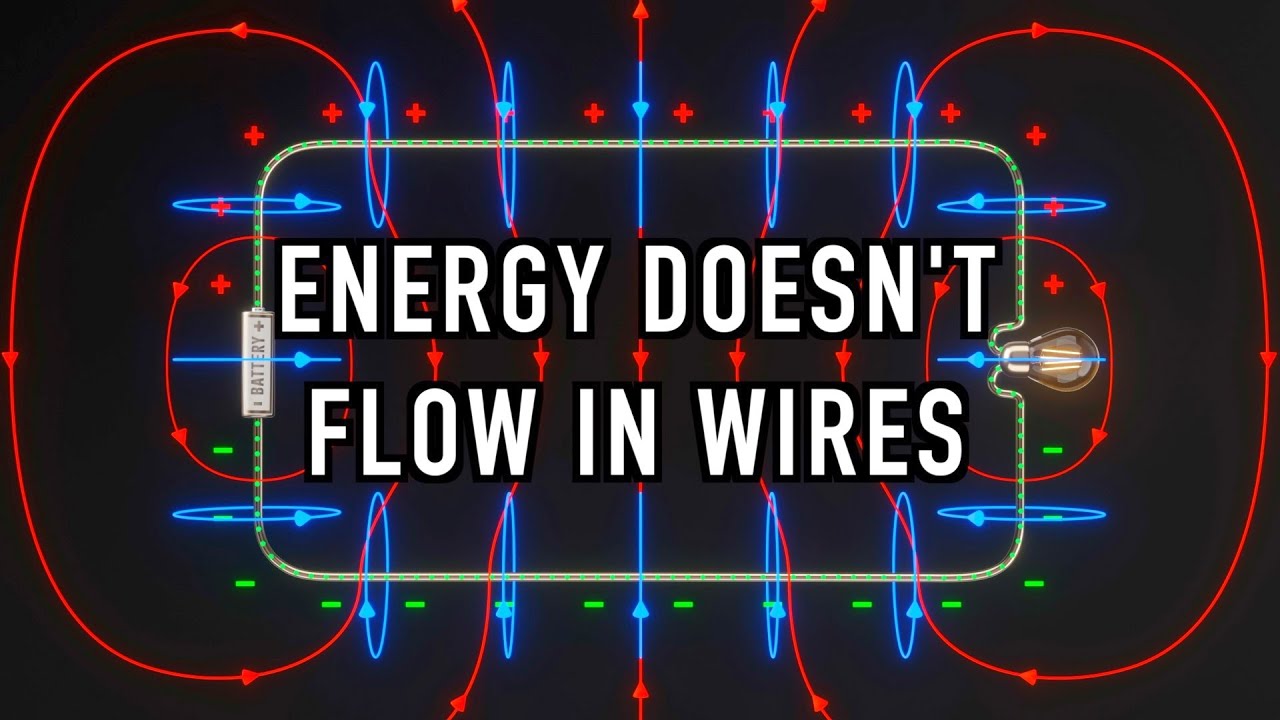
In short: Energy travels through the electric and magnetic fields around the wires, not through electrons flowing, and the Poynting vector describes that flow.
Once you accept that intuition can fail, this video overturns the textbook picture of current. It answers where the energy in a circuit really travels, replacing flowing electrons with fields and the Poynting vector. It rewires how you think about something you use constantly.
Key takeaways
Electrical energy is carried by oscillating electric and magnetic fields surrounding the wires, not by electrons physically flowing from the source into the device.
The Poynting vector, derived from Maxwell's equations, describes how energy flows through the fields around a circuit rather than inside the conductor itself.
Early undersea telegraph cables failed because engineers did not realize the energy was carried by the fields surrounding the wires, not the electrons.
Energy flows in one direction from source to device regardless of which way electrons move, which is why power can arrive almost instantly.
Watch on YouTube · Read the summary and Q&A
3. What Is Entropy and Why Does Time Flow?

Veritasium (Derek Muller) · 27 min · 30M views · 2023
In short: Entropy measures how energy spreads out, and its tendency to always increase gives time its direction and drives disorder in every system.
This is the conceptual spine of the set, explaining the one law that governs energy, disorder, and time. It answers what entropy is and why the future differs from the past. Understanding it makes many later topics click into place.
Key takeaways
Entropy is a measure of how energy disperses, and it tends to increase over time, producing more disorder in any isolated system.
The second law of thermodynamics states that the total entropy of the universe rises, which is what gives time its forward direction.
Life on Earth persists by capturing low-entropy, concentrated energy from the sun and radiating higher-entropy energy back into space.
An ideal Carnot heat engine is fully reversible, and its maximum efficiency depends only on the temperatures of its hot and cold sides.
Watch on YouTube · Read the summary and Q&A
4. What Is the World's Lightest Solid?

Veritasium (Derek Muller) · 12 min · 62.5M views · 2019
In short: Aerogel is a solid that is 99.8 percent air, making it the lightest solid and an exceptional thermal insulator.
A concrete look at how understanding matter lets engineers build the near-impossible. It answers what the lightest solid is and why it insulates so well, connecting nanoscale structure to real uses in space. It grounds abstract physics in a material you can hold.
Key takeaways
Aerogel is roughly 99.8 percent air, which makes it the lightest known solid while remaining rigid enough to hold its own shape.
Samuel Kistler invented aerogel in 1931 by removing the liquid from a jelly-like gel without collapsing its solid internal structure.
Aerogel insulates heat exceptionally well because its nanoscale pores make it very hard for heat to transfer through the material.
NASA has used aerogel to insulate Mars rovers and to capture particles from comets during the Stardust mission.
Watch on YouTube · Read the summary and Q&A
5. Why Was the Blue LED So Hard to Make?

Veritasium (Derek Muller) · 33 min · 51.4M views · 2024
In short: Blue light needed efficient p-type gallium nitride and precise crystal growth, which Shūji Nakamura achieved after years of skepticism and technical failure.
The longest single story here, and the payoff is both scientific and human. It answers why the blue LED resisted invention for decades and how one persistent researcher cracked it. It shows how a physics breakthrough becomes a world-changing product.
Key takeaways
The color of an LED comes from its semiconductor electronics, not from the plastic cover, which only shapes and protects the emitted light.
Shūji Nakamura created efficient p-type gallium nitride and mastered crystal growth, the two breakthroughs that made a working blue LED possible.
The blue LED completed the set of colors needed to produce white light, greatly expanding where LEDs could be used.
Nakamura's work turned Nichia into a dominant force in the LED market and helped transform modern lighting.
Watch on YouTube · Read the summary and Q&A
6. Why Do Systems Spontaneously Sync Up?

Veritasium (Derek Muller) · 19 min · 27.8M views · 2021
In short: Systems with different natural frequencies can settle into spontaneous order by nudging each other, from metronomes and fireflies to crowds on a bridge.
This moves from single objects to how order emerges among many parts. It answers why independent systems fall into step on their own, from fireflies to a wobbling bridge. It is the bridge from physics into the behavior of complex systems.
Key takeaways
Synchronization is spontaneous order emerging when systems with different natural frequencies influence each other, seen in metronomes, fireflies, and human crowds.
The Kuramoto model gives a mathematical description of how populations of oscillators with differing frequencies fall into a shared collective rhythm.
The Millennium Bridge wobbled because pedestrians unconsciously synchronized their steps with its sway, forcing engineers to close and modify the structure.
Synchronization appears at every scale of nature, from chemical reactions and firefly flashing to tidal locking and orbital resonances between bodies.
Watch on YouTube · Read the summary and Q&A
7. Does Cooperation Beat Self-Interest?

Veritasium (Derek Muller) · 27 min · 24.4M views · 2023
In short: In repeated prisoner's dilemmas, strategies that are nice, forgiving, retaliatory, and clear, like Tit for Tat, consistently outperform pure self-interest.
Here the world being explained is a social one. It answers whether cooperation or self-interest wins over repeated interactions, using the prisoner's dilemma and Axelrod's tournaments. The lessons about niceness, forgiveness, and clarity transfer directly to how you deal with people.
Key takeaways
In Robert Axelrod's tournaments, the simple Tit for Tat strategy won by cooperating first and then mirroring the opponent's last move.
Winning strategies in repeated games tend to be nice, forgiving, retaliatory, and clear rather than purely selfish or exploitative toward others.
No single strategy is universally best, since the optimal choice depends on the environment and the strategies that other players use.
Adding a small amount of forgiveness helps cooperation survive noise, when miscommunication would otherwise trigger endless cycles of mutual retaliation.
Watch on YouTube · Read the summary and Q&A
8. Why Did We Invent Imaginary Numbers?
Veritasium (Derek Muller) · 23 min · 22.3M views · 2021
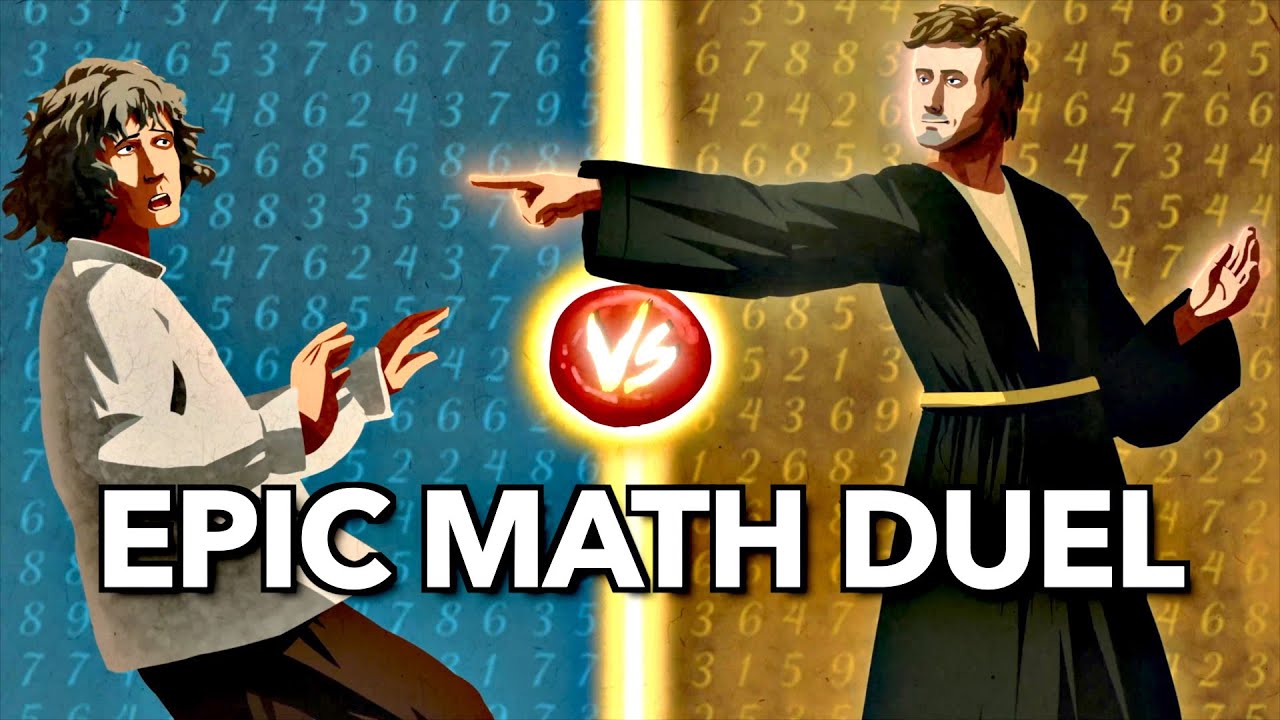
In short: Imaginary numbers were introduced to solve cubic equations, and they became essential for describing waves and the physics of the real world.
A shift into how the tools of math themselves get built. It answers why we invented imaginary numbers and how a seemingly absurd idea became indispensable to physics. It shows that useful abstractions often start out looking like nonsense.
Key takeaways
Imaginary numbers first appeared as a tool for solving cubic equations, even though negative and imaginary quantities seemed to make no physical sense.
Mathematicians like Tartaglia, Cardano, and Bombelli developed the methods and complex-number concepts needed to finally solve the general cubic equation.
Ancient mathematicians used geometric reasoning, such as completing the square, to derive algebraic solutions to equations long before modern notation existed.
Complex numbers, once dismissed as unreal, are now essential for describing waves and much of modern physics.
Watch on YouTube · Read the summary and Q&A
9. Can Every True Statement Be Proven?
Veritasium (Derek Muller) · 34 min · 30.5M views · 2021
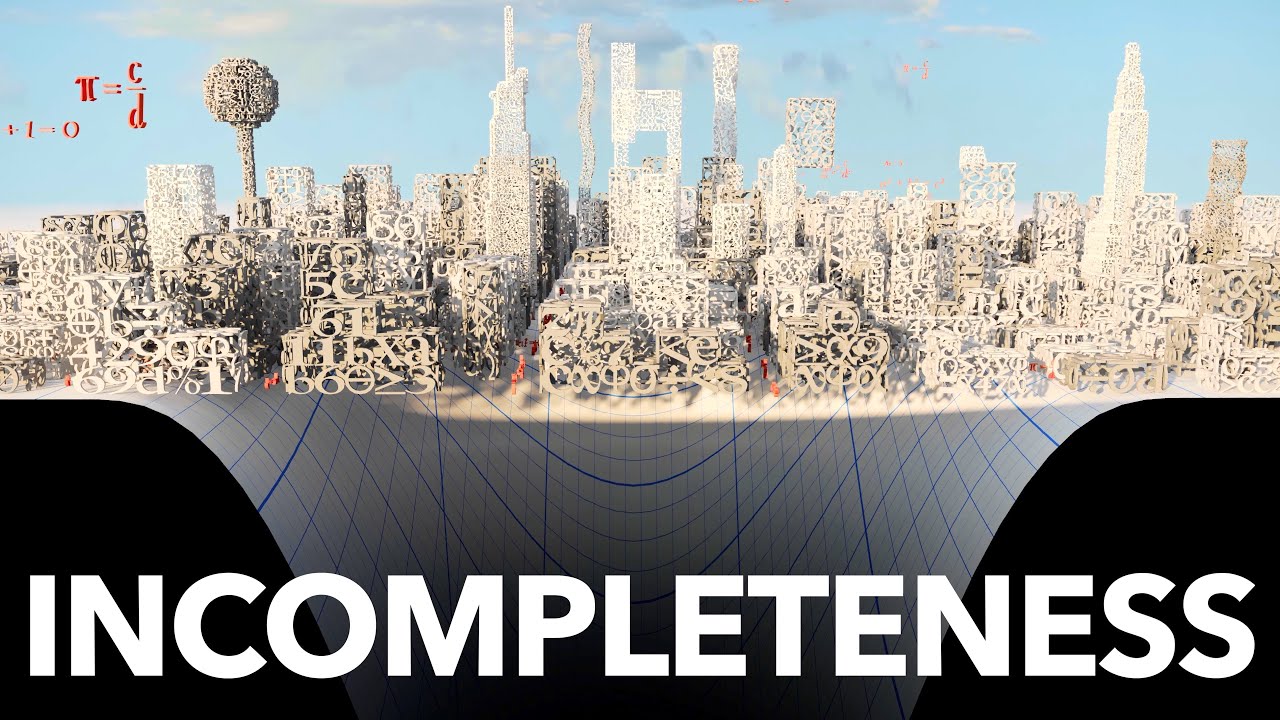
In short: No, Gödel's incompleteness theorems show any consistent mathematical system contains true statements it cannot prove and cannot prove its own consistency.
The intellectual peak of the journey, on the limits of provable knowledge. It answers whether every true statement can be proven, through Gödel's incompleteness theorems and Turing's halting problem. It reframes what it even means to know something is true.
Key takeaways
Gödel's incompleteness theorems prove that any consistent formal system contains true statements that cannot be proven within that same system.
No consistent mathematical system can prove its own consistency, which ended the dream of a complete and secure foundation for mathematics.
Turing's work on the halting problem grew from these questions of decidability and helped launch the field of computer science.
Undecidability appears in physical and computational systems, including quantum mechanics and Conway's Game of Life, which is Turing-complete.
Watch on YouTube · Read the summary and Q&A
10. How Did One Invention Poison Millions?
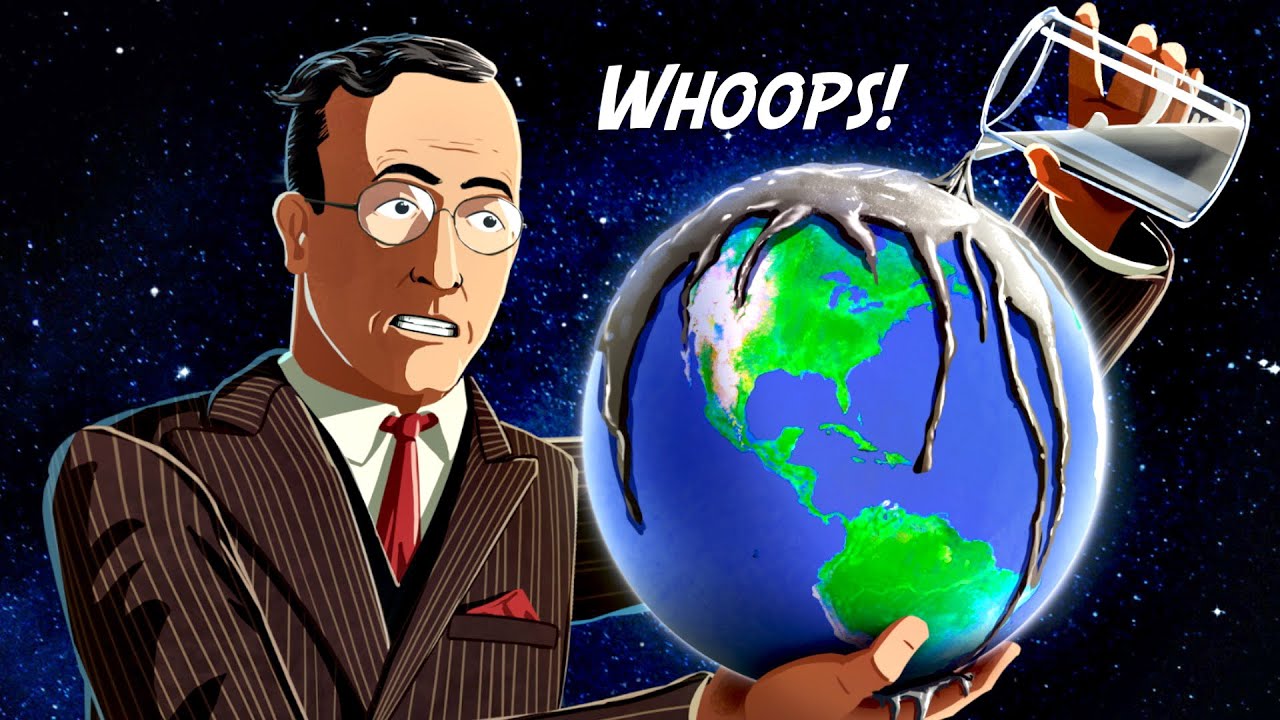
Veritasium (Derek Muller) · 24 min · 42.9M views · 2022
In short: Thomas Midgley Jr.'s leaded gasoline spread lead pollution worldwide, lowering intelligence, raising crime, and causing cardiovascular disease across generations.
A sober closer on what happens when science meets scale and industry. It answers how a single well-meaning invention harmed millions and why unintended consequences deserve serious attention. It leaves founders with a lasting question about responsibility.
Key takeaways
Thomas Midgley Jr.'s leaded gasoline caused widespread lead pollution linked to lower intelligence, higher crime rates, and cardiovascular disease across populations.
Estimates attribute over 800 million lost IQ points worldwide to lead exposure from gasoline over the course of the twentieth century.
The same inventor's CFC refrigerants later contributed to depletion of the ozone layer, compounding the environmental harm caused by his work.
Phasing out leaded gasoline produced large health and economic benefits, though lead exposure still affects millions of children today.
Watch on YouTube · Read the summary and Q&A
Frequently asked questions
Do electrons carry the energy in an electric circuit?
No. The energy travels through the electric and magnetic fields surrounding the wires, described by the Poynting vector, not through electrons drifting along the conductor.
What is entropy in simple terms?
Entropy measures how spread out energy is. The second law of thermodynamics says total entropy tends to increase, which is what gives time a forward direction.
Why was the blue LED so hard to invent?
It required efficient p-type gallium nitride and precise crystal growth. Shūji Nakamura solved both after years of skepticism, finally enabling white LED lighting.
What is the prisoner's dilemma in game theory?
It is a game where mutual cooperation beats mutual defection, and repeated play rewards strategies that are nice, forgiving, retaliatory, and clear, like Tit for Tat.
What did leaded gasoline do to people?
It spread lead pollution globally, which lowered intelligence, raised crime rates, and caused cardiovascular disease, with effects still reaching millions of children today.
Who are these Veritasium videos for?
This list is for curious people who want to understand how the world actually works, from bicycles and electricity to entropy, imaginary numbers and the limits of mathematical proof, without needing a physics or math degree first.
Which Veritasium video should I watch first?
Start with the bicycle balance video: it takes an everyday object you already know how to use and shows that the explanation is far less settled than you would expect, which sets up the mindset the rest of the list rewards.
Do I need a science background to follow these videos?
No science background is required. The topics range from how electrical energy reaches a device to why imaginary numbers were invented, and each is built around a concrete question and a visual explanation rather than formal prerequisites.
Are Veritasium videos just science trivia?
They are not trivia. Several of the videos, such as the ones on spontaneous synchronization, cooperation versus self-interest, and how one invention poisoned millions, use a scientific question as a way into how systems and societies behave.
How to use this list
Watch these in order and they build on each other, moving from everyday objects to the invisible fields around you, then to energy, materials, complex systems, and finally the limits of math and the consequences of invention. If you only have time for one, start with The Most Misunderstood Concept in Physics on entropy, since it gives you the single idea that makes the most of the world make sense. Come back for the bicycle and electricity videos when you want quick, intuition-breaking wins, and save the blue LED and leaded gasoline stories for when you want the human stakes behind the science.
Related lists
💡 Want summaries and transcripts for any YouTube video? Try YouTube Summary with ChatGPT & Claude.