World's Lightest Solid!
TL;DR
Aerogel is a lightweight solid that is 99.8% air and is known for its exceptional thermal insulation properties.
Transcript
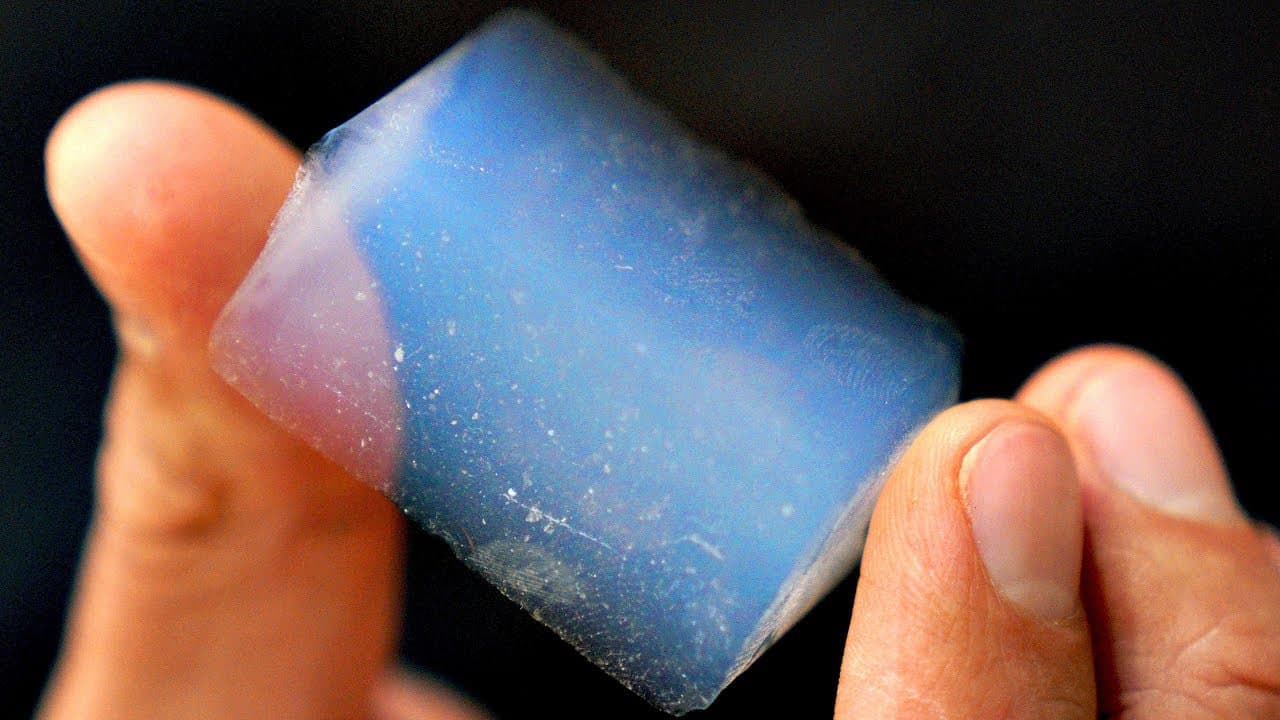
This is aerogel. The world's lightest, that is least dense, solid. This piece has a mass of just 1.22 grams. That is only a few times the mass of the same volume of air, which kind of makes sense because it is 99.8% air. In fact, some aerogels are so light that if you removed all the air from them, they would be less dense than air. I have long bee... Read More
Key Insights
- ✈️ Aerogel is the lightest solid because it is mostly made up of air, with a mass of just 1.22 grams.
- 💨 It was invented in 1931 by Professor Samuel Kistler, who found a way to remove liquid from a jelly-like substance without compromising its solid structure.
- 🥵 Aerogel is an exceptional thermal insulator due to the small width of its nanoscale pores, which makes it difficult for heat to transfer through the material.
- ☄️ NASA has used aerogel in insulation for Mars rovers and for capturing particles from comets in the Stardust mission.
- 🩵 The unique optical properties of aerogel cause it to scatter shorter wavelengths of light, making it appear blue against a darker background.
- 👷 Aerogel has potential applications in industries like construction for thermal insulation, but efforts are being made to improve its cost and durability.
- 💦 Scientists continue to work on developing next-generation aerogels, including waterproof variants.
Install to Summarize YouTube Videos and Get Transcripts
Explore YouTube Video Summarizer or Get YouTube Transcript Extractor
Questions & Answers
Q: How was aerogel invented?
In 1931, Professor Samuel Kistler discovered a method to remove liquid from a jelly-like substance without damaging its solid structure, resulting in the creation of aerogel.
Q: What gives aerogel its thermal insulation properties?
The nanoscale pores in aerogel make it a superb thermal insulator. The width of these pores is smaller than the mean free path of air molecules, making it difficult for heat to transfer through the material.
Q: How has NASA used aerogel in their missions?
NASA has used aerogel for insulation in Mars rovers to protect the electronics from extreme temperature changes. It has also been used to capture particles from comets in the Stardust mission.
Q: Can aerogel be used in everyday applications?
Currently, the cost and durability of aerogel are being improved. While it may not be used in everyday applications yet, advancements are being made, and it may find use in industries like construction for thermal insulation.
Summary & Key Takeaways
-
Aerogel is the lightest solid, with a mass of just 1.22 grams, and is mostly composed of air.
-
It was invented in 1931 by Professor Samuel Kistler, who found a way to remove liquid from a jelly-like substance without affecting its solid structure.
-
Aerogel is an excellent thermal insulator and has been used by NASA in various missions, including insulation for Mars rovers and capturing particles from a comet.
Read in Other Languages (beta)
Share This Summary 📚
Summarize YouTube Videos and Get Video Transcripts with 1-Click
Try YouTube Summary with ChatGPT & Claude or YouTube Transcript Generator
Explore More Summaries from Veritasium 📚






Summarize YouTube Videos and Get Video Transcripts with 1-Click
Try YouTube Summary with ChatGPT & Claude or YouTube Transcript Generator