Most People Don't Know How Bikes Work
TL;DR
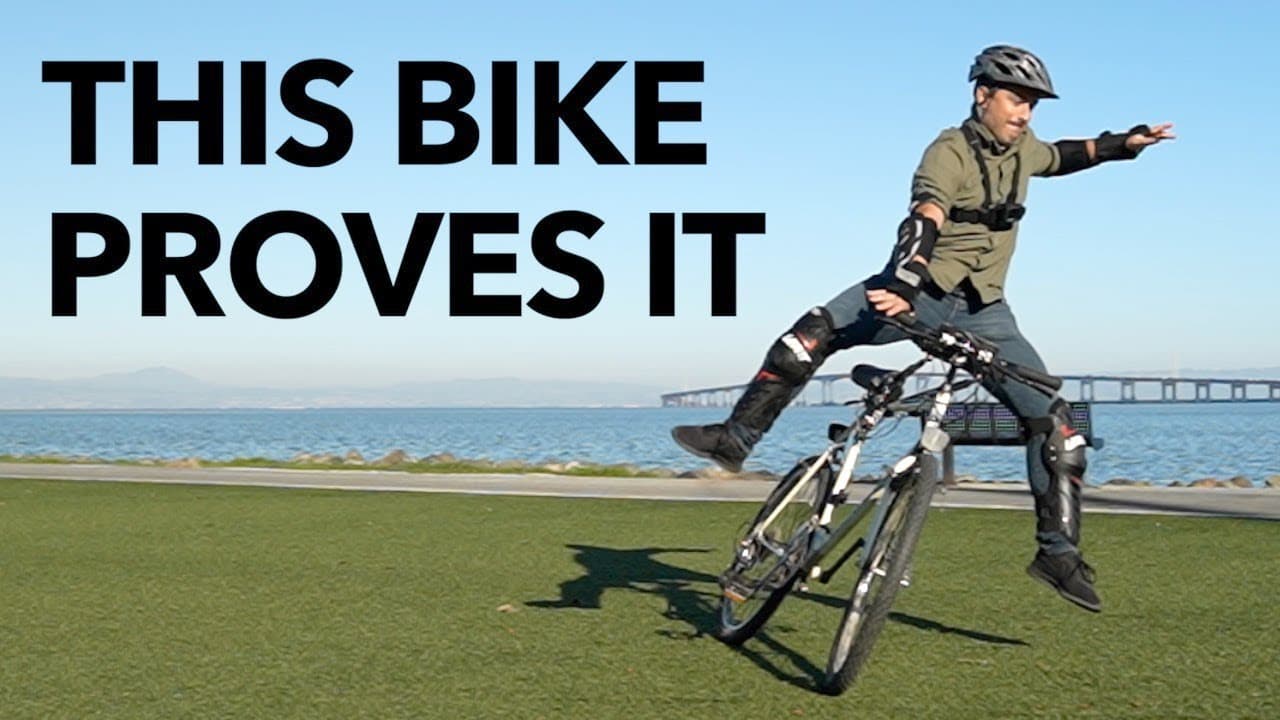
Most people think turning the handlebars is how bicycles turn, but in reality, steering affects both direction and balance.
Transcript
Most people don't know how bicycles actually work. - [Off screen] Let's try it again. So we modified this bike to prove it. This video was sponsored by KiwiCo. More about them at the end of the show. - When you're riding a bike and you want to turn left, I think most people just imagine you turn the handlebars to the left. This is a bike to test wh... Read More
Key Insights
- 🚲 Steering a bicycle affects both its direction and balance.
- ⚖️ Counter-steering is necessary to initiate turns and maintain balance.
- 🤳 Bicycles have built-in mechanisms, including the front fork's angle, weight distribution, and gyroscopic effect, to self-steer and remain stable.
- 🚲 Stationary bikes are challenging to balance because steering adjustments are not possible.
Install to Summarize YouTube Videos and Get Transcripts
Explore YouTube Video Summarizer or Get YouTube Transcript Extractor
Questions & Answers
Q: How does steering a bicycle differ from steering a car?
Unlike cars, where pointing the wheels in the desired direction is sufficient, bicycles require counter-steering to initiate a turn and maintain balance.
Q: What happens when the steering of a bicycle is locked?
Locking the steering of a bicycle renders it impossible to turn, highlighting the crucial role of steering in maintaining balance.
Q: Why is it difficult to balance on a stationary bike?
Balancing on a stationary bike is challenging because steering adjustments are necessary to keep the bike underneath the rider, which is not possible when the bike is not moving.
Q: How do bicycles stay upright without riders?
Bicycles are designed to steer themselves. If the bike starts leaning to one side, the handlebars turn in that direction, effectively steering the wheels back underneath the bike.
Summary & Key Takeaways
-
A modified bicycle is used to test the belief that turning the handlebars determines the direction of the bike.
-
The rider discovers that to turn left, they must first steer right and vice versa due to the need to maintain balance.
-
Bicycles rely on steering mechanisms, such as the front fork's angle, weight distribution, and gyroscopic effect, to maintain balance and self-steer.
Read in Other Languages (beta)
Share This Summary 📚
Summarize YouTube Videos and Get Video Transcripts with 1-Click
Try YouTube Summary with ChatGPT & Claude or YouTube Transcript Generator
Explore More Summaries from Veritasium 📚




Summarize YouTube Videos and Get Video Transcripts with 1-Click
Try YouTube Summary with ChatGPT & Claude or YouTube Transcript Generator