How Did America Become a Global Superpower?
TL;DR
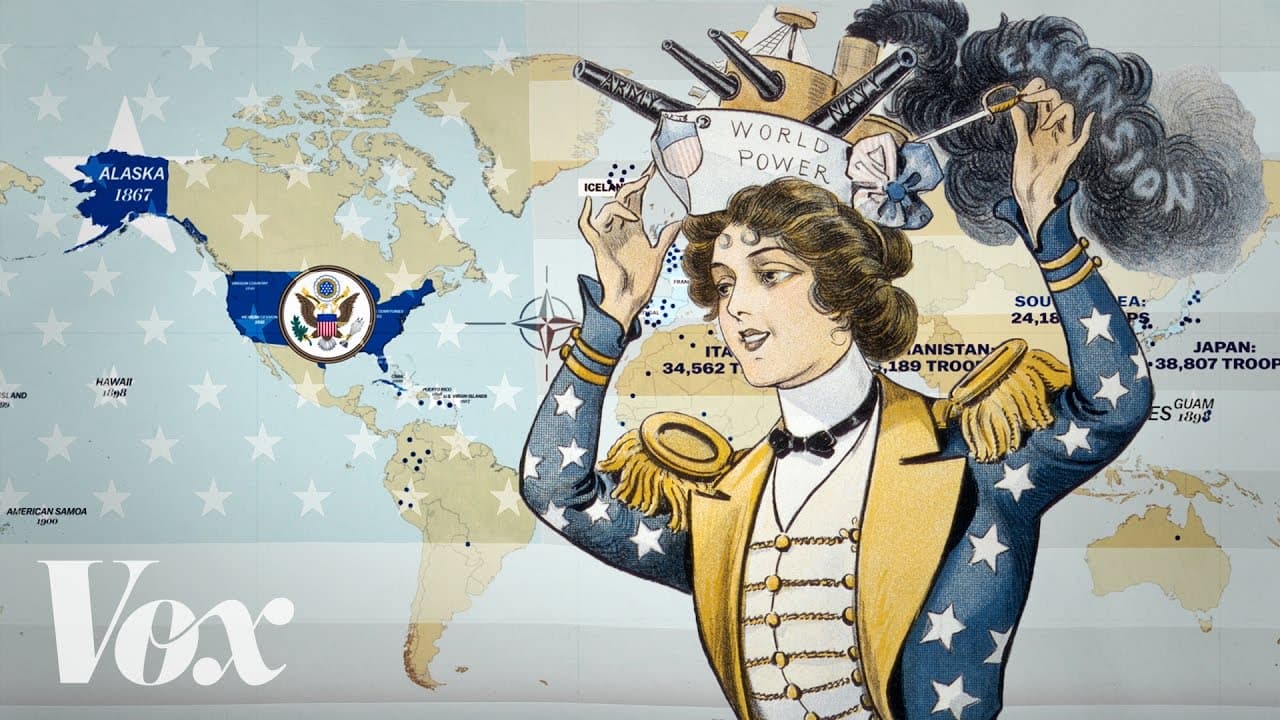
America became a global superpower through territorial expansion, economic growth, and strategic interventions. Starting from the 19th century, key events like the Spanish-American War marked its rise, followed by influential roles in World Wars and the establishment of international institutions. The Cold War solidified its global presence, with ongoing commitments to military alliances and political engagements.
Transcript
The modern United States is the most powerful country in human history. With over 800 military bases and 37% of global military spending, the United States has become the leader of a vast interconnected global system that has helped usher in an era of unprecedented prosperity and low levels of conflict. To understand America’s position in the world... Read More
Key Insights
- The United States has over 800 military bases worldwide and accounts for 37% of global military spending, highlighting its dominant global position.
- America's expansion began with territorial acquisitions in North America, eventually reaching the Pacific Ocean, often at the expense of indigenous populations.
- The industrial revolution facilitated a centralized state, empowering expansionist leaders to extend U.S. influence globally, as seen in the Spanish-American War.
- The acquisition of territories like Puerto Rico, Guam, and the Philippines marked America's emergence as a global power in the late 19th century.
- World War I and the League of Nations demonstrated America's growing influence, though isolationism remained a significant force domestically.
- Post-World War II, the U.S. established international institutions like the United Nations and Bretton Woods system, shaping global politics and economics.
- The Cold War era saw America adopt a containment strategy against Soviet influence, leading to global military alliances and interventions.
- Despite the end of the Cold War, the U.S. maintained its global military and political commitments, with recent debates on the value of these alliances.
Install to Summarize YouTube Videos and Get Transcripts
Explore YouTube Video Summarizer or Get YouTube Transcript Extractor
Questions & Answers
Q: How did the industrial revolution impact America's global influence?
The industrial revolution led to explosive economic growth in the United States, necessitating a more centralized government to manage the economy. This centralization of power empowered expansionist leaders to extend U.S. influence globally, as seen during the Spanish-American War, marking America's emergence as a global power.
Q: What role did World War I play in America's rise as a global power?
World War I demonstrated America's growing influence on the global stage. American intervention was a decisive factor in the war's outcome, and President Wilson's participation in the Paris Peace Conference highlighted America's ambition to shape global politics, although domestic isolationism limited full engagement in initiatives like the League of Nations.
Q: How did post-World War II institutions shape global politics?
Post-World War II, the U.S. helped establish institutions like the United Nations and the Bretton Woods system to promote international peace and economic stability. These institutions laid the foundation for modern international law and economic cooperation, reflecting America's commitment to managing global affairs and preventing future conflicts.
Q: What was the U.S. strategy during the Cold War?
During the Cold War, the U.S. adopted a containment strategy to limit Soviet influence globally. This involved forming military alliances like NATO, intervening in various international conflicts, and supporting regimes or rebellions aligned with American interests, reflecting a commitment to countering communism and maintaining global stability.
Q: How did America's foreign policy change after the Cold War?
After the Cold War, the U.S. maintained its global military and political commitments, continuing to manage international affairs as the sole superpower. While military spending decreased, alliances like NATO persisted, reflecting a belief in the benefits of sustained engagement in global politics to prevent conflicts and promote stability.
Q: What are the current debates regarding America's global commitments?
Current debates center around the relevance and sustainability of America's global military and political commitments. Some argue for reducing involvement and questioning the value of alliances like NATO, while others emphasize the importance of maintaining these commitments for global stability and American security, reflecting a shift towards potential isolationism.
Q: How did America's territorial expansion impact indigenous populations?
America's territorial expansion across North America often came at the expense of indigenous populations, resulting in significant displacement and violence. This expansion was driven by a belief in manifest destiny, prioritizing national growth and prosperity over the rights and wellbeing of indigenous communities.
Q: What was the significance of the Spanish-American War for the U.S.?
The Spanish-American War marked a turning point in America's emergence as a global power. The U.S. defeated Spain, acquiring territories like Puerto Rico, Guam, and the Philippines. This victory demonstrated America's military capabilities and willingness to extend its influence, setting the stage for further global engagement in the 20th century.
Summary & Key Takeaways
-
The United States emerged as a global superpower through territorial expansion and economic growth, beginning with its early expansion across North America. The industrial revolution centralized power, allowing leaders to extend influence abroad, notably during the Spanish-American War, marking the U.S. as a global power.
-
World War I further showcased America's influence, although isolationism persisted. After World War II, the U.S. established international institutions like the United Nations and Bretton Woods system, aiming to prevent future conflicts and stabilize the global economy, solidifying its role in global politics.
-
During the Cold War, the U.S. adopted a containment strategy against Soviet expansion, forming alliances like NATO and intervening in global conflicts. Although the Cold War ended, the U.S. retained its military and political commitments, with current debates on their relevance and sustainability.
Read in Other Languages (beta)
Share This Summary 📚
Summarize YouTube Videos and Get Video Transcripts with 1-Click
Try YouTube Summary with ChatGPT & Claude or YouTube Transcript Generator
Explore More Summaries from Vox 📚

Summarize YouTube Videos and Get Video Transcripts with 1-Click
Try YouTube Summary with ChatGPT & Claude or YouTube Transcript Generator