What Is the Saudi-Iranian Rivalry and Its Impact on the Middle East?
TL;DR
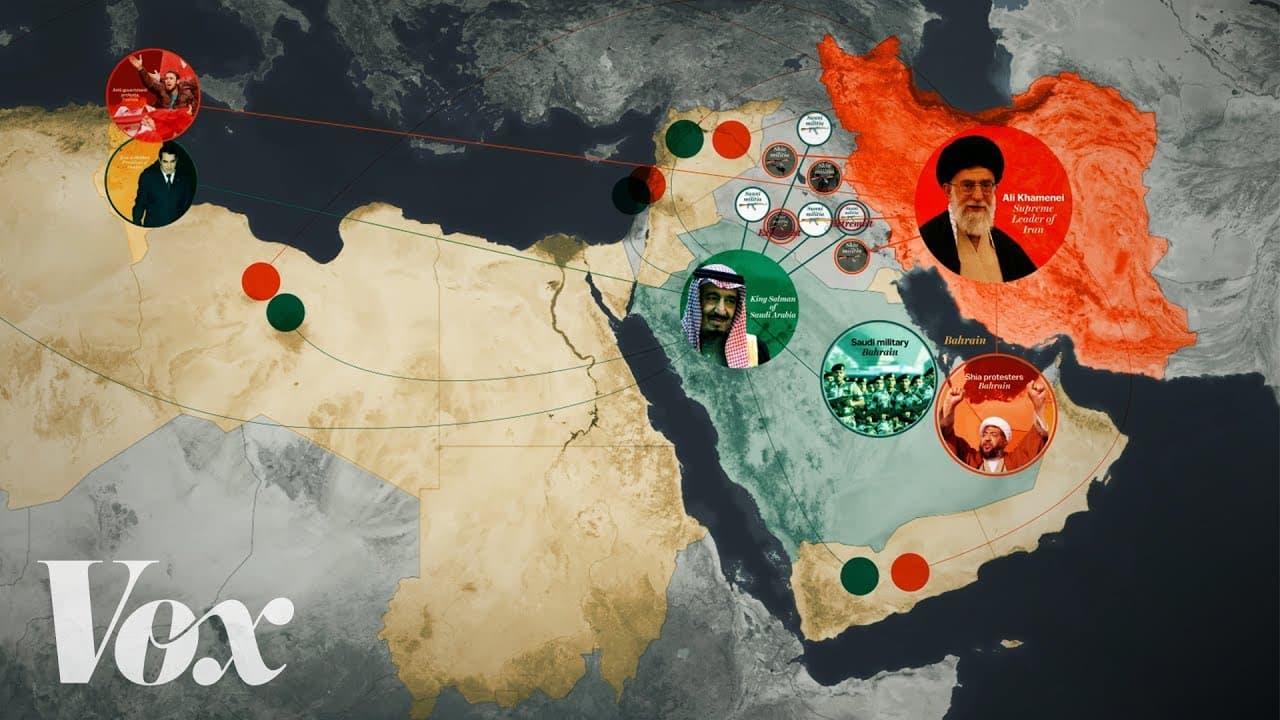
The Saudi-Iranian rivalry is a complex struggle for influence that fuels conflicts across the Middle East through proxy wars, with each country backing opposing factions in various conflicts. Rooted in historical, religious, and political differences, this rivalry intensified after the Iranian Revolution in 1979 and continues to destabilize the region, impacting nations like Iraq, Syria, and Yemen.
Transcript
The Middle East is one of the most complex regions in the world: Currently there are 4 failing states and 3 wars, with major powers increasingly taking opposite sides. Countless armed militias and terrorist groups are spreading violence across borders. The region has seen conflict after conflict going back well into the 20th century. But among all ... Read More
Key Insights
- The Middle East is a complex region with multiple failing states and ongoing wars, primarily influenced by the rivalry between Saudi Arabia and Iran.
- Saudi Arabia and Iran engage in proxy warfare, supporting opposing factions in other countries, leading to widespread destabilization.
- The origins of Saudi Arabia and Iran's rivalry trace back to historical, religious, and political differences, intensified by the Iranian Revolution in 1979.
- Saudi Arabia and Iran's rivalry is often compared to the Cold War, as both countries avoid direct conflict but engage in indirect confrontations through third-party battles.
- The Sunni-Shia divide, although not the main reason for the rivalry, exacerbates tensions between Saudi Arabia and Iran, with each supporting their respective sects.
- The Iran-Iraq War in the 1980s, fueled by Saudi support for Iraq, was a significant proxy conflict that deepened the Saudi-Iranian animosity.
- The Arab Spring and subsequent civil wars provided new arenas for Saudi-Iranian proxy battles, with both countries backing different factions across the Middle East.
- The ongoing Saudi-Iranian rivalry continues to destabilize the region, drawing in other countries and complicating efforts to resolve conflicts.
Install to Summarize YouTube Videos and Get Transcripts
Explore YouTube Video Summarizer or Get YouTube Transcript Extractor
Questions & Answers
Q: What is the main reason for the ongoing conflicts in the Middle East?
The main reason for the ongoing conflicts in the Middle East is the rivalry between Saudi Arabia and Iran. This rivalry fuels proxy wars, where both countries support opposing factions in various conflicts across the region, leading to widespread destabilization and hardship for the affected populations.
Q: How do Saudi Arabia and Iran engage in their rivalry?
Saudi Arabia and Iran engage in their rivalry through proxy warfare, where they support opposing factions in conflicts within other countries. This indirect confrontation allows them to avoid direct conflict while still exerting influence and destabilizing regions by backing different groups in civil wars and uprisings.
Q: What historical events intensified the Saudi-Iranian rivalry?
The Iranian Revolution in 1979 significantly intensified the Saudi-Iranian rivalry. The revolution overthrew the Shah of Iran and established an Islamic Republic, which threatened Saudi Arabia's influence in the region and challenged its religious leadership, leading to increased tensions and proxy conflicts.
Q: Why is the Saudi-Iranian rivalry compared to the Cold War?
The Saudi-Iranian rivalry is compared to the Cold War because both countries avoid direct military confrontation but engage in indirect conflicts through proxy wars. Like the US and Soviet Union during the Cold War, Saudi Arabia and Iran support opposing factions in other countries to exert influence without declaring war on each other.
Q: How does the Sunni-Shia divide play into the rivalry?
The Sunni-Shia divide exacerbates the Saudi-Iranian rivalry, with Saudi Arabia predominantly Sunni and Iran predominantly Shia. Both countries support their respective sects in regional conflicts, adding a religious dimension to their political and territorial disputes, although it is not the primary cause of their rivalry.
Q: What role did the Iran-Iraq War play in the Saudi-Iranian rivalry?
The Iran-Iraq War played a significant role in deepening the Saudi-Iranian rivalry. Saudi Arabia supported Iraq during the war, providing financial and military aid. This support intensified hostilities between Saudi Arabia and Iran, as Iran blamed Saudi Arabia for prolonging the conflict and contributing to its devastating impact.
Q: How did the Arab Spring affect the Saudi-Iranian rivalry?
The Arab Spring provided new arenas for Saudi-Iranian proxy battles, as both countries backed different factions in the uprisings across the Middle East. Saudi Arabia supported status quo governments, fearing instability, while Iran supported revolutionary movements, seeking to overturn existing regimes and expand its influence.
Q: What are the implications of the Saudi-Iranian rivalry for the Middle East?
The Saudi-Iranian rivalry has significant implications for the Middle East, contributing to the destabilization of the region. Their proxy wars exacerbate conflicts, create humanitarian crises, and hinder efforts to resolve disputes. The rivalry also draws in other countries, complicating international relations and regional stability.
Summary & Key Takeaways
-
The Middle East is embroiled in complex conflicts, largely driven by the rivalry between Saudi Arabia and Iran. This indirect confrontation, known as proxy warfare, involves both countries supporting opposing factions in various Middle Eastern nations, leading to widespread destabilization and hardship for the affected populations.
-
The roots of the Saudi-Iranian rivalry can be traced back to historical, religious, and political differences, notably intensified by the Iranian Revolution in 1979. This rivalry is often likened to a Cold War, with both nations avoiding direct conflict but engaging in battles through third-party countries.
-
The Sunni-Shia divide, although not the primary cause of the rivalry, exacerbates tensions, with Saudi Arabia and Iran backing their respective sects. The rivalry has fueled conflicts across the Middle East, including the Iran-Iraq War and the Arab Spring, complicating efforts to stabilize the region.
Read in Other Languages (beta)
Share This Summary 📚
Summarize YouTube Videos and Get Video Transcripts with 1-Click
Try YouTube Summary with ChatGPT & Claude or YouTube Transcript Generator
Explore More Summaries from Vox 📚



Summarize YouTube Videos and Get Video Transcripts with 1-Click
Try YouTube Summary with ChatGPT & Claude or YouTube Transcript Generator