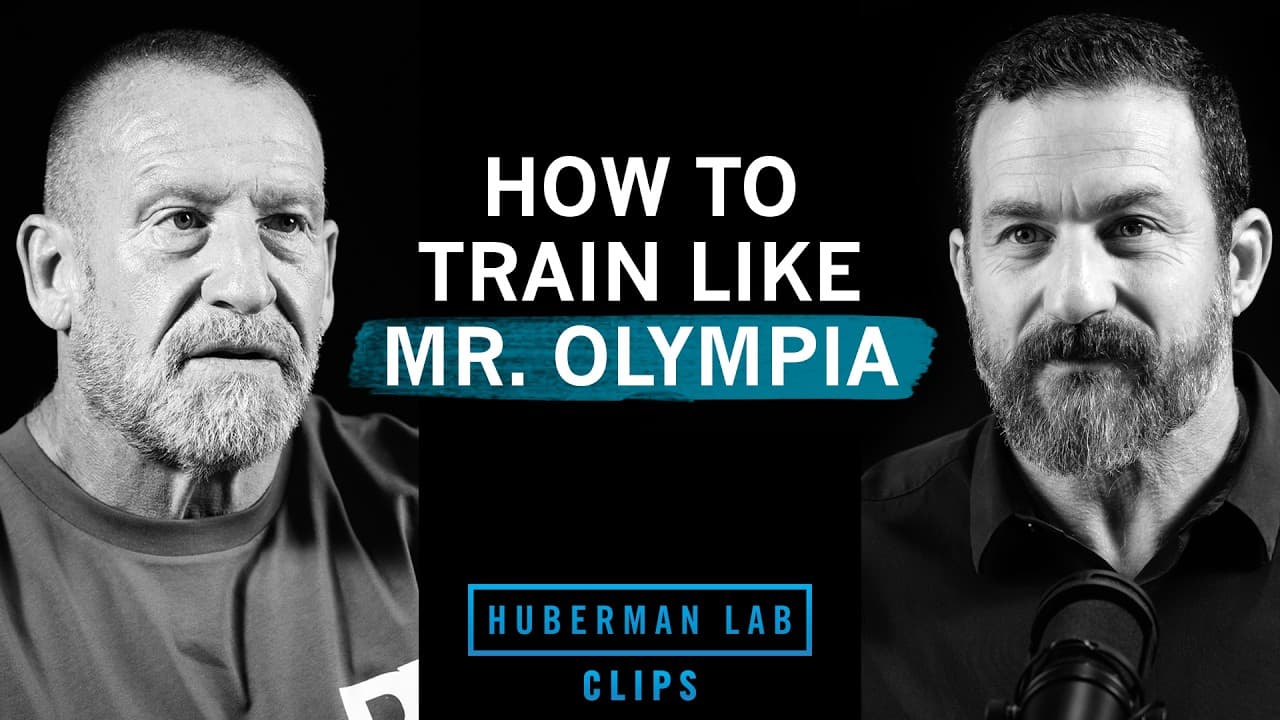
How to turn negative emotion into training power?
TL;DR
Negative emotions can fuel high intensity training when you pre plan, visualize, and convert anger into focus. Preparation routines and managing inner narratives help you stay hungry, while translating frustration into progress drives mastery over training and life. This mindset also considers mortality to prioritize effort and purpose.
Transcript
When people see the videos of you training, we'll put some links to those. It's so striking because you're like this, but then in the moment of a set, it's like I mean, intensity is doesn't quite explain it. It's like, and I'm curious because people can see those videos. What was going on in your head? Were you think going into the set, through the... Read More
Key Insights
- Training intensity starts before a set, with deliberate prep and visualization that set the mental stage for effort.
- Negative emotions can be repurposed into fuel for action, not self destruction, creating a constructive energy for performance.
- A routine involving specific clothes and ritualized steps can lower stress and increase readiness for demanding workouts.
- Staying hungry can be difficult in a successful career, but deliberate environment and choices help sustain drive.
- Mortality awareness and reflections on life encourage prioritizing meaningful training and living with purpose.
- Transforming anger into positive outcomes is a form of mental alchemy that supports discipline and progress.
- Control over dietary and training decisions is part of mastering the self, not just the body, especially during competition.
- The mindset of dog-like presence in the moment reinforces living in the now and maximizing each training day.
- More videos from this channel:
- More from this channel: Huberman Lab Clips
Install to Summarize YouTube Videos and Get Transcripts
Explore YouTube Video Summarizer or Get YouTube Transcript Extractor
Questions & Answers
Q: How to use visualization before a workout to boost intensity
Visualization before a workout helps set expectations and reduces uncertainty, making it easier to commit to challenging reps. By rehearsing the movement, sensations, and outcomes in advance, you prime neural pathways for execution, enhance focus during the set, and sustain effort even when fatigue rises. This practice aligns actions with goals and mitigates distraction.
Q: What is the role of negative emotions in training
Negative emotions act as fuel when redirected toward disciplined action rather than acting on impulse. By acknowledging anger or frustration and channeling it into a focused plan, you create a momentum that supports sustained effort, stricter adherence to form, and the willingness to push past perceived limits in pursuit of progress.
Q: How do routines influence hunger for training
Routines anchor desire and consistency, keeping motivation steady even after success. Repeating environment cues, such as clothing and setup, helps maintain a proactive mindset, ensuring that hunger remains intact and training remains a voluntary, purposeful activity rather than a routine obligation.
Q: Why reflect on mortality in training
Mortality reflection sharpens priorities and motivates action. Recognizing that life has an end drives a commitment to maximize quality of training and time, elevating present effort and reducing procrastination. This awareness helps align daily choices with long term health and performance goals.
Q: What is meant by alchemy of energy in this context
Alchemy of energy refers to transforming potentially destructive negative energy into constructive training power. By redirecting emotions, one can fuel discipline, focus, and resilience, converting inner turmoil into purposeful movement, refined technique, and higher hit rates during workouts.
Q: How to maintain simplicity while competing at high levels
Maintain focus by keeping core routines, goals, and values intact even as success grows. A simple, consistent training philosophy reduces cognitive load, helps decision making under pressure, and preserves motivation by reminding athletes of their foundational aims and the reasons behind their efforts.
Q: How to balance comfort with hunger for success
Balance comes from choosing environments and practices that preserve hunger without sacrificing well being. Staying in a challenging setting, controlling distractions, and maintaining a disciplined lifestyle allow continuous growth, while recognizing when to adjust routines to sustain health, longevity, and consistent performance.
Q: What is the impact of personal history on training mindset
Personal history shapes drive, resilience, and how one uses adversity as fuel. Early life experiences can reinforce a purpose-driven approach, turning difficult circumstances into motivation to prove capabilities, maintain focus, and invest in long term improvements, rather than settling for comfort or complacency.
Summary & Key Takeaways
-
Dorian Yates describes a pre training routine that includes visualization, specific clothes, and reviewing past workouts to prepare the mind for a hard set. He emphasizes turning negative energy into fuel and staying driven by a personal sense of purpose.
-
The discussion highlights transforming anger and adversity into momentum for training, using a structured approach to stay hungry and committed even after winning championships, and reflecting on life goals to guide daily effort.
-
The conversation connects psychology with longevity and quality of life, noting that embracing mortality can sharpen focus on what truly matters in training and personal progress, while maintaining control over impulses and choices.
Read in Other Languages (beta)
Share This Summary 📚
Summarize YouTube Videos and Get Video Transcripts with 1-Click
Try YouTube Summary with ChatGPT & Claude or YouTube Transcript Generator
Explore More Summaries from Huberman Lab Clips 📚



Summarize YouTube Videos and Get Video Transcripts with 1-Click
Try YouTube Summary with ChatGPT & Claude or YouTube Transcript Generator