How to Beat Social Media Addiction with Limits and Sleep
TL;DR
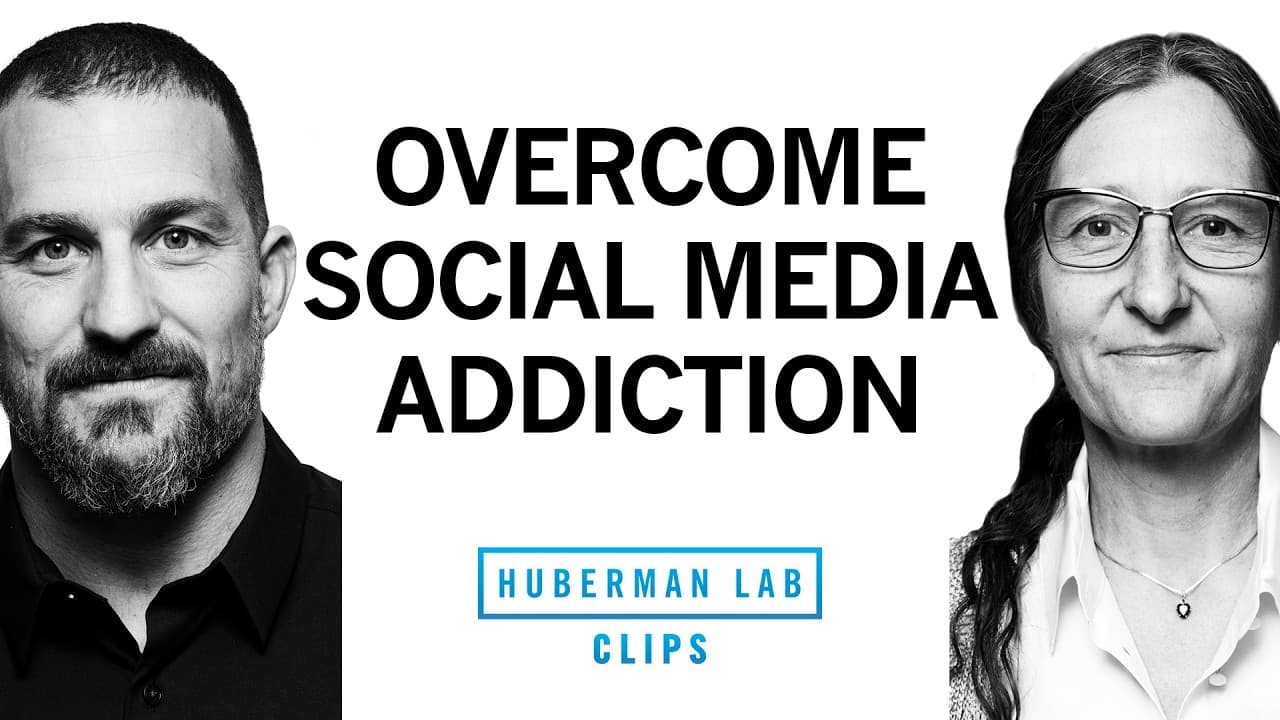
Social media functions like a drug and requires intentional use and boundaries. Set barriers that keep you in control, such as limiting time or devices, and prioritize offline connections and sleep to protect attention and creativity. A 30 day reset can help for heavy use, while shorter limits work for moderate use.
Transcript
so first of all social media um how addicting is it really and what is healthy social media behavior so the first message I would want to get across about social media is that it really is a drug and it's engineered to be a drug um and it's based on you know potency quantity variety um the bottomless bowls the likes the way that it's enumerated all... Read More
Key Insights
- Social media is described as a drug because of its potency, variety, and reinforcement in design, which makes awareness and boundaries crucial for healthy use.
- Effective use requires前 planning and intention, treating social media as a tool rather than a default mode of living.
- Setting tangible limits, such as restricting daily time or limiting posting and commenting, helps maintain control over usage patterns.
- Regularly embedding offline time and real world social interactions protects against loneliness and preserves social bonds.
- A 30 day reset is recommended for severe overuse, while many people may benefit from shorter, single day resets or lighter boundaries.
- The idea of a transitional object emerges, where the phone acts as security or a babying object that can distract from real life.
- Fostering offline spaces with friends present, where no one is online, reduces dopamine driven pressure and reduces FOMO.
- Creating deliberate barriers before entering situations with phone use helps sustain focused thought and creative energy in daily life.
- 🎬 More videos from this channel:
- 📺 More from this channel: Huberman Lab Clips
Install to Summarize YouTube Videos and Get Transcripts
Explore YouTube Video Summarizer or Get YouTube Transcript Extractor
Questions & Answers
Q: A real search query about reducing phone use and social media dependence
To reduce dependence you can implement deliberate barriers before and during phone use, such as leaving the phone in another room, setting a specific time window for checking apps, and choosing offline activities with friends. These steps help preserve sustained thought, prevent constant interruption, and encourage creative engagement instead of reactive scrolling. The process is iterative and may require adjustments over time as you learn which strategies work best for you.
Q: What is the core reason social media feels addictive according to the video
The core reason is that social media is engineered to resemble a drug through potency, quantity, and variety of stimuli, including endless likes and bottomless feeds. This design reinforces usage patterns, making it easy to slip into habitual checking and scrolling. Recognizing this helps you approach usage with intention rather than passivity.
Q: How can you create healthier daily routines around social media
Healthy routines involve explicit limits, such as allocating a set amount of time for posting and interactions, and designating phone free periods, especially during workouts or social time. Building offline activities and ensuring sleep quality decreases exposure to digital stimuli. Consistent routines reinforce self control and reduce the likelihood of compulsive checking.
Q: What role does offline connection play in reducing phone use
Offline connection acts as a counterbalance to constant online presence, providing meaningful interaction without digital distraction. By meeting friends without phones, you reduce dopamine triggers and FOMO, creating liberating and distraction free environments that support sustained attention and deeper conversations.
Q: What is recommended for severe social media overuse
For severe overuse, a full 30 day reset is recommended to recalibrate routines and reset neural responses to online stimuli. This longer break helps reestablish self control, rebuild healthy habits, and reduce reliance on constant digital feeds, though individual needs may vary.
Q: How did the speakers describe the phone as a security object
The phone is described as a transitional object that many people rely on for security and connection, similar to a baby with a bottle. This dynamic can make it hard to disengage, highlighting the need for deliberate barriers and mindful usage patterns to reclaim attention.
Q: What strategies help preserve offline time with friends
Strategies include scheduling tech free times, choosing activities where no one uses devices, and intentionally creating spaces for uninterrupted conversation. When friends participate in a dopamine fast together, the fear of missing out decreases and the experience becomes more liberating and engaging.
Q: How can someone start cultivating sustained thought and creativity
To cultivate sustained thought, limit interruptions by planning blocks of uninterrupted time, avoid multitasking with devices, and nurture environments that encourage deep work. Practice before bed and during walks by leaving the phone behind, which supports cognitive clarity and long term creative energy.
Summary & Key Takeaways
-
A practical framework is proposed to treat social media as a tool rather than a force of habit, emphasizing intentional use and planning.
-
The speakers advocate for explicit boundaries, like time limits and unplugged spaces, to preserve offline life and sustained thought.
-
The conversation highlights the value of sleep and deliberate, creative engagement over constant consumption and immediate reactions.
Read in Other Languages (beta)
Share This Summary 📚
Summarize YouTube Videos and Get Video Transcripts with 1-Click
Try YouTube Summary with ChatGPT & Claude or YouTube Transcript Generator
Explore More Summaries from Huberman Lab Clips 📚





Summarize YouTube Videos and Get Video Transcripts with 1-Click
Try YouTube Summary with ChatGPT & Claude or YouTube Transcript Generator