How to perform NSDR for quick energy recovery
TL;DR
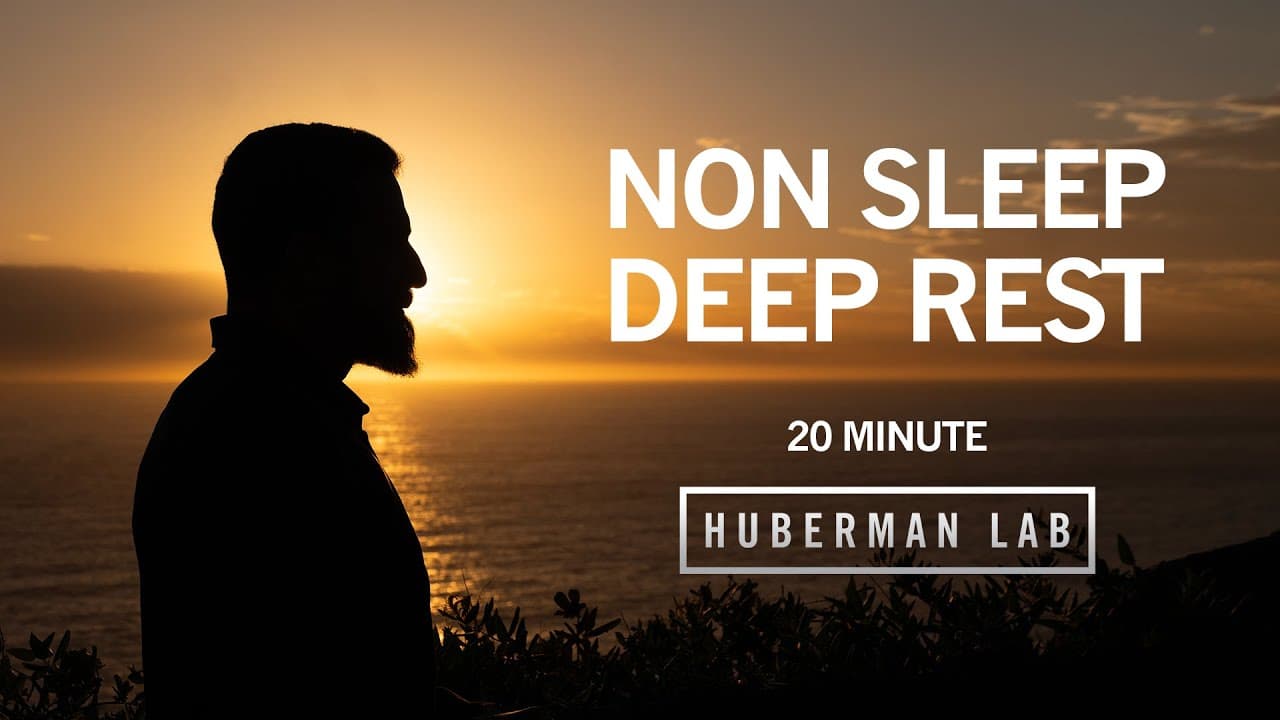
NSDR resets mental and physical energy by shifting the nervous system from thinking and stress to pure sensation and deep relaxation. The protocol uses controlled breathing, attention to feet and body sensations, and a guided illumination of the body to reduce sensory input. It can offset some sleep debt and be done anytime for a reset.
Transcript
ANDREW HUBERMAN: Welcome to this 20-minute non-sleep deep rest protocol. Non-sleep deep rest is a powerful tool that can allow you to control the relaxation state of your nervous system and your overall state of mind. It can restore mental and physical vigor, and it can be done any time of day or night. It can even partially offset the negative con... Read More
Key Insights
- NSDR is a designed protocol to control relaxation states of the nervous system for mental and physical recovery.
- The method relies on breathing patterns that slow heart rate and reduce stress, alongside attention to specific sensory cues to guide perception.
- Exteroception and interoception are two types of perception that can be directed to shift brain states toward relaxation or alertness.
- The spotlight metaphor helps visualize directing attention to different body parts to modulate sensation and relaxation.
- Breathing is repeated with nasal inhalation and mouth exhalation to promote deeper relaxation and bodily sinking into the surface.
- The practice teaches that perception can be controlled, which changes the sensory input to the brain and nervous system.
- NSDR can offset some negative effects of insufficient sleep by restoring vigor and improving sleep readiness.
- The protocol emphasizes slow, deliberate exhalations and progressive relaxation from feet to head to maintain a calm, controlled state.
- More videos from this channel:
- More from this channel: Huberman Lab Clips
Install to Summarize YouTube Videos and Get Transcripts
Explore YouTube Video Summarizer or Get YouTube Transcript Extractor
Questions & Answers
Q: What is NSDR and what is its purpose?
NSDR stands for non sleep deep rest, a 20 minute protocol designed to restore mental and physical vigor by shifting the nervous system from a state of thinking and planning to pure sensation and deep relaxation. The aim is to reduce stress, lower heart rate, and provide a reset that can be used anytime to improve energy and readiness for sleep.
Q: How does the breathing pattern work in NSDR?
The breathing pattern involves inhaling deeply through either the nose or mouth and exhaling slowly through the mouth with slightly pursed lips. This technique slows the heart rate and relaxes the nervous system, creating a calmer physiological state that supports deeper rest and reduced mental arousal during the session.
Q: What role does perception play in NSDR?
Perception is controlled by directing attention to specific sensations. By focusing on exteroceptive cues such as sounds and the sensation of contact with a surface and interoceptive cues like bodily sensations, the practitioner can reduce external input and guide the nervous system toward a resting state.
Q: Can NSDR be done anywhere and at any time?
Yes, NSDR can be performed seated or lying down, in most environments. The protocol is designed to be portable and adaptable, allowing a person to reset mental and physical energy at various times of day, including periods of wakefulness when a quick reset is beneficial.
Q: What is the purpose of visualizing a spotlight over the body?
The spotlight visualization helps guide attention to different body areas, turning on and off sensory input in a controlled way. This technique supports gradual relaxation, anchors awareness, and helps the mind remain engaged with internal cues rather than external distractions.
Q: What benefits can users expect from NSDR besides energy restoration?
Beyond restoring energy, NSDR can partially offset the effects of sleep deprivation and improve the ability to fall asleep and stay asleep by training the nervous system to tolerate reduced sensory input and cultivate a calmer, more stable mental state.
Q: Is there any guidance on body movement during NSDR?
Small, deliberate movements such as moving toes, ankles, or a slight head shift are acceptable. The main focus is on controlled breathing and perceptual focusing, with movement used sparingly to maintain relaxation rather than to intensify activity.
Q: What makes NSDR different from meditation or traditional rest?
NSDR uses a structured 20 minute protocol emphasizing a guided body scan, spotlight attention, and breathing patterns to actively reduce sensory load and shift brain states, offering a practical, repeatable way to rapidly restore energy without sleeping.
Summary & Key Takeaways
-
NSDR uses breath work and focused body perception to lower heart rate and relax the nervous system, enabling a state of deep rest without sleep.
-
The protocol guides attention from external stimuli to internal sensations, driving a relaxation response and improved mental clarity after the session.
-
The practice can be performed seated or lying down and is designed to restore energy and improve sleep readiness with a short, 20 minute session.
Read in Other Languages (beta)
Share This Summary 📚
Summarize YouTube Videos and Get Video Transcripts with 1-Click
Try YouTube Summary with ChatGPT & Claude or YouTube Transcript Generator
Explore More Summaries from Huberman Lab Clips 📚




Summarize YouTube Videos and Get Video Transcripts with 1-Click
Try YouTube Summary with ChatGPT & Claude or YouTube Transcript Generator