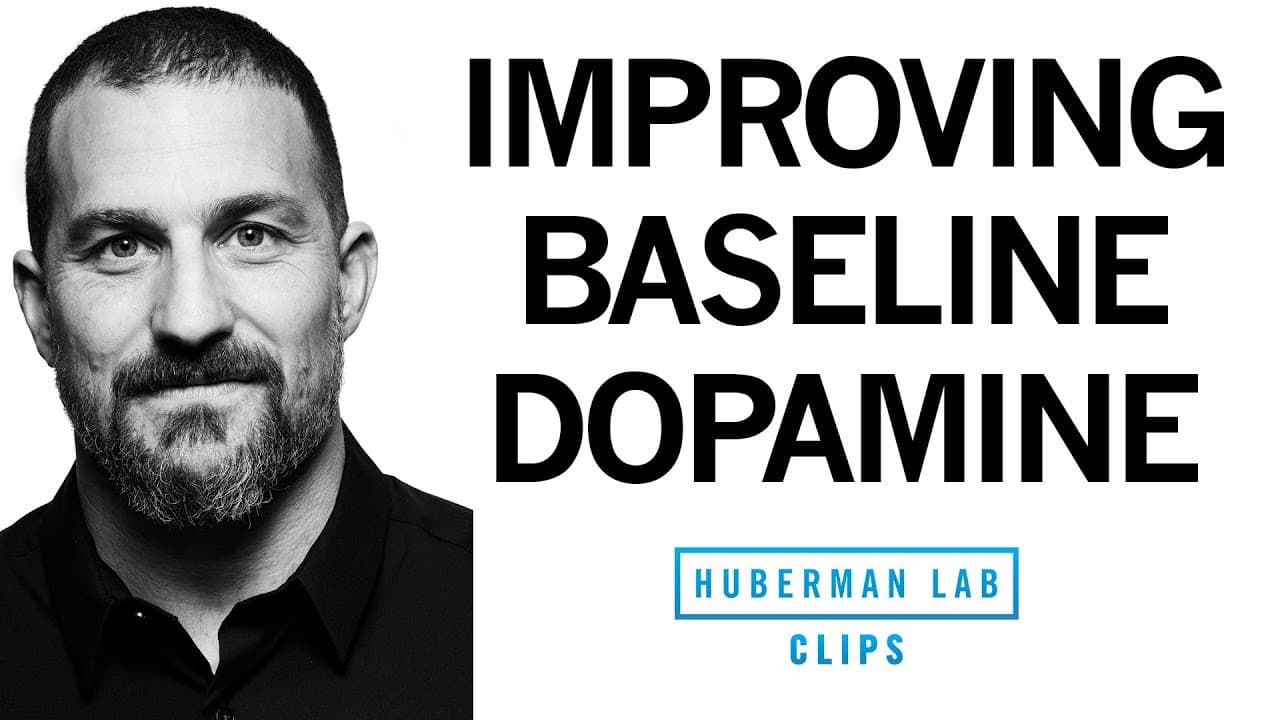
How to Raise Baseline Dopamine for Motivation
TL;DR
Support baseline dopamine with sufficient quality sleep, non-sleep deep rest, proper nutrition, early daylight exposure, and regular exercise. These practices replenish or maintain the dopamine reserves needed for motivation, alertness, mood, and goal pursuit, although baseline levels also vary with genetics and circumstances and require consistent upkeep.
Transcript
If we are going to feel motivated at all, that is, if we are going to wake up in the morning or have any period of time during our day in which we feel like we are capable of pursuing goals, we are going to have to have a healthy level of baseline dopamine. In other words, we are going to have to have enough dopamine in the wave pool, enough water ... Read More
Key Insights
- A healthy baseline dopamine level is necessary for feeling capable of pursuing goals. The transcript compares baseline reserves to water in a wave pool, because sufficient dopamine must already be available before the nervous system can generate meaningful peaks, troughs, motivation, and goal-directed behavior.
- Quality sleep restores dopamine reserves and supports a baseline level that makes meaningful consideration of goals possible. Sleep is presented as a foundational practice that must be replenished regularly, not as an optional tactic reserved for periods when motivation has already declined.
- Non-sleep deep rest is a guided relaxation practice involving elements such as a body scan and long-exhale breathing. The transcript distinguishes it from traditional focusing meditation and says NSDR or similar yoga nidra practices can increase dopamine reserves by up to 65 percent.
- Proper nutrition provides nutrients needed to maintain baseline dopamine, particularly the amino acid tyrosine used in dopamine synthesis. The transcript identifies Parmesan cheese, certain meats, nuts, and vegetables as food categories containing varying tyrosine levels, without prescribing one specific diet.
- Morning sunlight initiates biological signals linked to dopamine, alertness, elevated mood, and wellbeing throughout the day. The suggested minimum exposure is 5–10 minutes on clear days, 10–20 minutes on cloudy days, and 20–30 minutes under very overcast conditions.
- Safe sunlight viewing means going without sunglasses while avoiding direct staring at the sun or damaging the eyes. The transcript recommends facing eastward and looking slightly away from the sun, with particular emphasis on getting sufficient exposure when cloud cover reduces available morning light.
- Regular movement helps elevate and maintain baseline dopamine, not merely produce temporary exercise euphoria. The recommended pattern is a mixture of cardiovascular and resistance exercise at least five days a week if daily activity is not practical, with consistency emphasized over isolated personal records.
- Baseline dopamine varies because of genetics and life circumstances, which may partly explain differences in energy, motivation, and activation energy between people. Despite those differences, everyone is encouraged to maintain sleep, nutrition, sunlight exposure, rest, and movement as regularly as circumstances permit.
Install to Summarize YouTube Videos and Get Transcripts
Explore YouTube Video Summarizer or Get YouTube Transcript Extractor
Questions & Answers
Q: How can I raise baseline dopamine for motivation?
Baseline dopamine can be supported through sufficient quality sleep, non-sleep deep rest, proper nutrition, morning sunlight, and regular exercise. Sleep restores dopamine reserves, NSDR can increase those reserves, tyrosine-containing foods provide material needed for dopamine synthesis, early light initiates dopamine-related signals, and consistent cardiovascular and resistance exercise helps maintain an elevated baseline for motivated goal pursuit.
Q: Why is quality sleep important for baseline dopamine?
Quality sleep literally restores dopamine reserves according to the transcript. Those reserves establish the baseline needed before a person can meaningfully consider goals, generate motivation, or pursue desired outcomes. Because sleep must be renewed regularly, it is treated as a daily foundation for dopamine rather than a one-time intervention used only after energy and drive have fallen.
Q: What is non-sleep deep rest, and how does it affect dopamine?
Non-sleep deep rest, or NSDR, is a relaxation practice similar to yoga nidra that can include lying down, scanning the body, and using long-exhale breathing. The transcript says these practices have been shown to increase dopamine reserves by up to 65 percent. Ten-minute, 20-minute, and 30-minute guided versions are described as available on YouTube.
Q: Does traditional meditation increase dopamine reserves?
Traditional meditation is described as a focusing exercise, and the transcript says there is very little evidence that it increases dopamine levels. Non-sleep deep rest is presented differently because it uses deep relaxation, body scanning, and long-exhale breathing rather than sustained focus. NSDR, which resembles yoga nidra, is the practice specifically associated with increasing dopamine reserves in the discussion.
Q: How does nutrition support baseline dopamine?
Nutrition supports baseline dopamine by providing nutrients required for dopamine synthesis, particularly the amino acid tyrosine. Tyrosine occurs at different levels across foods, including Parmesan cheese, certain meats, nuts, and vegetables. The transcript does not prescribe a specific meal plan, but it emphasizes that adequate nutrition is necessary for maintaining sufficient dopamine reserves and baseline levels.
Q: How much morning sunlight should I get for dopamine support?
The suggested minimum is 5–10 minutes of early sunlight on a clear day, 10–20 minutes on a cloudy day, and 20–30 minutes on a very overcast day. The transcript recommends viewing sunlight as early as possible, without sunglasses, while never staring directly at the sun. Facing east and looking slightly away from the sun are advised.
Q: Why does morning sunlight help motivation and mood?
Morning sunlight activates light-sensitive cells in the eyes that signal the hypothalamus and interact with the pituitary and other endocrine organs. According to the transcript, this sets a dopamine-related cascade of neuromodulators and hormones in motion, supporting alertness, elevated mood, and wellbeing throughout the day. It also raises cortisol early, when higher cortisol is considered desirable, and supports nighttime sleep.
Q: What type of exercise helps maintain baseline dopamine?
A regular mixture of cardiovascular and resistance exercise helps elevate and maintain baseline dopamine. The transcript suggests exercising at least five days a week if not daily. The benefit is not limited to euphoria during or after a workout. Movement-related brain and body circuits interact with motivational circuits, helping sustain the dopamine baseline needed for goal-directed behavior.
Summary & Key Takeaways
-
A healthy baseline level of dopamine provides the foundation for motivation and meaningful goal pursuit. The transcript compares dopamine reserves to water in a wave pool: sufficient reserves must exist before peaks and troughs can occur. Foundational practices replenish or maintain this baseline and require regular effort rather than special purchases.
-
Quality sleep restores dopamine reserves, while non-sleep deep rest practices resembling yoga nidra can further increase those reserves. Proper nutrition also matters because tyrosine is required for dopamine synthesis and occurs in foods such as Parmesan cheese, meats, nuts, and vegetables. These foundations need attention on a regular basis.
-
Early sunlight exposure supports a dopamine-related cascade associated with alertness, mood, and wellbeing, while also helping nighttime sleep. Regular cardiovascular and resistance exercise can elevate and maintain baseline dopamine beyond any temporary post-workout euphoria. Genetics and circumstances create individual differences, but the same foundations remain important for everyone.
Read in Other Languages (beta)
Share This Summary 📚
Summarize YouTube Videos and Get Video Transcripts with 1-Click
Try YouTube Summary with ChatGPT & Claude or YouTube Transcript Generator
Explore More Summaries from Huberman Lab Clips 📚


Summarize YouTube Videos and Get Video Transcripts with 1-Click
Try YouTube Summary with ChatGPT & Claude or YouTube Transcript Generator