How to recomposition: gain muscle and lose fat?
TL;DR
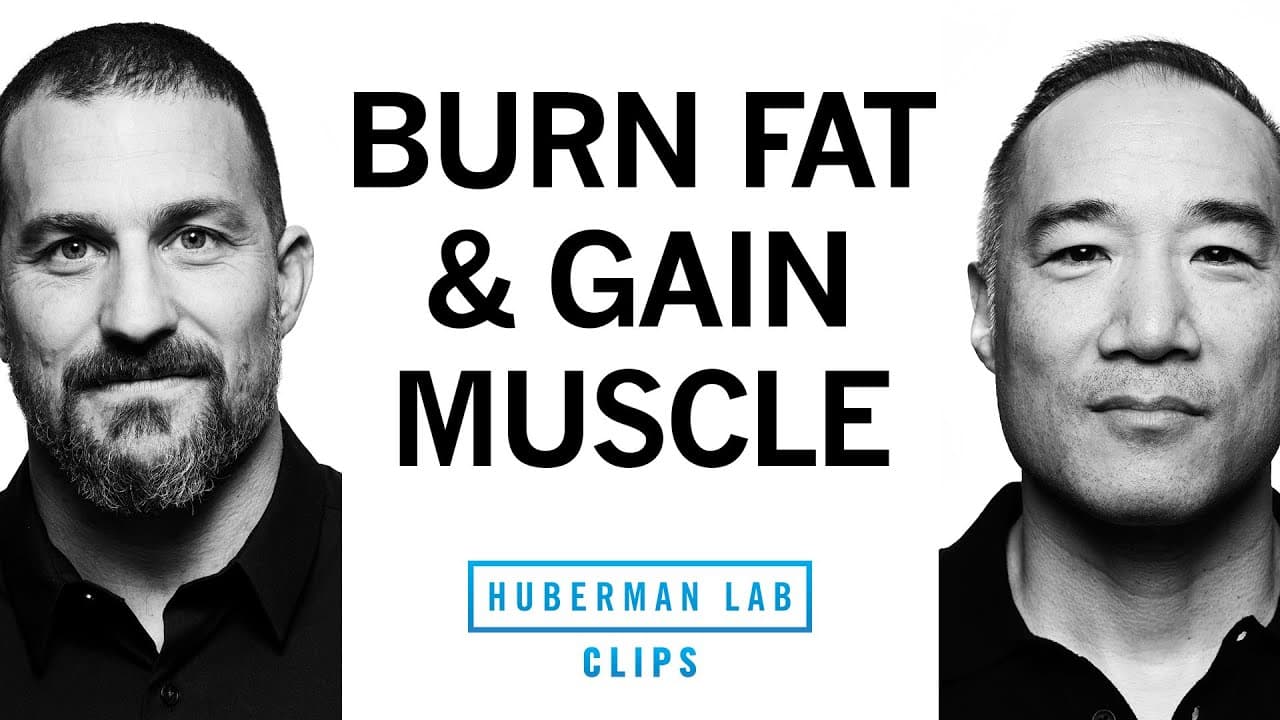
Yes, you can gain lean mass while shedding fat with resistance training and a protein rich intake. Several studies show lean mass gains or fat loss under maintenance or slight surplus calories, especially when protein is high. A modest 10 percent above maintenance and protein at about one to one and a half grams per pound supports recomposition.
Transcript
I'd like to talk a little bit about body recomposition. Um, simple question to start off. Is it possible to quote unquote gain muscle while at the same time losing fat? Yes. Great. That will be reassuring to people. Um, does it require a caloric deficit? This is the weird part. No. No. A and um just super interesting man. Um my my friend and collea... Read More
Key Insights
- Recomposition can occur without a strict caloric deficit.
- High protein intake is consistently linked to recomposition outcomes.
- A modest caloric surplus around 10 percent above maintenance is recommended for recomposition.
- Resistance training 3 to 4 times per week supports muscle gains.
- Adding protein to the diet can occur without necessarily increasing total calories by much.
- Protein may drive increased energy expenditure and affect appetite and intake.
- Metabolic ward studies differ from free living studies in outcomes when protein is overfed without exercise.
- Free living recomposition tends to favor fat loss with high protein and resistance training.
- More videos from this channel:
- More from this channel: Huberman Lab Clips
Install to Summarize YouTube Videos and Get Transcripts
Explore YouTube Video Summarizer or Get YouTube Transcript Extractor
Questions & Answers
Q: What is body recomposition and can it happen without a caloric deficit?
Body recomposition refers to gaining lean mass while losing fat at the same time. According to the discussion, this phenomenon has been observed in multiple studies, including non metabolic ward conditions, where participants trained with resistance exercise and consumed a maintenance or slightly higher caloric intake. The presence of high protein intake appears to support lean mass gains without a necessary caloric deficit, under practical, free living conditions.
Q: How much should calories be above maintenance for recomposition?
The practical guidance from the video suggests keeping the caloric surplus judicious, around 10 percent above maintenance. This typically translates to an extra 200 to 300 calories per day for many individuals. The goal is to provide enough energy to support training and recovery while avoiding excessive fat gain.
Q: What protein intake levels support recomposition?
Protein intake is highlighted as very important for recomposition, with targets mentioned around one to one and a half grams per pound of body weight. In some studies, even higher protein intakes were used, but the emphasis is on maintaining a high protein level while training to drive lean mass gains and support fat loss.
Q: Does adding protein above maintenance affect overall calories?
Yes, adding more protein on top of habitual intake can increase total caloric intake if other macros are not adjusted. However, the discussion notes that some subjects reported adding protein without necessarily tracking or increasing fats and carbohydrates proportionally, which can still lead to favorable body composition changes when combined with resistance training.
Q: What is the role of resistance training in recomposition?
Resistance training is central to recomposition, with sessions described as three to four times per week, including multiple sets and near failure to stimulate muscle growth. They also mention combining cardio in the weekly routine, suggesting that the training stimulus and its quality are critical for achieving simultaneous fat loss and muscle gain.
Q: How does protein affect energy expenditure and appetite?
High protein intake is described as potentially increasing nonexercise energy expenditure and affecting appetite regulation. It can lead to reduced intake of other macronutrients, effectively shifting the diet composition toward protein. This shift may contribute to the overall energy balance that supports recomposition.
Q: What did the metabolic ward study find regarding protein overfeeding?
In a metabolic ward study, escalating protein and caloric intake without exercise led to gains in both lean mass and fat mass. This contrasts with free living recomposition where resistance training and higher protein can favor fat loss or lean mass gain without excessive fat gain, highlighting the importance of context and activity level.
Q: Can recomposition occur if training is done fasted or not?
The discussion notes reassurance that recomposition can occur whether training is done fasted or fed, as long as training quality and volume are maintained. This reflects practical realities where schedules vary, and supports the idea that training timing is flexible while protein intake and training stimulus remain key.
Summary & Key Takeaways
-
Recomposition is possible in free living conditions with resistance training and high protein intake.
-
Protein plays a central role, and adding it on top of habitual intake can drive favorable body composition changes.
-
Calorie distribution should favor quality protein, with training kept consistent to support recomposition.
Read in Other Languages (beta)
Share This Summary 📚
Summarize YouTube Videos and Get Video Transcripts with 1-Click
Try YouTube Summary with ChatGPT & Claude or YouTube Transcript Generator
Explore More Summaries from Huberman Lab Clips 📚




Summarize YouTube Videos and Get Video Transcripts with 1-Click
Try YouTube Summary with ChatGPT & Claude or YouTube Transcript Generator