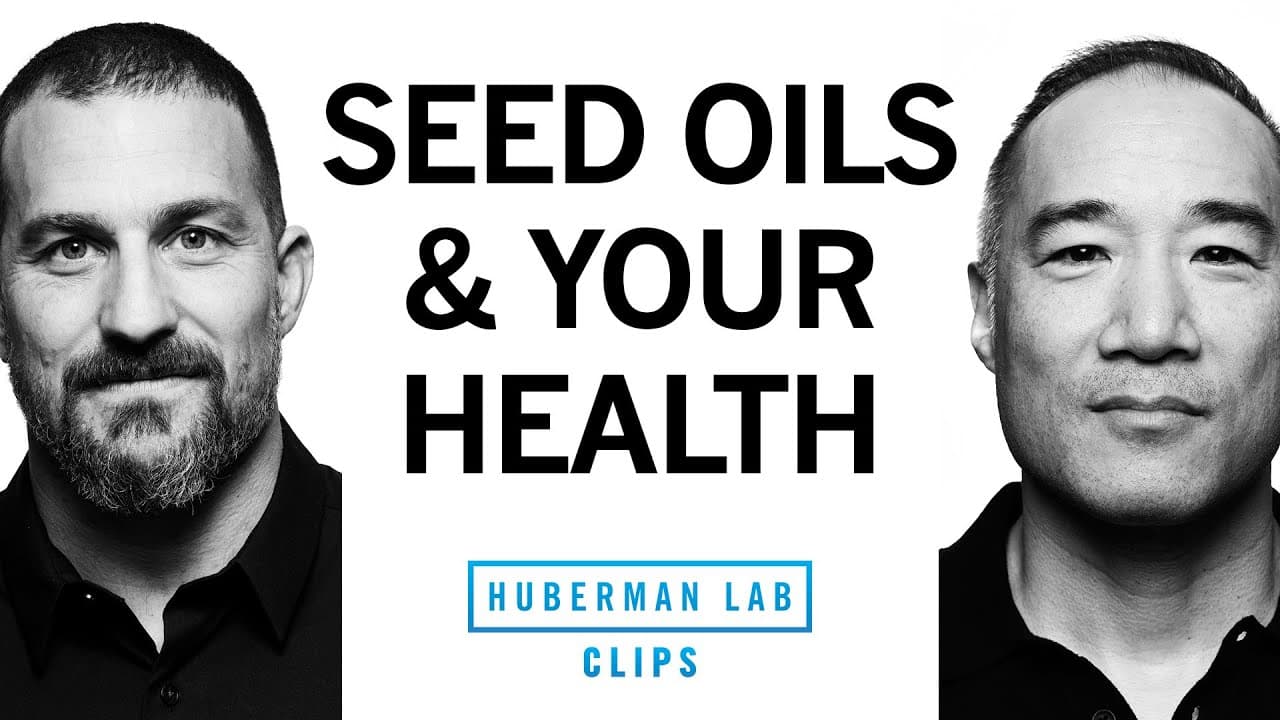
What is the truth about seed oils in diets?
TL;DR
Seed oils are not the villains some claim. Canola oil often lowers LDL and has a higher omega-3 content than other seed oils, while olive oil remains a preferred option for many. The overall diet quality and context matter more than choosing one oil over another.
Transcript
Let's talk about seed oils. The dreaded seed oil debate. Should we fear them or not fear them? Let's assume somebody is going to maintain calories. Like they're not adding seed oils as a source of additional calories above what they would normally be taking in. But let's say they have the choice. They can consume a seed oil like canola oil or soybe... Read More
Key Insights
- Seed oils are not inherently dangerous and should be evaluated in the context of the full diet. They often show favorable or neutral effects versus animal fats in many trials.
- Canola oil contains notable omega-3s and can outperform olive oil for certain blood lipid outcomes, challenging the notion that olive oil is always superior for lipid profiles.
- Study results indicate seed oils generally have positive effects on intermediate and hard endpoints like mortality and heart disease risk compared to some animal fats.
- Processing and extraction methods matter, but hexane levels in seed oils remain within safe thresholds compared to other oils according to discussed literature.
- Dietary patterns matter; seed oils are often consumed with starches and sugars in ways that may promote inflammation if overall diet quality is poor.
- Olive oil remains a preferred oil for many due to taste and perceived quality, but this preference does not imply seed oils are universally harmful.
- The debate risks oversimplification by treating all seed oils as a monolithic group; the evidence supports nuance and individual oil comparisons.
- Economic and accessibility considerations influence fat choice, underscoring that practical dietary choices must balance cost with health recommendations.
Install to Summarize YouTube Videos and Get Transcripts
Explore YouTube Video Summarizer or Get YouTube Transcript Extractor
Questions & Answers
Q: What is the general stance on seed oils versus animal fats according to the discussion?
The speakers argue that seed oils are not inherently bad and that the scientific consensus does not support a blanket vilification of seed oils. When compared to animal fats like butter, beef tallow, and lard, seed oils show fewer adverse health outcomes in many trials. The emphasis is on avoiding oversimplified fear and considering the broader diet context.
Q: Why is canola oil highlighted in the discussion, and how does it compare to olive oil?
Canola oil is highlighted for its unusually high omega-3 fatty acid content among seed oils and its favorable effects on blood lipid profiles, sometimes outperforming olive oil in lowering LDL cholesterol. This challenges the assumption that olive oil is always superior for lipid outcomes, though taste and quality preferences still drive consumer choice.
Q: What role do processing methods play in seed oil concerns, according to the speakers?
Processing methods, such as high pressure, high temperature refinement, are cited as a source of concern for some critics. The discussion notes that while processing can influence oil quality, the literature still shows overall positive outcomes for seed oils in various health measures. The hexane extraction discussion is mentioned as well, with safe threshold levels noted.
Q: What factors beyond the oil type does the discussion say influence health outcomes?
Health outcomes depend on what the seed oils are consumed with, such as starches and added sugars, and the overall quality of the diet. The speakers emphasize that people who choose high quality fats often pair them with better dietary choices, whereas those consuming lower quality diets may experience negative effects regardless of oil type.
Q: How do the speakers describe the current scientific consensus on seed oils?
The speakers state that the scientific consensus does not support the extreme seed oil scare. They note that the literature shows positive or neutral effects for seed oils in many trials and that some fringe views stem from ideological positions rather than robust evidence. They advocate for nuanced interpretation of data.
Q: What practical considerations do they raise for people trying to choose oils on a budget?
They acknowledge that cost matters for families and that affordable fats may still fit within a healthy diet. The practical takeaway is to balance cost with quality and to avoid overly restricting oil choices based on fear, focusing instead on overall dietary patterns and sourcing where possible.
Q: How do the speakers relate seed oil debates to broader dietary patterns?
They compare seed oil debates to other nutrition debates, arguing that people tend to oversimplify by treating seed oils as monolithic. The discussion encourages looking at the whole diet, including nutrient balance and lifestyle factors, rather than fixating on a single food component.
Q: What is the stance on hexane and seed oil extraction in relation to safety?
The discussion mentions hexane use in extraction but notes that reported hexane levels in seed oils are well below established safe thresholds. This point is used to argue that concerns about processing should be weighed against overall evidence and not be the sole basis for fearing seed oils.
Summary & Key Takeaways
-
Seed oils are not inherently harmful and evidence shows favorable outcomes on hard and soft endpoints compared to some animal fats, though context matters.
-
The literature highlights canola oil as having favorable effects on blood lipids, partly due to its omega-3 content, challenging the idea that all seed oils are bad.
-
A practical view emphasizes focusing on overall diet quality, food sources, and cost considerations rather than demonizing seed oils or any single fat source.
Read in Other Languages (beta)
Share This Summary 📚
Summarize YouTube Videos and Get Video Transcripts with 1-Click
Try YouTube Summary with ChatGPT & Claude or YouTube Transcript Generator
Explore More Summaries from Huberman Lab Clips 📚
Summarize YouTube Videos and Get Video Transcripts with 1-Click
Try YouTube Summary with ChatGPT & Claude or YouTube Transcript Generator