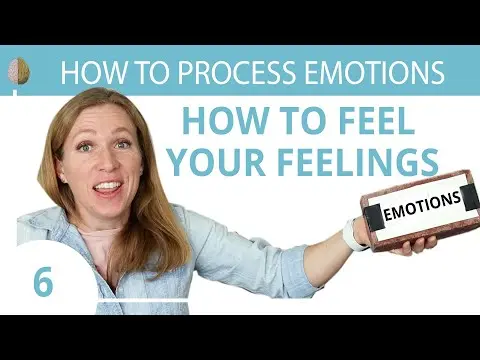
How to Process Emotions for Depression and Anxiety

TL;DR
Emotion processing is taught as a stepwise practice that identifies, names, pauses, explores, and resolves emotions. The course argues that suppression and lack of skills create backlogs, and it offers 30+ skills you can learn to regulate emotions without traditional therapy. It also emphasizes a compassionate approach and practical exercises for everyday life.
Transcript
When it comes to working through intense emotions, most people only have like three skills - things like talk it out or avoid it or try to cope or, you know, my favorite: eat something. Now, these skills might work great in a couple of situations or they might be just fine in the short term, but if these are the only skills that you have, then when... Read More
Key Insights
- Emotion processing is a multi-step practice that starts with noticing and naming emotions before deciding how to respond.
- Backups in emotion processing occur when big feelings arrive faster than our coping tools can handle, leading to overwhelm or avoidance.
- Suppression is a major barrier, often learned in childhood, that makes emotions feel dangerous and hard to manage later.
- Most people lack practical, structured skills to work through grief, guilt, anger, and other tough emotions.
- The central method emphasizes pausing and exploring emotions rather than rushing to solve them.
- Cognitive distortions can distort emotional understanding; identifying and correcting them helps resolve feelings more effectively.
- Regular processing reduces the likelihood of emotional buildup and supports better relationships and health.
- Therapy can teach these skills, but the course asserts you can learn them independently with guided practice.
- More videos from this channel:
- More from this channel: Therapy in a Nutshell
Install to Summarize YouTube Videos and Get Transcripts
Explore YouTube Video Summarizer or Get YouTube Transcript Extractor
Questions & Answers
Q: How can I begin processing emotions when they feel overwhelming?
Begin by noticing and naming what you feel, then pause to avoid immediate reactions. Explore the emotion to understand its function and what information it may carry about needs or boundaries. Use body regulation techniques to calm the nervous system, then decide on a measured action or change in plans.
Q: What role does naming emotions play in processing?
Naming emotions helps reduce their power and clarifies what you are really feeling. It creates a map you can work with, allowing you to identify what is driving the reaction and what kind of support or adjustment might be needed. This step is foundational for any further processing.
Q: Why is suppression problematic when dealing with strong feelings?
Suppression teaches the mind that emotions are dangerous, which leads to avoidance and larger backlogs. Over time unaddressed feelings can trigger unhealthy coping strategies. Processing them openly, in a controlled way, reduces the risk of crises and supports ongoing emotional regulation.
Q: How many skills does the course claim to teach?
The course promises to teach over 30 emotion processing skills, designed to replicate the benefits of a year of therapy. These skills cover recognizing, naming, calming, breaking down feelings, challenging distortions, and choosing effective actions, all aimed at sustainable emotional health.
Q: What makes emotion processing different from simply talking about feelings?
Emotion processing involves actionable steps that move beyond discussion. It includes checking in with the emotion, pausing, exploring its purpose, breaking it into smaller parts, correcting distorted thinking, and applying body-based calm strategies before acting. This approach aims at resolution, not just venting.
Q: How does stress affect our ability to process emotions?
Stress activates the body’s fight or flight response, which can blunt thinking and hinder problem solving. The course recommends first achieving a calm body and mind, then engaging in structured processing steps to reduce the impact of stress on emotional regulation.
Q: What is the analogy used to explain emotion processing, and what does it illustrate?
The video compares emotion processing to a seafood processing factory. Trucks of emotional input must be checked, unloaded, portioned, and packaged for use. When emotions backlog, the process stalls and the system degrades; timely processing keeps life functioning smoothly and relationships healthy.
Q: Can these skills be learned without therapy?
Yes, the course is designed to teach emotion processing skills outside of traditional therapy. While therapy offers personalized guidance, the program provides structured, practical tools that learners can apply on their own to regulate emotions, reduce distress, and improve overall wellbeing.
Summary & Key Takeaways
-
This introduction explains emotion processing as a concrete, teachable system for handling powerful feelings. It uses the factory analogy to illustrate how emotions can back up if not processed, and it emphasizes naming, pausing, exploring, and choosing actions as core steps. The course promises to teach skills learned in therapy.
-
The material highlights common barriers to processing emotions, including suppression, lack of skills, and stress. It argues these obstacles can be overcome with structured practice, cognitive checking, and body regulation, enabling more stable functioning and healthier relationships over time.
-
The course positions itself as an accessible, non-therapeutic pathway to resilience, offering 30 plus skills to address anxiety, depression, and intense emotions. It frames emotional work as essential for well being and long-term life satisfaction through steady, guided practice.
Read in Other Languages (beta)
Share This Summary 📚
Summarize YouTube Videos and Get Video Transcripts with 1-Click
Try YouTube Summary with ChatGPT & Claude or YouTube Transcript Generator
Explore More Summaries from Therapy in a Nutshell 📚
Summarize YouTube Videos and Get Video Transcripts with 1-Click
Try YouTube Summary with ChatGPT & Claude or YouTube Transcript Generator