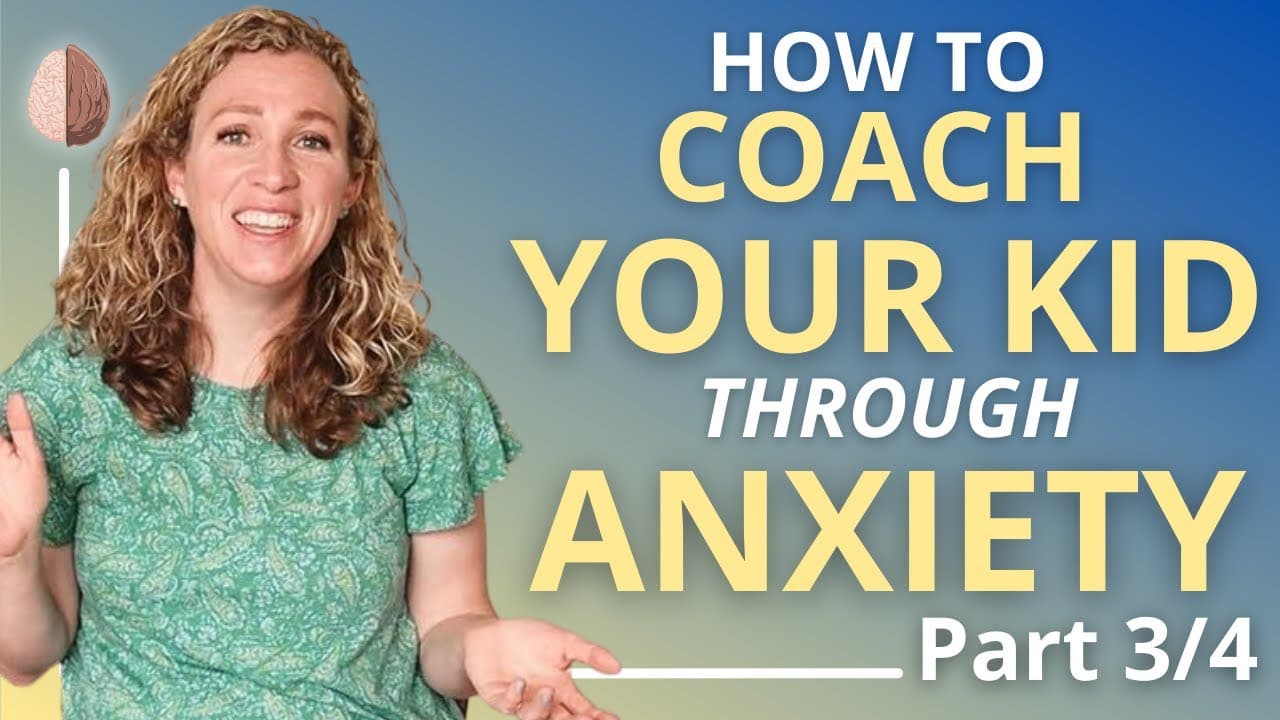
How to coach kids through anxiety with step by step tasks
TL;DR
Coping skills for anxiety are built by breaking tasks into tiny steps, then practicing them with support until the child masters each stage. The method uses four keys: emotional connection, baby steps, practice, and attention during fears, plus a framework called hardening off to strengthen resilience over time.
Transcript
in this video you're going to learn how to teach your kids coping skills for anxiety you'll learn how to coach your child through anxiety help them overcome it we'll talk about the skills to break tasks down into steps that they can accomplish and then feel super proud of themselves as they grow and develop an internal sense of resilience and I... Read More
Key Insights
- Anxiety coaching starts with emotional connection that validates feelings without judgment, creating a secure base for children to learn new skills.
- Accommodations should help a child accomplish tasks rather than escape them, meaning focus on teaching coping strategies rather than removing challenges.
- Learning zone placement is crucial; tasks must be challenging enough to promote growth but not so hard as to overwhelm the child.
- Breaking tasks into tiny, manageable steps is central to building competence and confidence in anxious children.
- Practice and repetition are essential; mastery comes only after repeated exposure and reinforcement of the skill.
- Imaginal exposure and scripted scenarios help children rehearse coping strategies before real life exposure.
- Support during exposure, such as holding a hand or staying nearby, enables progress toward independent task completion.
- The concept of hardening off applies to parenting by gradually increasing environmental challenges to build resilience over time.
- More videos from this channel:
- More from this channel: Therapy in a Nutshell
Install to Summarize YouTube Videos and Get Transcripts
Explore YouTube Video Summarizer or Get YouTube Transcript Extractor
Questions & Answers
Q: A real search query question about the video (e.g. 'How to...', 'What is...', 'Why does...', 'When should...'). Question 1
How can I help a anxious child break down a big fear like tests into small steps and still build resilience rather than avoidance? The video explains that the best accommodations are those that help a child complete the task rather than escape it, by teaching the necessary skills to manage fear and failure. Start with validating feelings, then segment the task into tiny steps, practice each step with repetition, and add supportive elements such as a parent nearby or a calm routine. This approach keeps the child in the Learning Zone, gradually increasing exposure and competence while reducing avoidance behaviors.
Q: Question 2
What is the greenhouse analogy used for teaching kids to face fears and how does it guide parenting strategy? The greenhouse analogy frames emotional safety as warmth and protection while carefully exposing children to manageable challenges. The goal is to foster growth so the child becomes capable outside the protective environment. Caregivers balance safety with gradual wind, cold, and other stressors to strengthen resilience, not shield from all danger. This strategy mirrors how growers harden plants to thrive in the outdoors.
Q: Question 3
What are the four main steps to coaching children through anxiety and how should they be applied sequentially? The four steps are: connect emotionally, break the task into baby steps, help them practice the skill, and give attention when facing fear. Connect emotionally to validate feelings; then design tasks as tiny steps that progressively increase in difficulty. Practice with repetition, using supportive structures, and finally provide ongoing encouragement and attention as the child confronts fears until mastery is achieved.
Q: Question 4
How does the video propose handling test anxiety without simply offering accommodations to avoid tests? It argues that accommodations should empower the child to take tests and manage fear around failure. Focus on teaching test-taking skills, breaking tests into smaller tasks, and practicing under realistic yet supported conditions. The aim is to build competence and confidence so the child can handle challenges independently rather than relying on avoidance strategies.
Q: Question 5
What is imaginal exposure and how can it be used to help a child practice scary tasks like flying on an airplane? Imaginal exposure involves mentally rehearsing a feared scenario with controlled details to desensitize fear. The video suggests scripting and visualization where the child imagines calming themselves, creating space for uncomfortable feelings, and successfully completing the task. This technique is part of an exposure hierarchy that starts with tiny exposures and gradually increases to real-life experiences.
Q: Question 6
Why is it important to keep a child in the Learning Zone and how does this affect resilience development? Staying in the Learning Zone ensures tasks are challenging enough to promote growth but not so hard that they trigger overwhelm or panic. This balance prevents avoidance while keeping the child engaged in skill-building. Over time, repeated exposure in this zone rewires the brain to believe in the child’s capability, reducing future anxiety and increasing resilience.
Q: Question 7
What roles do parents play during exposure to fears to maximize learning and minimize avoidance? Parents provide presence, hands-on support, and safe encouragement during exposure. Techniques include holding a hand during first attempts, sitting nearby while the child practices, or gradually removing supports as the child gains competence. This scaffolding helps the child feel secure while learning to handle fear-inducing tasks independently.
Q: Question 8
How can you practically apply the four keys to everyday parenting to support a child with anxiety? Begin with validating feelings while avoiding judgment, then break tasks into tiny steps and practice them with repetition. Maintain consistent attention when the child faces fears, and introduce incremental challenges to build resilience. Using these steps repeatedly creates a pattern of growth that strengthens the child’s coping skills over time.
Summary & Key Takeaways
-
The video explains a greenhouse analogy to describe emotional safety and gradual exposure, showing how controlled challenges build resilience rather than shielding children from every fear. It emphasizes not shaming feelings and validates anxiety while guiding actions.
-
Four main coaching steps are outlined: connect emotionally, break tasks into tiny steps, practice the skill, and give plenty of attention when facing fears, with an emphasis on gradual exposure and support.
-
Practical strategies include using imaginal exposure, role play, modeling, and reduced task duration to slowly increase a child’s tolerance and competence in real life situations.
Read in Other Languages (beta)
Share This Summary 📚
Summarize YouTube Videos and Get Video Transcripts with 1-Click
Try YouTube Summary with ChatGPT & Claude or YouTube Transcript Generator
Explore More Summaries from Therapy in a Nutshell 📚




Summarize YouTube Videos and Get Video Transcripts with 1-Click
Try YouTube Summary with ChatGPT & Claude or YouTube Transcript Generator