How to boost mental health with free phone apps
TL;DR
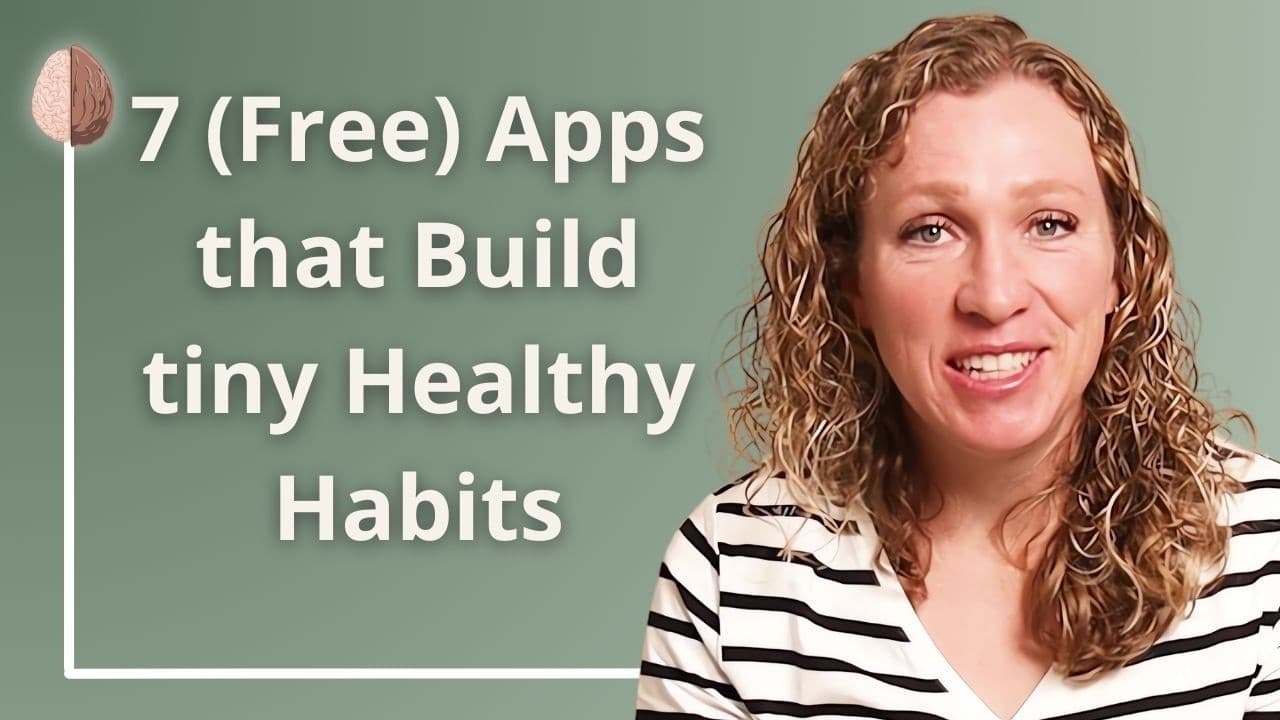
Free apps can support small, practical habits that improve mental health. Use habit trackers to choose tiny goals, reminders to reduce mental load, notes for brain dumps, and journaling apps to preserve positive moments. Mindfulness bells and cycle tracking help with awareness and mood fluctuations, building lasting routines.
Transcript
Okay. Everyone knows that smartphones and social media can be bad for mental health but phones are a tool and if we use them well, they can also be really beneficial for mental health. So let me share with you how I use mostly free apps on my phone to build healthy, tiny little habits to help maintain and improve my mental health. Okay. So, most... Read More
Key Insights
- Habit trackers turn goals into observable routines, making progress toward small behavioral changes measurable and repeatable.
- Reminders reduce the mental load by scheduling tasks like checking in with loved ones or taking medications, enabling consistency without relying on memory.
- Notes serve as a quick space for brain dumps, reducing overwhelm and providing a place to store thoughts when upset or anxious.
- Day One offers a structured journaling option to capture daily moments and memories, reinforcing a gratitude or mood review practice.
- Mindfulness tools like Lotus Bud or Mindfulness Bell create gentle cues to pause, breathe, and check in with the body, aiding nervous system regulation.
- Cycle tracking helps identify hormonal influences on mood and thoughts, offering practical context for emotional fluctuations.
- Therapy in a Nutshell provides free courses on grounding and panic management, expanding access to evidence based strategies.
- The video promotes environment management on phones by removing distractions and keeping notifications minimal to support mental health goals.
- More videos from this channel:
- More from this channel: Therapy in a Nutshell
Install to Summarize YouTube Videos and Get Transcripts
Explore YouTube Video Summarizer or Get YouTube Transcript Extractor
Questions & Answers
Q: How can I start using free apps to improve mental health today?
Begin with a small, practical goal and pick a habit tracker to schedule a daily action toward that goal. Add reminders for key check ins with friends or family, and use Notes for a quick brain dump when stressed. Pair journaling in Day One with a brief daily reflection to reinforce positive moments and track mood over time. This combination creates a simple, repeatable system that reduces cognitive load and builds momentum.
Q: What role do reminders play in maintaining mental health habits?
Reminders act as external prompts that reduce reliance on memory for maintaining healthy routines. By scheduling recurring tasks like checking in with a loved one or taking medications, reminders keep small practices consistent, which over time compounds into steadier mood and better stress management. They free cognitive resources for coping and problem solving during the day.
Q: Why is Notes recommended for dealing with anxiety or overwhelm?
Notes provides a quick outlet to capture thoughts during moments of anxiety or overwhelm, which helps reduce rumination and frees cognitive space. Using voice to text during a rush of thoughts allows you to externalize internal chatter, creating a readable record you can revisit to process emotions, plan actions, or simply acknowledge feelings without judgment.
Q: How does Day One support emotional well being beyond journaling?
Day One extends journaling by enabling a focus on gratitude, mood tracking, and memory preservation. You can collect daily entries with prompts or photos, creating a personal archive that highlights positive moments and growth over time. The ability to print yearly journals also provides a tangible reminder of progress and resilience.
Q: What is the benefit of using mindfulness apps like Lotus Bud or Mindfulness Bell?
Mindfulness apps provide gentle, regular cues to pause, breathe, and check in with the body, which helps calm the nervous system and reduce automatic stress responses. They support body awareness, reduce cognitive distortions, and promote a calmer baseline by triggering small, consistent mindful moments throughout the day.
Q: How can cycle tracking influence mood management?
Cycle tracking offers insight into how hormonal fluctuations relate to mood and cognition. By understanding when PMS or other hormonal changes are approaching, you can prepare strategies for self care, plan lightening workloads, and adjust expectations, which can reduce mood swings and improve emotional regulation during sensitive periods.
Q: What value does the Therapy in a Nutshell app add for free courses?
The Therapy in a Nutshell app provides access to free courses on grounding skills for stress and anxiety management, plus a course on stopping panic attacks. These structured, evidence informed resources help users learn practical techniques to regulate the nervous system, recognize survival patterns, and practice skills that reduce anxiety in daily life.
Q: How can I keep my phone a support tool rather than a distraction?
Limit the apps on your home screen to those that support your health goals, and suppress notifications that pull you into distractions. By removing or hiding addictive apps and turning off non essential alerts, your phone becomes a crafted environment that reinforces positive routines and protects attention for mental health work.
Summary & Key Takeaways
-
Summary point 1: The video demonstrates using free apps to build simple daily habits that support mental health, emphasizing that small, consistent actions can compound into meaningful well being over time. It highlights systems over resolutions and practical reminders as key tools.
-
Summary point 2: It covers a set of specific apps for different purposes: habit tracking, reminders, notes, journaling, mindfulness, and cycle tracking, showing how each supports emotional regulation, memory offloading, and self-reflection.
-
Summary point 3: The person sharing stresses environment and intentional use of technology, avoiding distractions, and using tools that protect attention while promoting positive routines, with examples like turning off notifications and focusing on helpful apps.
Read in Other Languages (beta)
Share This Summary 📚
Summarize YouTube Videos and Get Video Transcripts with 1-Click
Try YouTube Summary with ChatGPT & Claude or YouTube Transcript Generator
Explore More Summaries from Therapy in a Nutshell 📚




Summarize YouTube Videos and Get Video Transcripts with 1-Click
Try YouTube Summary with ChatGPT & Claude or YouTube Transcript Generator