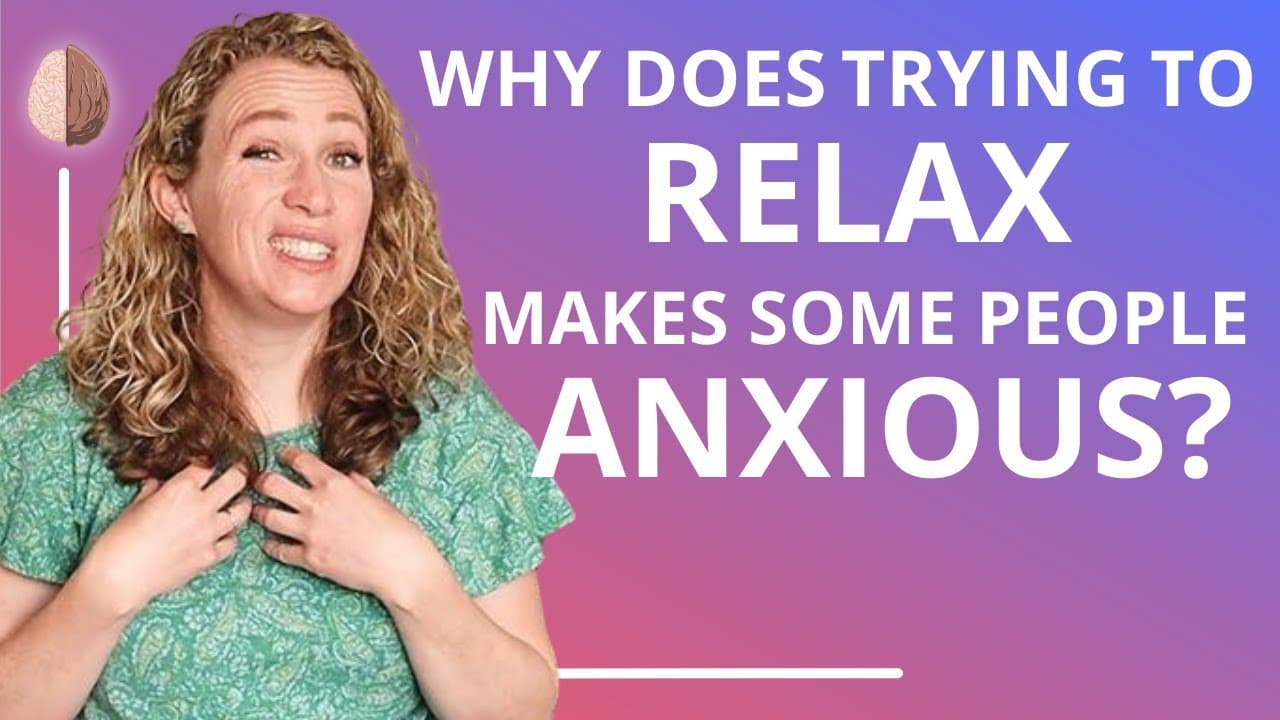
Why Does Relaxing Trigger Anxiety and How to Cope?
TL;DR
Relaxing can trigger anxiety due to trauma, hyper vigilance, and protective routines that resist letting go. To cope, create space for difficult feelings, practice non striving while observing thoughts, address underlying worries or problems, and gradually reframe relief as safe rather than threatening.
Transcript
does trying to relax or meditate make you anxious like isn't it supposed to make you feel calm so I recently got this email asking about this common problem the person said hi I've just been trying out your relaxation techniques on the grounding course which I'm finding extremely useful but during progressive muscle relaxation I started crying ... Read More
Key Insights
- Trauma can keep the nervous system in a defensive state even during relaxation.
- Relaxation may feel unsafe due to chronic hyper vigilance and past experiences.
- Contrast avoidance leads people to fear big positive emotions that come with rest.
- Guilt toward relaxation often stems from cultural and family beliefs about productivity.
- A scarcity mindset can make quiet moments feel dangerous or expensive.
- Being busy can be more comfortable than resting for some, making relaxation feel odd.
- Mindfulness is a skill that requires non-striving and observation, not forcing change.
- ADHD or executive function differences can make slow relaxation harder but are manageable with practice.
- More videos from this channel:
- More from this channel: Therapy in a Nutshell
Install to Summarize YouTube Videos and Get Transcripts
Explore YouTube Video Summarizer or Get YouTube Transcript Extractor
Questions & Answers
Q: How can trauma influence how you feel when you try to relax?
Trauma can keep the nervous system in a constant state of readiness, activating fight, flight, or freeze responses. Even when the environment is safe, this defense mechanism may cause muscles to tense and anxiety to rise during relaxation or meditation. Understanding that this is a protective pattern helps in approaching relaxation with gentle curiosity and time, rather than forcing immediate calm.
Q: What is contrast avoidance and how does it relate to relaxation?
Contrast avoidance is the tendency to fear intense negative emotions, so people worry or stay anxious to prevent a bigger emotional spike. When attempting to relax, this pattern can undermine feelings of calm because the mind expects discomfort and may resist letting go. Recognizing this belief allows for gradual exposure to softer, safer emotional states over time.
Q: Why might someone feel guilty when they try to relax, and what can help?
Guilt around relaxing often comes from cultural or family messages that productivity is inherently valuable and rest is selfish. This internal rule can make rest feel like a moral failure. Reframing relaxation as essential self care and slowly practicing short, structured rest can reduce guilt while reinforcing that calm is compatible with responsibility.
Q: How does a scarcity mindset affect relaxation, and what steps help?
A scarcity mindset makes people fear that there is never enough time or safety, so resting can feel risky. To counter this, identify true fears, clarify what you want from life, and visualize safety and self acceptance during rest. Implementing small, regular rest periods can recondition the mind to see calm as achievable and safe.
Q: What role does guilt play in the reluctance to relax, and how can you address it?
Guilt arises when rest is equated with laziness or betrayal of duties. Addressing this involves questioning the beliefs that tie identity to constant activity, and practicing self compassion through gradual exposure to calm states. Journaling about fears and seeking supportive guidance can help dissolve the guilt over time.
Q: How can being busy be comfortable for some people, and how to change this?
For some, constant activity is a familiar baseline that feels safer than the unknown of rest. Changing this requires deliberate exposure to relaxation, accepting initial discomfort, and building a new norm that rest is acceptable. Regular practice helps the nervous system reframe rest as a positive and safe experience.
Q: Can ADHD or executive function differences affect relaxation, and what helps?
ADHD and other executive function differences can make sustaining attention during slow activities challenging. Recognizing neurodiversity is important, and relaxation can still be beneficial with adapted approaches. Practice mindfulness with shorter, frequent sessions, use external cues, and gradually extend practice as focus improves.
Q: What is a practical first step if relaxation triggers anxiety due to a problem you’re avoiding?
If relaxation triggers anxiety because of an unresolved problem, shift focus from meditation to concrete action. Sit down, review the problem, create a simple plan, and take one small step toward resolution. This reduces the sense of overwhelm and can make subsequent relaxation feel safer and more effective.
Summary & Key Takeaways
-
Relaxation can provoke anxiety because past trauma keeps the body in a guarded state and can make relaxation feel unsafe. The body may respond with a fight, flight, or freeze reaction even when there is no external threat. Understanding this helps reframe relaxation as a controlled, safe practice.
-
Guilt, scarcity mindset, and fear of being unworthy can make relaxing feel like a betrayal to self or others. Challenging these beliefs with curiosity and gradual exposure to calm states helps reduce guilt while increasing tolerance for slow, mindful moments.
-
Neural and emotional patterns that crave constant busyness may resist relaxation. Repeated exposure to calm states, along with practical steps like addressing underlying problems, can retrain the nervous system to accept rest as normal and safe.
Read in Other Languages (beta)
Share This Summary 📚
Summarize YouTube Videos and Get Video Transcripts with 1-Click
Try YouTube Summary with ChatGPT & Claude or YouTube Transcript Generator
Explore More Summaries from Therapy in a Nutshell 📚

Summarize YouTube Videos and Get Video Transcripts with 1-Click
Try YouTube Summary with ChatGPT & Claude or YouTube Transcript Generator