How to Turn Obstacles Into Strength With Stoicism
TL;DR
Treat obstacles as material for growth by asking how each difficulty can develop patience, discipline, clarity, or grit. Stoicism does not require seeking pain or pretending setbacks are fair; it calls for accepting what has happened, confronting necessary discomfort, and choosing purposeful action instead of panic, avoidance, or paralysis.
Transcript
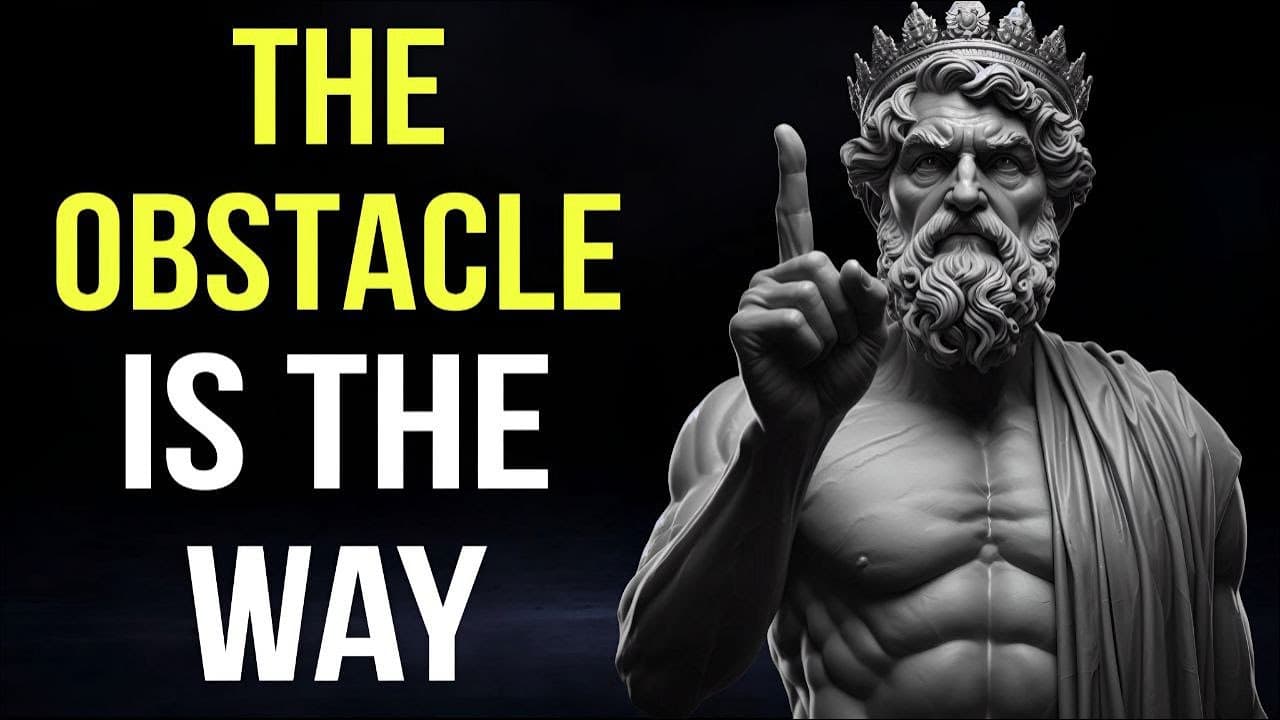
Most people see an obstacle and stop. They freeze, complain, retreat, or look for a shortcut. But the Stoic does something radically different. He walks forward, not because it's easy, not because he enjoys the pain, but because he understands a truth most people spend their lives avoiding. The obstacle is the way. This idea is not just poetic, it'... Read More
Key Insights
- Obstacles are part of the journey because they demand adaptation when plans, expectations, or preferred outcomes collapse. A delay, rejection, or mistake can become the material through which a person learns patience, develops grit, and discovers a clearer direction.
- The obstacle becomes useful when a person asks how it can be used rather than merely wishing it away. This question restores a sense of control because even an immovable difficulty can still teach discipline, reveal priorities, or reshape perspective.
- Real strength develops under pressure because adversity forces people to rewrite plans, remain calm amid uncertainty, and act when paralysis feels safer. Easy conditions do not demand the same examination of character or expose the same capacity to rebuild.
- Pain is not inherently good or necessarily fair, but it can reveal strength and shape perspective. The Stoic approach does not justify suffering or pursue it for its own sake. It seeks a meaningful response to hardship that has already arrived.
- Resistance is an opportunity for refinement because discomfort often accompanies learning, effort, and personal change. Frustration and stalled progress can invite deeper examination of the skills, habits, discipline, or mindset that the challenge requires.
- Avoidance offers temporary relief but increases the long-term cost because postponed fear and unlearned lessons remain unresolved. Facing a hard truth, difficult conversation, grief, or weakness allows the experience to run its course and create change.
- Clarity can emerge through action because a person does not need every answer before entering uncertainty. Walking through a challenge with awareness and calm can reveal the next step, while waiting for complete certainty may preserve fear and delay necessary action.
- Inner power comes from becoming capable of moving through difficulty rather than depending on every obstacle to disappear. Peace is cultivated by meeting hardship with open eyes, a steady heart, and intact principles instead of escaping discomfort.
- Related book: The Obstacle Is the Way
- Export your Kindle highlights to Glasp: How to Download Highlights and Notes from Kindle
- More videos about this book:
Install to Summarize YouTube Videos and Get Transcripts
Explore YouTube Video Summarizer or Get YouTube Transcript Extractor
Questions & Answers
Q: How can Stoicism turn obstacles into personal growth?
Stoicism turns obstacles into growth by treating difficulty as material for training rather than evidence that the journey has failed. A person can pause, accept that the setback exists, and ask what it can teach. The obstacle may develop patience, grit, discipline, adaptability, or clearer priorities. Growth comes from choosing purposeful action instead of panic, complaint, retreat, or paralysis.
Q: What does it mean that the obstacle is the way?
The phrase means that a difficulty is not necessarily a detour from the meaningful path. It can become the path itself because responding to it demands the qualities a person needs to develop. When plans break down, the work of adapting, staying calm, and continuing forward creates strength and character that an uninterrupted journey would not have required.
Q: Why does resistance feel like failure during growth?
Resistance feels like failure because growth is often uncomfortable, confusing, and chaotic while it is happening. People may interpret frustration or stalled progress as proof that something is wrong. The Stoic perspective treats that friction as a possible signal of refinement. It encourages examining which skill, habit, discipline, or mindset the struggle is asking a person to build.
Q: How should someone respond when a setback disrupts a plan?
A person should pause rather than panic, acknowledge the setback, and determine what remains within their response. If the original plan no longer works, the task is to rewrite it under pressure without abandoning sound principles. The setback can then be used to practice patience, clarify direction, learn from mistakes, and take the next available action despite uncertainty.
Q: Why is facing hardship better than avoiding it?
Facing hardship allows a necessary experience or lesson to be processed, while avoidance provides only temporary relief. A postponed conversation, grief, weakness, or hard truth remains unresolved and may allow fear to grow. Going through the difficulty means staying present, accepting uncertainty, and trusting that clarity can emerge during the process rather than needing to appear beforehand.
Q: Does Stoicism teach people to seek pain and suffering?
Stoicism does not require chasing obstacles or treating pain as inherently good. The approach described is to refuse defeat when hardship already exists. A setback may be unfair, and pain does not need to be justified. The practical goal is to choose a meaningful response, use what can be learned, and avoid surrendering control of one’s actions to discomfort.
Q: How can asking “How can I use this?” restore control?
Asking how a difficulty can be used redirects attention from wishing the situation away to choosing a response. Even when the obstacle itself cannot be moved, a person can develop patience, build grit, reconsider direction, or discover which outcomes are unnecessary. The question does not excuse pain. It identifies the remaining opportunity for action, learning, and personal change.
Q: How can someone build resilience through resistance?
Resilience develops by repeatedly meeting resistance with deliberate effort instead of retreating whenever discomfort appears. A person can identify what the challenge is refining, continue taking action, and remain steady when progress slows. Like carrying weight repeatedly, this practice strengthens the capacity to handle pressure. The result is greater trust in one’s ability to move through uncertainty and hardship.
Summary & Key Takeaways
-
Stoicism reframes an obstacle as part of the path rather than proof that the journey has ended. Delays, rejection, mistakes, and broken expectations can become training grounds for patience, grit, clearer thinking, and stronger character when a person calmly asks how the difficulty can be used for growth.
-
Resistance often feels like failure because growth is uncomfortable, confusing, and difficult to recognize while it is happening. The Stoic response is to value effort, study discomfort, and continue acting. Repeatedly moving through resistance develops discipline and reveals abilities that would remain hidden on a path defined only by ease.
-
Avoidance provides temporary relief but postpones necessary lessons and allows fear to deepen. Going through hardship means facing grief, uncertainty, weakness, difficult conversations, and uncomfortable truths without numbing or denial. By remaining present and acting according to principles, a person becomes an active participant in personal transformation.
Read in Other Languages (beta)
Share This Summary 📚
Summarize YouTube Videos and Get Video Transcripts with 1-Click
Try YouTube Summary with ChatGPT & Claude or YouTube Transcript Generator
Explore More Summaries from Stoic Saga 📚
Summarize YouTube Videos and Get Video Transcripts with 1-Click
Try YouTube Summary with ChatGPT & Claude or YouTube Transcript Generator