How to Turn Obstacles Into Personal Growth
TL;DR
Treat obstacles as opportunities to practice clear perception, effective action, and persistent will. Separate events from your interpretation, pause before responding, focus on the next useful task, and finish what you start. Consistent effort can turn adversity into growth because outcomes become the byproduct of disciplined execution over time.
Transcript
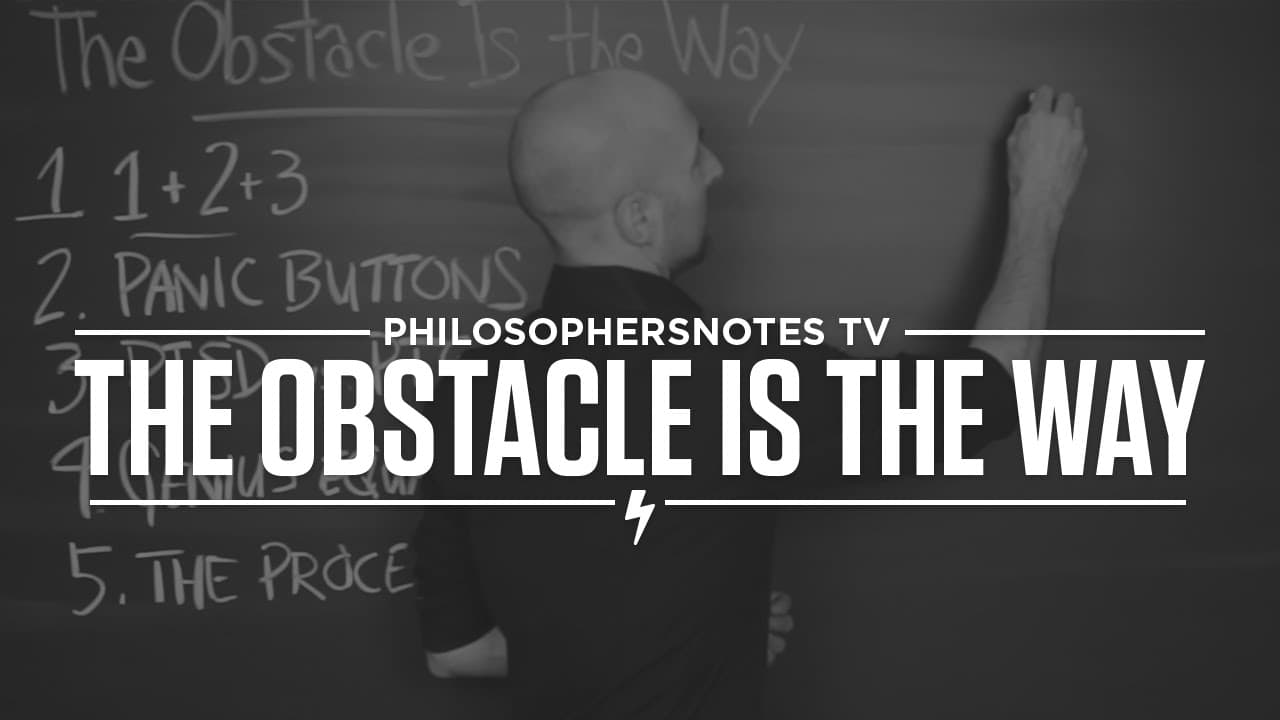
hi this is Brian welcome back to another episode of philosophers notes TV another great one today the obstacle is the way by Ryan holiday who is brilliant this book is really really good he's a smart guy and uh this book is extraordinarily inspiring well written and uh awesome the obstacle is the way we've got five Big Ideas I've got the philosophe... Read More
Key Insights
- Obstacles can become catalysts for growth when they are treated as opportunities to exercise judgment, strength, and effective action. Marcus Aurelius expresses the core principle by arguing that an impediment to action can advance action, so what blocks the path can become the path itself.
- Perception is the starting point for handling adversity because an event and the judgment that it is bad are separate things. Viewing circumstances objectively, without becoming overwhelmed by fear or emotion, supports a more useful emotional state and a more deliberate response.
- Effective action is grounded, bold, humble, and direct rather than merely reactive. It means doing what needs to be done when it needs to be done, whether or not motivation is present, while choosing conduct suited to the actual obstacle.
- Will is the inner capacity to endure circumstances that cannot be changed immediately. It includes accepting life's unpredictability, learning humility, maintaining resolve under overwhelming conditions, and trusting that sustained engagement with difficulty can produce greater strength over time.
- Composure can be trained by controlling perception before panic controls behavior. NASA emphasized not panicking when preparing astronauts for space, and John Glenn's heart rate reportedly remained below 100 beats per minute throughout the day when he became the first American to orbit Earth.
- Post-traumatic growth is presented as an alternative possibility to post-traumatic stress. A severe experience does not guarantee one fixed response because a gap remains between stimulus and response. Pausing and planning within that gap creates room to choose a response oriented toward growth.
- Genius is described as 1 percent inspiration and 99 percent perspiration. The examples of Ulysses S. Grant and Thomas Edison illustrate the importance of repeated effort, failure, and renewed attempts, with breakthroughs emerging from persistence rather than a single flash of insight.
- The process works by directing attention toward the task immediately at hand instead of distant outcomes. Nick Saban's approach emphasizes finishing each repetition, drill, play, and review session. Repeatedly completing small units of work builds discipline, momentum, and reliable execution.
- Related book: The Obstacle Is the Way
- Export your Kindle highlights to Glasp: How to Download Highlights and Notes from Kindle
- More videos about this book:
- More from this channel: Brian Johnson
- More videos with Ryan Holiday:
Install to Summarize YouTube Videos and Get Transcripts
Explore YouTube Video Summarizer or Get YouTube Transcript Extractor
Questions & Answers
Q: How can obstacles become opportunities for personal growth?
Obstacles become opportunities when a person changes how they perceive and respond to difficulty. Instead of assuming that an unwanted event is purely bad, they can view it objectively and ask which strengths the situation allows them to practice. Clear perception supports appropriate action, while persistent will helps them endure what cannot be changed immediately and become stronger through the experience.
Q: What are the three parts of turning obstacles into progress?
The framework consists of perception, action, and will. Perception is the ability to see circumstances objectively and manage the interpretation attached to them. Action means responding with grounded, direct, and effective behavior, even without feeling motivated. Will is the inner endurance required to face uncertainty, accept limits, and continue through challenges that cannot be solved immediately.
Q: How does perception affect the way people experience obstacles?
Perception shapes the meaning and emotional force assigned to an event. Something happening and the conclusion that it is bad are two different things. A fearful interpretation can lead to panic and reactive behavior, while an objective interpretation can reveal an opportunity to use personal strengths. Controlling perception therefore creates better conditions for calm emotions and deliberate action.
Q: How can someone avoid panicking during a difficult situation?
Avoiding panic begins with getting control of perception and seeing the situation as accurately as possible. The transcript uses astronaut training as an example, noting that NASA emphasized not panicking and that John Glenn's heart rate stayed below 100 beats per minute during the day he became the first American to orbit Earth. Calm perception supports a graceful, powerful response.
Q: What is the difference between post-traumatic stress and post-traumatic growth?
Post-traumatic stress describes harmful distress following an adverse experience, while post-traumatic growth describes the possibility of becoming stronger through adversity. The central point is that an event does not mechanically determine a single response. Because a gap exists between stimulus and response, a person can pause, plan, and choose actions that help turn a damaging experience into a source of growth.
Q: Why is the gap between stimulus and response important?
The gap matters because it creates room for choice. When people assume that an event directly causes their reaction, the stimulus and response seem fused together. Pausing reveals that they can assess what happened, manage their perception, and select a better response. Consistently using this space makes deliberate conduct and growth from adverse circumstances more possible.
Q: What does the genius equation say about success?
The genius equation presented here is 1 percent inspiration and 99 percent perspiration. It challenges the belief that exceptional performance mainly results from natural brilliance or a sudden insight. Stories involving Ulysses S. Grant and Thomas Edison emphasize repeated failure, continued effort, and eventual breakthrough. The practical lesson is to value hard work, persistence, and repeated attempts.
Q: How does focusing on the process help overcome obstacles?
Focusing on the process directs attention toward what must be completed now instead of toward a distant championship or other outcome. Nick Saban's approach emphasizes finishing each repetition, drill, play, and review session. In ordinary work, the same principle means completing what one starts. Diligent, patient, persistent execution allows outcomes to become the byproduct of consistent daily action.
Summary & Key Takeaways
-
Ryan Holiday's central framework has three parts: perception, action, and will. Perception means viewing an obstacle objectively instead of automatically labeling it as bad. Action means doing the appropriate work despite discomfort. Will provides the humility, endurance, and inner strength needed when circumstances cannot be changed immediately.
-
A stimulus does not dictate a response because a gap exists between what happens and how a person reacts. Pausing within that gap makes deliberate action possible. The contrast between post-traumatic stress and post-traumatic growth illustrates the broader principle that painful experiences can sometimes become sources of strength rather than permanent defeat.
-
Progress comes from sustained work and attention to the process, not dependence on inspiration or fixation on outcomes. The practical discipline is to finish each repetition, drill, play, review, or work session. Diligent, patient, and persistent execution builds momentum and allows worthwhile results to emerge as a byproduct.
Read in Other Languages (beta)
Share This Summary 📚
Summarize YouTube Videos and Get Video Transcripts with 1-Click
Try YouTube Summary with ChatGPT & Claude or YouTube Transcript Generator
Explore More Summaries from Brian Johnson 📚
Summarize YouTube Videos and Get Video Transcripts with 1-Click
Try YouTube Summary with ChatGPT & Claude or YouTube Transcript Generator