How to Turn Obstacles Into Personal Growth
TL;DR
Treat obstacles as opportunities to strengthen judgment, resilience, and disciplined action. Focus on thoughts, actions, and attitudes within your control, accept what lies beyond your influence, reflect on your responses, and translate clear intentions into consistent daily work. This Stoic approach turns setbacks into practical lessons instead of reasons to surrender.
Transcript
have you ever faced a failure so profound that it left you questioning your path and purpose consider the words of modern stoic philosopher William Irvine the stoics advice is simple we should welcome rather than dread whatever challenges fate May throw at us senica once stated a gem cannot be polished without friction nor a man perfected without t... Read More
Key Insights
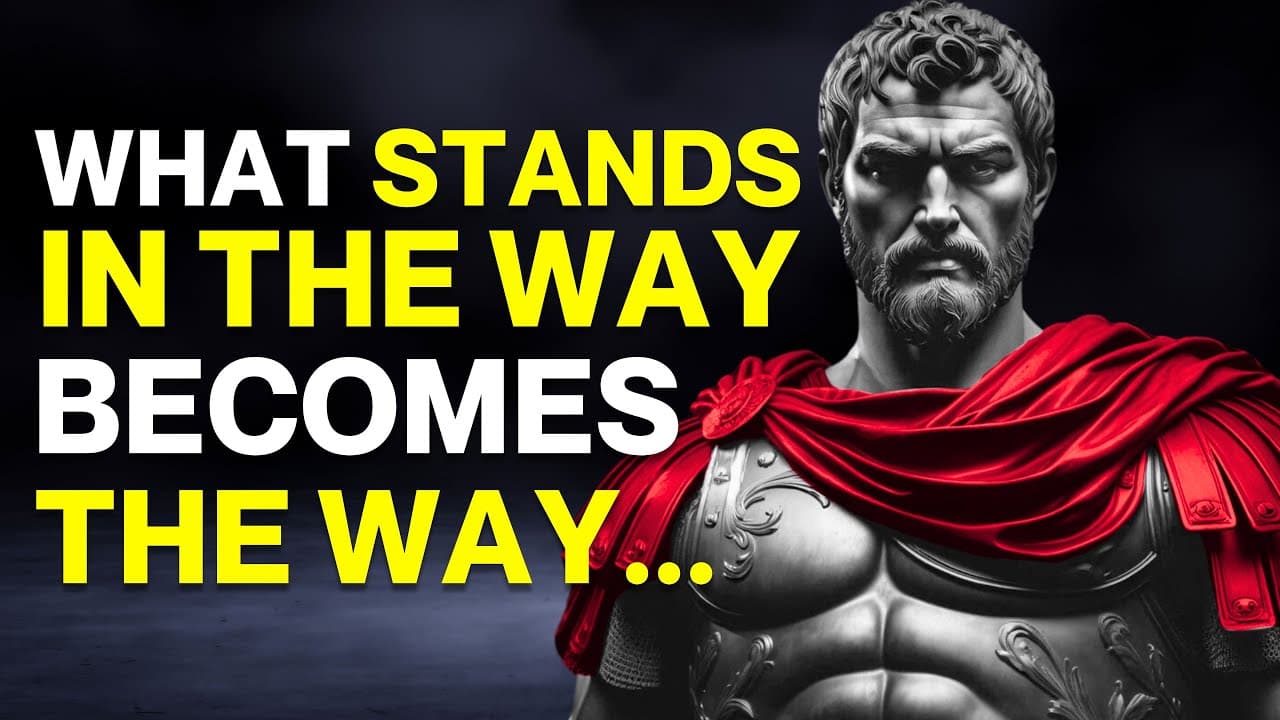
- Obstacles are opportunities for growth because confronting difficulty can refine resilience, judgment, patience, and creativity. Marcus Aurelius's principle that what impedes action can advance action encourages people to treat roadblocks as material for development rather than evidence that progress is impossible.
- Perception shapes the practical meaning of adversity. A failed trade, rejected proposal, or troubled project can produce frustration, but it can also prompt education, better due diligence, emotional control, teamwork, or project-management skills when the person deliberately searches for useful lessons.
- Reframing an obstacle begins with asking what opportunity it presents and writing down three potential benefits. Repeating this exercise trains the mind to look for growth possibilities in difficult circumstances, gradually changing how setbacks are interpreted and handled.
- Acceptance is the recognition of reality without necessarily approving of it. Stoic practice separates controllable thoughts, actions, and attitudes from uncontrollable market conditions, political tensions, weather, unexpected events, and other people's opinions, allowing energy to be directed more effectively.
- Serenity comes from changing one's relationship to uncontrollable events rather than trying to control everything. Identifying one uncontrollable factor each morning, consciously accepting it, and releasing related tension throughout the day can cultivate a calmer and more focused mind.
- The inner citadel is a stable foundation of character and values that external circumstances cannot easily erode. Victor Frankl's example illustrates the central claim that even amid severe suffering, a person retains the freedom to choose an attitude toward existing circumstances.
- Reflective journaling strengthens self-awareness and resilience by examining daily events, reactions, lessons, and alignment with personal values. Spending 15 minutes each evening asking how one acted and how one could respond better helps fortify the mind against future adversity.
- Disciplined action turns intentions into tangible results through clear goals, daily commitments, scheduling, and accountability. Motivation may weaken, but sustained effort remains essential, so the recommended practice is to choose an achievable weekly goal, divide it into daily actions, and track completion.
- Related book: The Obstacle Is the Way
- Export your Kindle highlights to Glasp: How to Download Highlights and Notes from Kindle
- More videos about this book:
Install to Summarize YouTube Videos and Get Transcripts
Explore YouTube Video Summarizer or Get YouTube Transcript Extractor
Questions & Answers
Q: How can obstacles become opportunities for personal growth?
Obstacles become opportunities when they are treated as material for developing stronger qualities rather than as proof of defeat. A setback can reveal weaknesses in patience, preparation, emotional control, teamwork, or judgment. By asking what the difficulty can teach and identifying three possible benefits, a person redirects attention from frustration toward useful action and gradually builds resilience.
Q: What does the Stoic phrase "the obstacle is the way" mean?
The phrase means that difficulty is not merely something standing between a person and progress. Working through the difficulty can itself create progress by demanding adaptation, perseverance, creativity, and better judgment. Marcus Aurelius expresses this principle by saying that an impediment to action can advance action. The challenge therefore becomes part of the path rather than a reason to abandon it.
Q: How should someone respond to a failed stock market trade?
A failed trade can be reframed as an opportunity to study market conditions, improve chart reading, practice patience, and strengthen emotional control. Instead of surrendering to frustration or depression, the person can review the decision, improve due diligence, and examine whether greed or fear of missing out influenced the action. The financial loss then also produces practical lessons for future conduct.
Q: What is within a person's control according to Stoicism?
Stoic practice places thoughts, actions, and attitudes within a person's sphere of control. Conditions such as the economy, market volatility, geopolitical tensions, weather, unexpected events, political ideologies, and other people's opinions lie outside that sphere. Distinguishing between these categories helps a person release unproductive worry and concentrate on purposeful decisions that can actually be influenced.
Q: Does Stoic acceptance mean giving up or approving of everything?
Stoic acceptance does not mean approving of every event, abandoning goals, or refusing to act. It means acknowledging circumstances as part of present reality, especially when they cannot be controlled. This recognition preserves attention and energy for actions that remain possible. Acceptance is therefore presented as an empowering practice that supports calm, focused, and effective engagement with life.
Q: How can someone practice acceptance every day?
Begin each day by identifying one condition that cannot be controlled and consciously acknowledging it. For example, a person cannot control market conditions but can control the reaction to them. Throughout the day, notice tension connected to that uncontrollable factor and deliberately release it. Repeating this practice builds the habit of acceptance and supports a more peaceful, clear, and focused mind.
Q: How can reflective journaling build an inner citadel?
Reflective journaling builds an inner citadel by increasing awareness of thoughts, reactions, values, and behavioral patterns. The suggested practice is to spend 15 minutes each evening reviewing the day's events, recording lessons, and asking whether one's conduct matched personal values. Considering how a response could have been better strengthens self-discipline, wisdom, emotional intelligence, and resilience against future adversity.
Q: How can disciplined action turn intentions into results?
Disciplined action begins with a specific, achievable goal for the coming week. The goal should be divided into daily tasks, placed on a calendar, and tracked for accountability. Someone beginning a writing project, for example, can commit to 500 words each day. Consistently completing purposeful work, even when motivation declines, converts abstract wishes and knowledge into tangible progress.
Summary & Key Takeaways
-
Stoicism presents obstacles as necessary material for growth rather than interruptions to progress. Because perception shapes how challenges affect us, a person can pause, identify possible benefits, and reframe rejection, failure, or loss as a chance to develop patience, creativity, emotional control, knowledge, and stronger judgment.
-
Acceptance begins by separating controllable thoughts, actions, and attitudes from uncontrollable conditions, events, and opinions. Releasing anxiety about what cannot be directed preserves energy for effective decisions. This practice does not require approving of circumstances or becoming passive. It means acknowledging reality while acting purposefully within one's genuine sphere of influence.
-
An inner citadel is built through virtue, self-discipline, reflection, and commitment to personal growth. Evening journaling can examine events, reactions, values, and possible improvements. Clear goals must then be divided into achievable daily actions, scheduled, tracked, and completed consistently, because Stoic knowledge becomes meaningful only when expressed through purposeful conduct.
Read in Other Languages (beta)
Share This Summary 📚
Summarize YouTube Videos and Get Video Transcripts with 1-Click
Try YouTube Summary with ChatGPT & Claude or YouTube Transcript Generator
Explore More Summaries from Stoicism Legends 📚



Summarize YouTube Videos and Get Video Transcripts with 1-Click
Try YouTube Summary with ChatGPT & Claude or YouTube Transcript Generator