How to Turn Obstacles Into Opportunities
TL;DR
Obstacles become useful when you view them objectively, focus on what you can control, and take deliberate action instead of freezing or avoiding the problem. Stoic discipline, present-moment focus, emotional control, and perseverance turn adversity into a source of learning, resilience, and forward momentum.
Transcript
In life, obstacles are inevitable. Whether in our personal relationships, our careers, or our quest for self-improvement, we all encounter challenges that seem insurmountable at first. These obstacles can be anything from external difficulties such as unexpected setbacks or opposition from others to internal struggles like fear, doubt, or confusion... Read More
Key Insights
- Perception is the first tool for handling adversity because the meaning attached to an obstacle shapes the response. Viewing difficulty objectively, without fear or frustration distorting it, reveals opportunities for action and changes the mindset from helplessness to empowerment.
- Control is divided between external events and personal responses. Stoic practice does not promise command over circumstances, but it emphasizes the ability to choose thoughts, decisions, and actions, allowing a person to respond with calm purpose instead of automatic anger or fear.
- Action is the antidote to paralysis because movement restores a sense of control and creates momentum. Even an imperfect or very small step weakens inertia, while procrastination, avoidance, and denial consume energy and can make the original obstacle feel larger.
- Obstacles are potential opportunities because each setback can contain something to learn, adapt to, or change. Engaging fully with difficulty develops abilities that might remain unused when discomfort is continually avoided, including resilience, creativity, and practical problem-solving.
- Discipline is essential for managing thoughts, emotions, and behavior during difficult situations. A steady and rational mind helps a person concentrate on the process of finding solutions instead of wasting attention on anger, fear, frustration, or an uncontrollable outcome.
- Perseverance is a foundation of success because meaningful achievement often follows repeated failure rather than one moment of inspiration. The account of Thomas Edison illustrates the principle that mistakes can become lessons, setbacks can refine an approach, and continued effort can move a goal closer.
- Adversity is a source of mental fortitude because it forces adaptation and encourages the development of new skills. Treating challenges as part of the journey reduces the struggle against discomfort and strengthens the capacity to handle later difficulties with greater wisdom and resilience.
- Present-moment focus improves action because the past cannot be changed and the future cannot be controlled. Concentrating on what can be done now removes some of the emotional weight associated with previous failures and future uncertainty, making an effective response more likely.
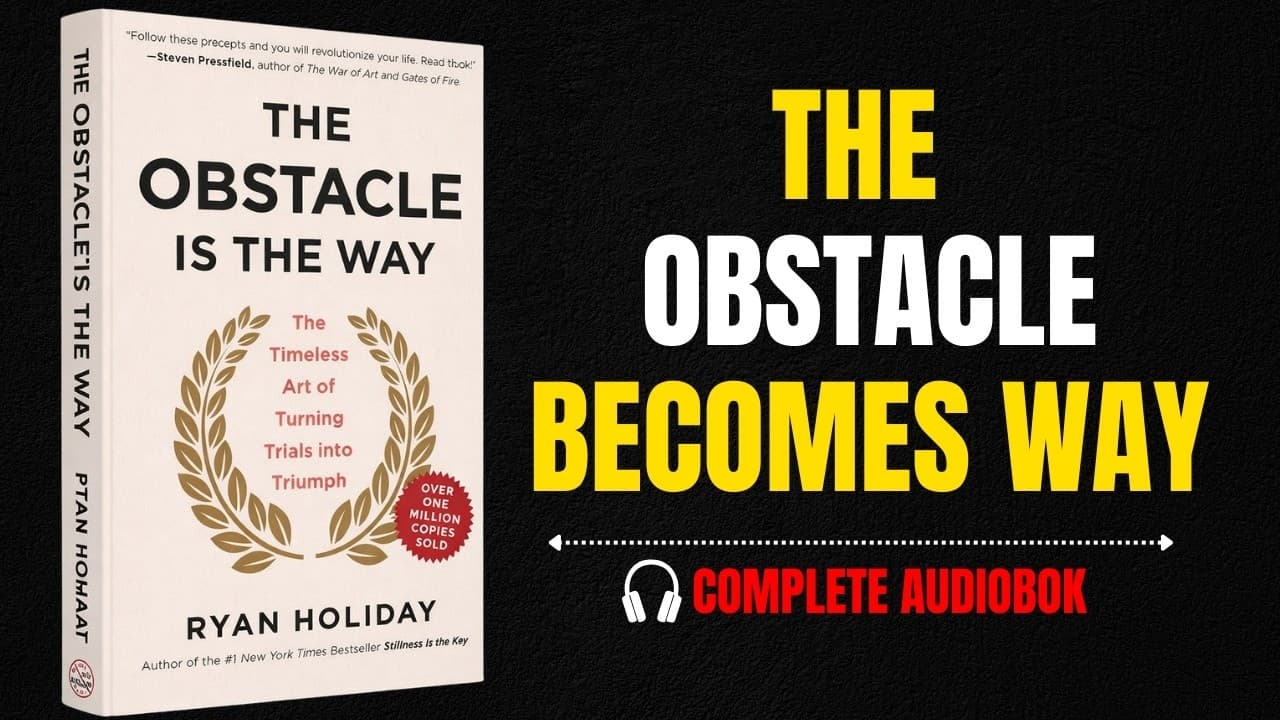
- Related book: The Obstacle Is the Way
- Export your Kindle highlights to Glasp: How to Download Highlights and Notes from Kindle
- More videos about this book:
- More from this channel: Capitura Audiobooks
- More videos with Ryan Holiday:
Install to Summarize YouTube Videos and Get Transcripts
Explore YouTube Video Summarizer or Get YouTube Transcript Extractor
Questions & Answers
Q: How can obstacles be turned into opportunities?
Obstacles can be turned into opportunities by changing how they are perceived and then responding with deliberate action. Instead of treating a setback as an insurmountable barrier, examine it objectively and identify what can be learned, adapted, or changed. This approach makes adversity a tool for developing resilience, creativity, discipline, and practical skills while creating forward momentum through manageable steps.
Q: What does Stoicism teach about controlling adversity?
Stoicism teaches that people cannot control every external event, but they can control how they respond. The useful focus is therefore on perceptions, emotions, decisions, and actions rather than on circumstances outside personal influence. Choosing a calm, rational, and purposeful response reduces helplessness and directs energy toward meaningful change within the situation that can actually be affected.
Q: Why is action important when facing an obstacle?
Action is important because it counters the fear, uncertainty, and inertia that often accompany an obstacle. Waiting or avoiding the problem can enlarge it and drain mental and emotional energy. Taking even a small or imperfect step restores a degree of control, creates momentum, and can reveal possibilities that were not visible while remaining passive or overwhelmed.
Q: How should emotions be managed during difficult situations?
Emotions should be managed through discipline, clarity, and a steady examination of the situation. The aim is not to let anger, fear, or frustration determine the response. Remaining calm and rational preserves attention for solutions and supports thoughtful decisions. This emotional discipline helps a person focus on the process and available actions rather than obsessing over an uncontrollable outcome.
Q: Why does perseverance matter for achieving success?
Perseverance matters because success is often produced by continued effort through repeated failures, criticism, and setbacks. Each unsuccessful attempt can provide information that improves the next approach. The example of Thomas Edison shows the principle clearly: failure can be treated as a lesson and a step toward the goal rather than as proof that progress is impossible.
Q: What does amor fati mean in the approach to obstacles?
Amor fati is described as the love of fate, an attitude of embracing obstacles as part of the journey rather than resisting or resenting them. It encourages acceptance of difficult circumstances while still looking for useful action. By recognizing that every challenge may contain something to learn, adapt to, or change, a person can use discomfort for development.
Q: How does focusing on the present help overcome challenges?
Focusing on the present helps because the past cannot be changed and the future cannot be controlled. Attention placed on what can be done now reduces the emotional burden of previous failures and uncertain possibilities. This creates greater clarity for immediate action, allowing a person to address the current obstacle instead of becoming trapped in regret, worry, or imagined outcomes.
Q: How did Marcus Aurelius respond to adversity?
Marcus Aurelius is presented as responding to wars, plagues, and other challenges with deliberate action rather than surrendering to fear or anger. He focused on what remained within his power, maintained clarity, and made thoughtful decisions aimed at meaningful change. His example shows that purposeful action does not require controlling everything or fighting every possible battle.
Summary & Key Takeaways
-
Stoic philosophy treats obstacles as natural parts of life that can support growth rather than merely block progress. Because external events are often beyond our control, the practical task is to govern our perceptions, emotions, and responses. Clear observation replaces panic with a more empowered and useful view of adversity.
-
Action is presented as the antidote to fear, frustration, inertia, and helplessness. Even a small, imperfect step creates momentum and opens new possibilities, while procrastination, denial, and avoidance allow difficulties to grow. Deliberate action shifts a person from passively experiencing a challenge to actively addressing what remains controllable.
-
Discipline, perseverance, and present-moment attention make sustained progress possible. Emotional steadiness keeps energy directed toward solutions, while repeated effort turns failures into lessons that refine future attempts. Accepting adversity as part of life also develops adaptability, creativity, mental fortitude, and readiness for challenges that cannot be predicted.
Read in Other Languages (beta)
Share This Summary 📚
Summarize YouTube Videos and Get Video Transcripts with 1-Click
Try YouTube Summary with ChatGPT & Claude or YouTube Transcript Generator
Explore More Summaries from Capitura Audiobooks 📚

Summarize YouTube Videos and Get Video Transcripts with 1-Click
Try YouTube Summary with ChatGPT & Claude or YouTube Transcript Generator