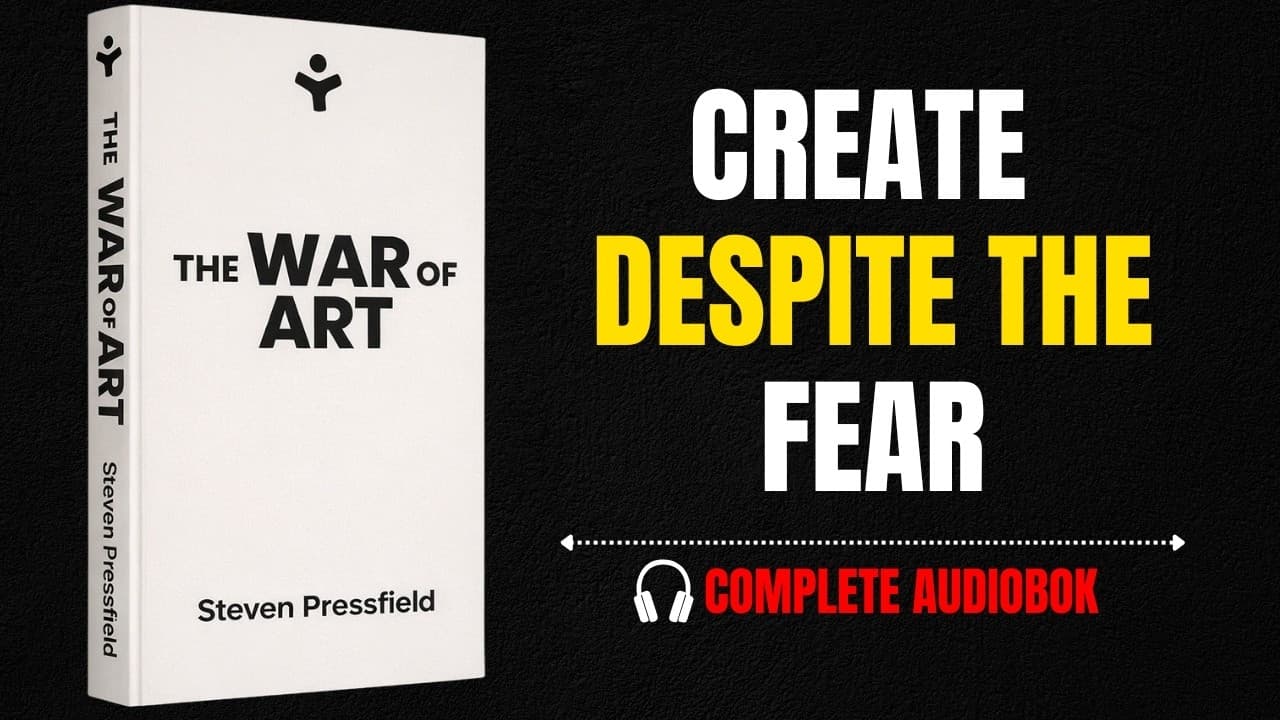
How to Beat Resistance and Unlock Creativity
TL;DR
Overcome creative resistance by showing up consistently, treating meaningful work as a responsibility, and acting even when fear, doubt, or procrastination appears. Break large goals into manageable tasks, build supportive habits and systems, and value steady effort over perfect results or immediate rewards. A professional mindset turns daily action into momentum, mastery, and greater creative fulfillment.
Transcript
Every human being has a calling, a creative desire, or a passion waiting to be unleashed. It may be a lifelong dream to write a novel, start a business, create art, or pursue something else entirely. However, something stands in the way of these aspirations. A force so powerful that it can stop us in our tracks, holding us back from realizing our t... Read More
Key Insights
- Resistance is a universal internal force that obstructs meaningful work through procrastination, fear, self-doubt, excuses, distraction, and rationalization. Its influence comes from convincing people to remain comfortable, postpone their ambitions, or abandon a creative pursuit before they have genuinely begun.
- The battle against resistance is a daily practice rather than a single breakthrough. Persistence, commitment, self-discipline, and repeated action are required because resistance can return whenever a person attempts difficult, purposeful, or creative work.
- The professional mindset is defined by showing up and working regardless of mood, inspiration, external validation, or ideal conditions. Treating creative practice as a responsibility shifts attention from uncertain outcomes to the controllable process of consistently doing the work.
- The amateur mindset is rooted in fear, hesitation, ego, and concern about how others will respond. When praise, success, or favorable emotions become prerequisites for action, creative work becomes vulnerable to delay and paralysis.
- Consistent effort is more dependable than talent or inspiration alone. Progress develops through small actions repeated over time, even when those actions feel imperfect or produce no immediate reward, because accumulated effort creates momentum and supports mastery.
- Clear goals make consistency easier by helping people prioritize their time and effort. Breaking a large ambition into smaller, manageable tasks replaces an intimidating definition of success with practical actions that can be completed regularly.
- Habits and systems are the building blocks of sustained consistency. A routine such as working for a set period, writing regularly, or making one positive change provides a repeatable structure for progress when motivation is weak.
- Creativity is presented as both purposeful work and a spiritual endeavor. Connecting with the higher self and honoring inspiration can free creators from fear and limitation, allowing their work to express deeper truths and contribute meaningfully beyond personal achievement.
- Related book: The War of Art
- Export your Kindle highlights to Glasp: How to Download Highlights and Notes from Kindle
- More videos about this book:
- More from this channel: Capitura Audiobooks
- More videos with Steven Pressfield:
Install to Summarize YouTube Videos and Get Transcripts
Explore YouTube Video Summarizer or Get YouTube Transcript Extractor
Questions & Answers
Q: What is resistance in creative work?
Resistance is the internal force that prevents people from pursuing meaningful goals or creative callings. It appears as procrastination, fear, self-doubt, excuses, distractions, hesitation, and rationalization. Rather than simply blocking ability, it creates a mental narrative that a person is not good enough or that the present moment is unsuitable for starting, encouraging comfort and delay.
Q: How can you overcome procrastination and creative resistance?
Creative resistance can be overcome through action, commitment, and the repeated practice of showing up. The approach is to work even when fear, doubt, discouragement, or imperfect conditions are present. Breaking a large goal into manageable tasks and establishing a routine makes action easier to repeat, while consistent effort gradually produces momentum and reduces dependence on temporary inspiration.
Q: What is the difference between a professional and amateur mindset?
A professional treats creative work as a responsibility and shows up consistently, regardless of mood, distractions, praise, or ideal conditions. An amateur is more easily controlled by emotion, fear, hesitation, ego, and concern about external judgment. The professional concentrates on doing the work and respecting the process, while the amateur may wait for inspiration or reassurance before acting.
Q: Why is consistency important for creative success?
Consistency matters because success develops from small actions and choices accumulated over time, rather than from one isolated accomplishment. Regular effort creates momentum and continues moving a person toward a goal when progress feels slow or immediate rewards are absent. Talent and opportunity can help, but they cannot replace the sustained commitment required to improve a craft and produce lasting results.
Q: How should large creative goals be made manageable?
Large creative goals should be connected to a clear vision and divided into smaller, practical tasks. Instead of concentrating on the intimidating idea of complete success, a person can focus on the next action that moves the work forward. Regular steps, such as working on a project for a set period or writing consistently, make progress achievable and help establish momentum.
Q: Why should creators value process over outcomes?
Creators should value process because outcomes are uncertain, while the act of showing up and working can be repeated and controlled. Concentrating on results, praise, or immediate success can strengthen fear and hesitation. Concentrating on the process builds commitment, allows action to generate momentum, and supports gradual mastery even when progress is imperfect, difficult, or not immediately visible.
Q: What role do habits and systems play in defeating resistance?
Habits and systems give consistency a practical structure. A repeatable routine determines when and how meaningful work happens, reducing the need to decide whether to act based on current motivation. Regular practices, including working for a set period, writing frequently, or making one constructive change, allow small efforts to accumulate and keep progress moving despite doubt, setbacks, or distractions.
Q: How does creativity connect with purpose and the higher self?
Creativity can connect a person with the higher self, described as the best version of oneself, free from fear, doubt, and limiting beliefs. The act of creation is presented as more than producing a tangible result. It can align people with their true purpose, help them express deeper truths, and allow their work to contribute meaningfully to something larger than personal achievement.
Summary & Key Takeaways
-
Resistance is the internal force that discourages meaningful work through procrastination, fear, self-doubt, excuses, and distraction. It affects artists, writers, entrepreneurs, and anyone pursuing an important calling. Defeating it is not a single victory, but a continuing practice of recognizing its tactics and choosing committed action despite discomfort or uncertainty.
-
Pressfield contrasts amateurs, who depend on emotions, validation, and favorable conditions, with professionals, who consistently fulfill their responsibility to the work. Professionals do not wait for inspiration or perfection. They focus on the process, show up despite obstacles, and allow repeated effort to create momentum and gradually develop mastery in their craft.
-
Consistency converts ambitions into results through small actions accumulated over time. A clear vision helps direct effort, while manageable tasks, routines, habits, and systems make regular progress possible. Creative work can also connect people with their higher selves and a larger purpose, making creation an expression of authenticity and contribution beyond personal achievement.
Read in Other Languages (beta)
Share This Summary 📚
Summarize YouTube Videos and Get Video Transcripts with 1-Click
Try YouTube Summary with ChatGPT & Claude or YouTube Transcript Generator
Explore More Summaries from Capitura Audiobooks 📚
Summarize YouTube Videos and Get Video Transcripts with 1-Click
Try YouTube Summary with ChatGPT & Claude or YouTube Transcript Generator