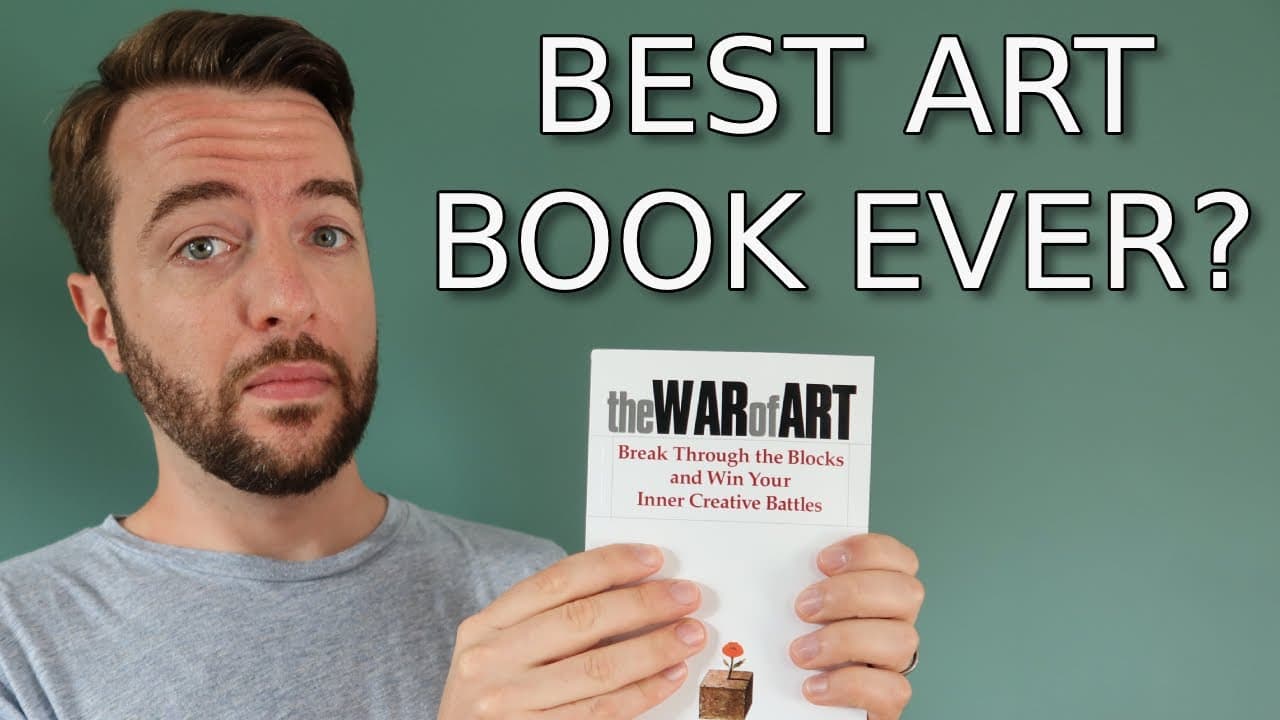
The War of Art Review: Essential for Creatives
TL;DR
Treat resistance as an internal force that grows around meaningful work, then counter it by showing up consistently and putting important creative work ahead of urgent distractions. Steven Pressfield’s framework helps artists name procrastination, fear, and self-doubt, while his spiritual view presents inspiration as assistance that arrives when creators make a serious commitment to their craft.
Transcript
today I'm going to be giving you a summary and my review of this gem of a book the war of art by Steven Pressfield it's a book that is so powerful that merely talking about it is going to inspire you today that's coming up what's going on everybody I have Youngman brown and this is your creative push the podcast and the YouTube channel that's all a... Read More
Key Insights
- Resistance is an internal, invisible force that obstructs creative work and other actions favoring long-term growth over immediate gratification. It can interfere with writing, exercise, dieting, starting a business, or any pursuit that moves a person toward a higher version of themselves.
- Resistance becomes stronger when a goal matters deeply and may intensify near the finish line. Its common expressions include procrastination, fear, self-doubt, distraction, rationalization, isolation, self-criticism, substance use, drama, and the belief that personal healing must happen before creative work can begin.
- The professional prioritizes important work over urgent demands and approaches creativity as a long-term commitment. Unlike the amateur, the professional shows up consistently, practices patience, accepts discomfort, and concentrates on technique and fundamentals instead of waiting for ideal emotional or mystical conditions.
- Professional conduct is grounded in resilience and perspective. A professional expects fear and unfairness, asks for help, endures adversity, recognizes personal limitations, ignores unhelpful criticism, reinvents when necessary, and avoids becoming overly attached to either success or failure.
- Inspiration is presented as help from a spiritual realm, with artists acting as vessels who translate ideas into creations. Pressfield argues that the muse responds when creators sit down, demonstrate commitment, fight resistance, and make themselves ready to receive creative assistance.
- Creative processing continues outside formal work sessions through background mental activity. Walking, washing dishes, sleeping, and dreaming may allow the mind to organize or edit ideas, so Pressfield encourages creators to notice dreams and insights that could contribute to their work.
- The ego protects survival and existing conditions, while the self seeks creativity and evolution. In Pressfield’s framework, resistance lives in the ego because growth threatens familiar patterns, producing fears that can include not only failure but also the consequences of success.
- Authentic art is created for the artist’s soul rather than for status, hierarchy, or audience approval. Pressfield’s test asks whether someone would still create as the last person on Earth, emphasizing inward purpose and the responsibility to share work that others may need.
- Related book: The War of Art
- Related book: Turning Pro
- Export your Kindle highlights to Glasp: How to Download Highlights and Notes from Kindle
- More videos about this book:
Install to Summarize YouTube Videos and Get Transcripts
Explore YouTube Video Summarizer or Get YouTube Transcript Extractor
Questions & Answers
Q: What is resistance in The War of Art?
Resistance is the internal, invisible force that prevents people from doing meaningful work that supports long-term growth. It is not limited to art or writing. It can obstruct exercise, dieting, business creation, and other purposeful actions. Pressfield describes it as universal, persistent, and fueled by fear, especially when a goal is deeply important to the person pursuing it.
Q: How can artists recognize creative resistance?
Artists can recognize resistance through patterns such as procrastination, self-doubt, fear, rationalization, isolation, constant distraction, self-criticism, and promises to begin tomorrow. It can also appear as shopping, eating, substance use, drama, or trouble. Another form is insisting that complete personal healing must occur before creative work can start, which delays action indefinitely.
Q: Why does resistance increase near the finish line?
Resistance may become strongest near completion because the meaningful work is close to becoming real. The transcript describes resistance as growing with the importance of a goal and intensifying when someone begins achieving it. Finishing requires the creator to face exposure, change, judgment, and even success, so fear can generate stronger excuses precisely when continued effort matters most.
Q: What does it mean to turn pro as a creative person?
Turning pro means making a firm decision to treat creative work as a disciplined, sustained practice rather than a casual side hobby. The professional works consistently, separates the important from the merely urgent, and does the work first. This approach also requires patience, comfort with difficulty, attention to fundamentals, willingness to seek help, and acceptance that fear will remain.
Q: How is a professional different from an amateur artist?
A professional consistently gives priority to the work, while an amateur approaches a creative passion more like a part-time hobby. The amateur may become overly invested in success and terrified of failure. The professional takes a longer view, endures adversity, ignores unhelpful criticism, accepts limitations, avoids showing off, and does not allow excuses to become recurring habits.
Q: How does inspiration work according to The War of Art?
Pressfield presents inspiration as something arriving from a higher, timeless realm, with creators serving as vessels that bring it into ordinary life. The muse helps when an artist demonstrates commitment by sitting down and working. Ideas may also develop during walks, household tasks, sleep, or dreams, suggesting that creative organization continues beyond deliberate working sessions.
Q: Why should artists create for themselves instead of an audience?
Creating primarily for audience approval encourages artists to look up and down social hierarchies instead of looking inward. Pressfield asks whether a person would continue making art if they were the last person on Earth. If the answer is yes, the work reflects an authentic inner need rather than a search for status, comparison, praise, or external validation.
Q: Is The War of Art worth reading for creative people?
The reviewer considers the book important enough that every creative person should read it and ideally own a copy. Its strongest contribution is giving the name resistance to the fear, procrastination, laziness, and self-doubt creators commonly experience. The reviewer says this framework transformed his approach, helping him complete a music video after years of hesitation, although he later disagreed with some points about turning pro.
Summary & Key Takeaways
-
Steven Pressfield defines resistance as the invisible internal force that obstructs activities connected to growth, purpose, and creativity. It appears through procrastination, fear, distraction, rationalization, self-doubt, isolation, and other evasions. Resistance affects everyone, persists throughout life, and often becomes strongest when meaningful work approaches completion.
-
Turning pro means treating creative work as a sustained practice instead of a casual hobby. The professional prioritizes important work over urgent demands, develops patience, focuses on technique and fundamentals, accepts adversity, seeks help when needed, and refuses to treat either criticism, success, failure, fear, or unfair circumstances as an excuse to stop.
-
Pressfield portrays inspiration as coming from a higher realm and creators as vessels who bring it into the world. Commitment and consistent work invite help from the muse, including ideas that emerge during ordinary activities, sleep, and dreams. Ultimately, artists must look inward, create authentically, and fulfill the work they feel called to make.
Read in Other Languages (beta)
Share This Summary 📚
Summarize YouTube Videos and Get Video Transcripts with 1-Click
Try YouTube Summary with ChatGPT & Claude or YouTube Transcript Generator