How to Overcome Resistance and Do Creative Work
TL;DR
Overcome resistance by recognizing its disguises and showing up for meaningful work every day, even when motivation is absent. Procrastination, perfectionism, fear, distraction, and self-doubt lose influence when you act before conditions feel perfect, finish imperfect work, and build momentum through disciplined, consistent effort.
Transcript
have you ever sat down to write create or start something important only to find yourself suddenly distracted by well everything your phone buzzes your to-do list seems to multiply and that big scary project you've been avoiding just sits there staring at you if you've ever experienced this you're not alone and guess what there's a name for it it's... Read More
Key Insights
- Resistance is a persistent force that obstructs meaningful work through ordinary-looking excuses, distractions, and doubts. It often appears when someone tries to write, create, exercise, start a business, change a habit, or pursue another goal connected to personal growth.
- Procrastination is one of resistance's most effective disguises because postponement feels temporary and reasonable. The promise to work later reduces immediate discomfort, but repeated delays create a cycle of avoidance in which fear and doubt continue controlling decisions.
- Perfectionism is a form of resistance that prevents completion by making flawless work seem like the minimum acceptable result. Because nothing is ever truly perfect, endless refinement becomes another way to avoid finishing, sharing, and receiving judgment from others.
- Fear is a byproduct of pursuing something meaningful, especially when the work creates risks of failure, judgment, embarrassment, or vulnerability. Its presence can indicate that the project matters, while progress depends on acting despite fear rather than waiting for it to disappear.
- Recognition is the first step in fighting resistance because naming the pattern separates it from personal identity. Instead of concluding that they are lazy or incapable, people can identify a recurring obstacle and choose a deliberate response to its familiar tactics.
- Discipline is the practice of showing up even when motivation, confidence, or favorable conditions are absent. Professionals create working conditions through consistent action, while amateurs tend to wait for a perfect moment that may never arrive.
- Momentum is built by working consistently, and it makes continued action easier after the difficult beginning. Daily engagement with a project generally produces steadier progress than sporadic effort because each completed session helps weaken resistance's power to delay the next one.
- Resistance becomes more intense near important breakthroughs, according to the summary's central argument. Strong discomfort should therefore not automatically be interpreted as a reason to stop, since it may accompany work that is especially meaningful or close to significant progress.
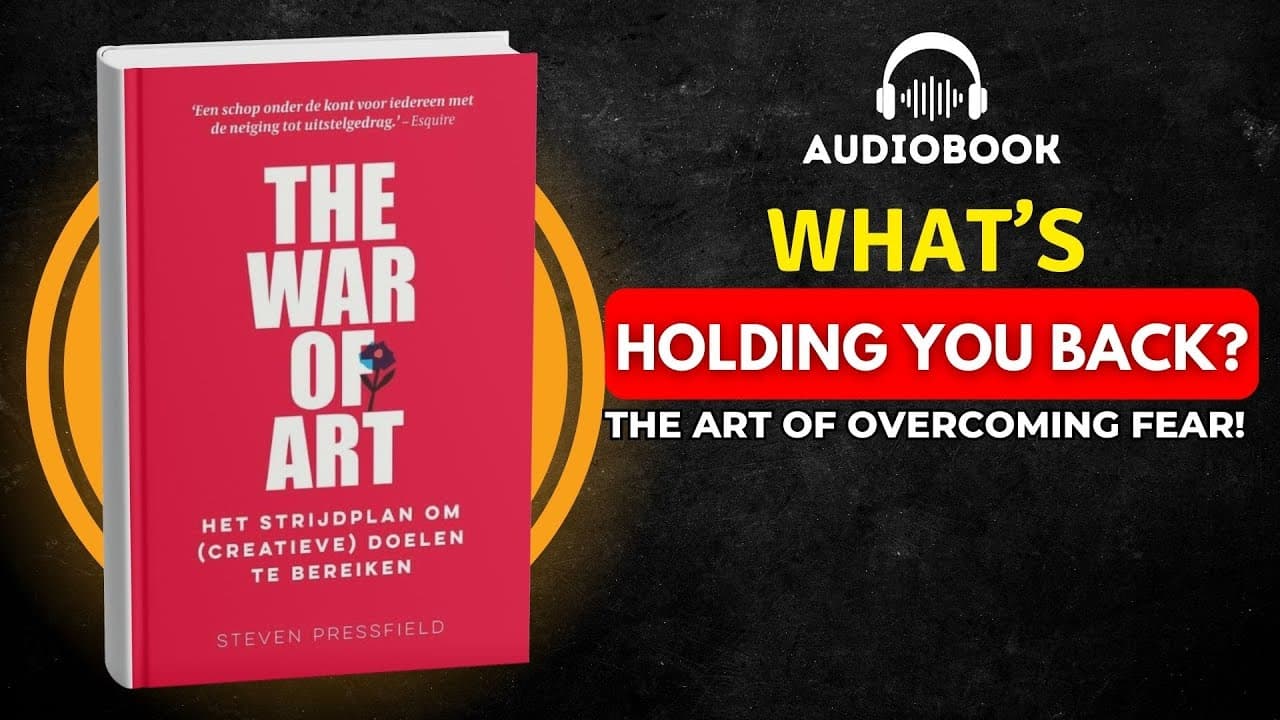
- Related book: The War of Art
- Export your Kindle highlights to Glasp: How to Download Highlights and Notes from Kindle
- More videos about this book:
- More videos with Steven Pressfield:
Install to Summarize YouTube Videos and Get Transcripts
Explore YouTube Video Summarizer or Get YouTube Transcript Extractor
Questions & Answers
Q: What is resistance in creative work?
Resistance is the force that discourages a person from doing meaningful work or pursuing an important goal. It appears through procrastination, distraction, perfectionism, fear, self-doubt, and reasonable-sounding excuses. Rather than openly commanding someone to abandon a dream, it suggests waiting until tomorrow, preparing more, or delaying action until conditions become perfect.
Q: How can you recognize resistance in daily life?
Resistance can be recognized whenever an important task triggers sudden distractions, excuses, doubt, or an urge to postpone action. Common signs include scrolling through social media before starting, staring at a blank page, insisting that more preparation is necessary, endlessly refining unfinished work, or promising to begin when circumstances feel better. These patterns keep meaningful projects safely unfinished.
Q: How do you overcome procrastination on an important project?
Overcoming procrastination begins with identifying postponement as resistance rather than accepting its excuses as valid instructions. Start the work before you feel completely ready, even if the first effort is brief or imperfect. Returning consistently builds momentum, and momentum makes later sessions easier. The essential practice is choosing action today instead of repeatedly promising to act tomorrow.
Q: Why does perfectionism prevent creative progress?
Perfectionism prevents progress by making completion dependent on an impossible standard. It persuades creators that work should not be finished or shared unless it is flawless, leading to endless adjustments without a final result. The practical alternative is to accept that nothing is ever truly perfect, complete the project, and release it with its imperfections still present.
Q: What does fear mean when pursuing a meaningful goal?
Fear often appears when a goal involves possible failure, judgment, embarrassment, or vulnerability. The summary presents fear as a byproduct of meaningful action and a reminder that the work matters. It does not prove that someone lacks ability or should stop. Progress comes from acknowledging the fear and continuing to work despite its presence.
Q: How does discipline help defeat resistance?
Discipline helps defeat resistance by replacing dependence on mood with a reliable practice of showing up. A disciplined person works despite distractions, uncertainty, fear, or low motivation. This repeated commitment weakens resistance's ability to dictate behavior and distinguishes the professional approach from the amateur tendency to wait for inspiration or ideal circumstances before beginning.
Q: Why is momentum important for completing creative work?
Momentum is important because starting is often the hardest part of meaningful work. Once action begins, continuing becomes easier, and repeated daily effort produces steadier progress than occasional bursts. Each work session supports the next one, reducing the influence of resistance. Even a small beginning can interrupt avoidance and establish a pattern that carries the project forward.
Q: Does resistance disappear after you become disciplined?
Resistance does not necessarily disappear when discipline improves. Instead, a person becomes better at noticing its disguises and moving past them more quickly. The struggle may continue each day, especially around important work, but consistent practice reduces its control. Success depends on recognizing resistance, continuing to show up, and trusting gradual progress without giving up.
Summary & Key Takeaways
-
Resistance is the persistent force that appears whenever people pursue meaningful goals. It hides behind procrastination, perfectionism, fear, distraction, excuses, and claims that conditions are not yet right. Naming this force helps people stop treating avoidance as a personal defect and begin responding to it deliberately through action.
-
Waiting for confidence, inspiration, or perfect circumstances allows resistance to control the creative process. The practical response is to begin before feeling ready, accept that work will contain imperfections, and finish what was started. Fear can be treated as evidence that the goal matters, not proof that the person should withdraw.
-
Discipline separates professionals from amateurs because professionals work whether or not they feel motivated. Repeated action creates momentum, making continued effort easier and sporadic avoidance less powerful. Resistance may never disappear completely, but recognizing its tactics, maintaining a daily practice, and trusting gradual progress can move any meaningful project toward completion.
Read in Other Languages (beta)
Share This Summary 📚
Summarize YouTube Videos and Get Video Transcripts with 1-Click
Try YouTube Summary with ChatGPT & Claude or YouTube Transcript Generator