How to Beat Resistance and Do Creative Work
TL;DR
Creative resistance is overcome by doing the work while fear is still present, not by waiting to become fearless or inspired. A professional focuses on the daily process, follows a consistent schedule, accepts useful feedback without being ruled by critics, and treats results as byproducts of diligent, patient, persistent effort.
Transcript
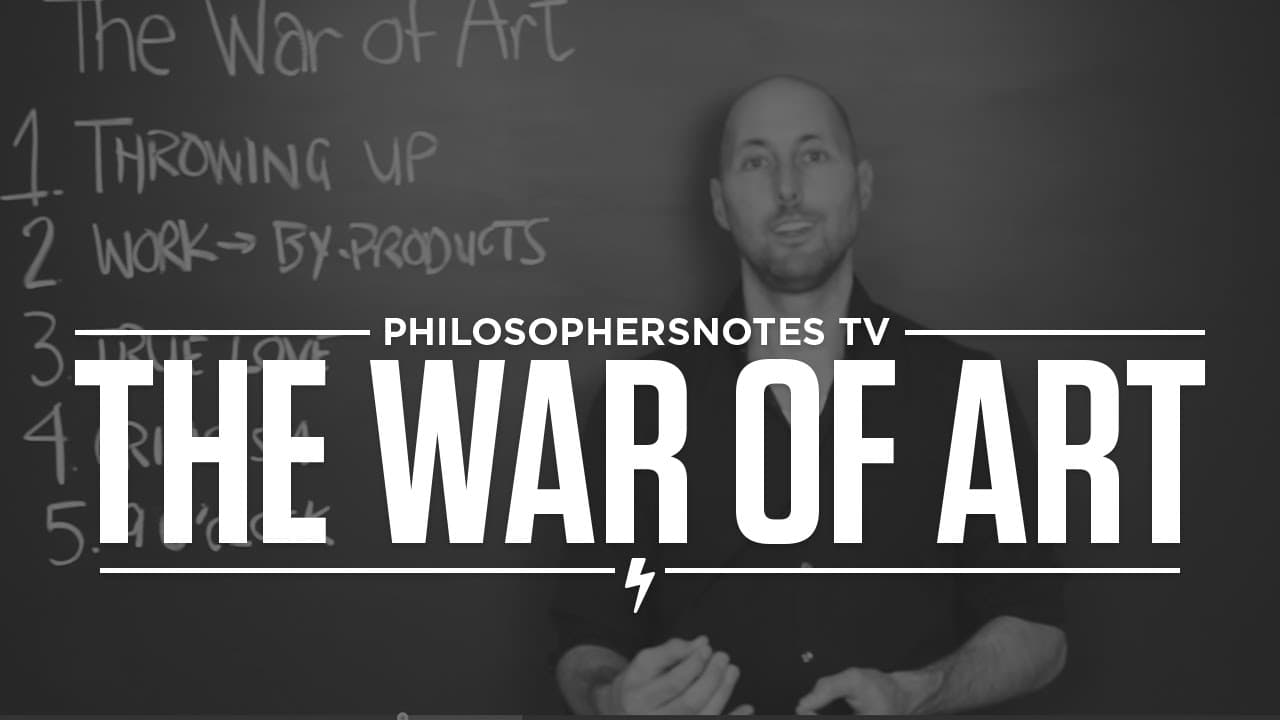
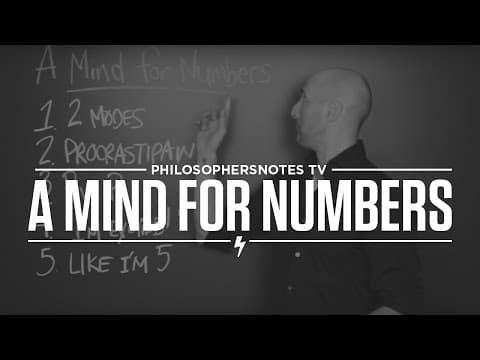
hi this is Brian welcome back to philosophers notes TV today we've got another great book The War of art we also have a new chalkboard pretty excited about it so the war of art yesterday we did turning pro by Steven pressfield today we're doing his war of art break through the blocks and win your inner creative battles now this was the first book i... Read More
Key Insights
- Fear is a normal part of ambitious creative work, and professionals do not require fearlessness before acting. They recognize anxiety, interpret it as evidence that the work matters, and continue with the task instead of waiting for discomfort to vanish.
- The difference between an amateur and a professional is how each responds to resistance. An amateur waits to feel ready, while a professional expects fear and still completes the work that the situation demands.
- Results are byproducts of sustained attention to the process. Obsessing over outcomes can encourage endless planning, dreaming, and visualizing, while focusing on daily craft creates the conditions from which meaningful results can emerge.
- True commitment is expressed by organizing life around the work. Pressfield's distinction suggests that a professional loves the craft enough to dedicate substantial time and energy to it, rather than treating it only as an occasional hobby.
- Criticism often reflects the critic's own unexpressed frustration. People who understand how difficult creation is may offer encouraging, useful feedback, while petty attacks can be ignored so attention remains on the work.
- Personal criticism of others can signal neglected responsibilities or blocked self-expression. When the presenter notices himself becoming especially critical, he looks at whether he has failed to do what he previously identified as important.
- Consistency helps summon inspiration rather than merely waiting for it. Somerset Maugham's remark about inspiration arriving every morning at 9:00 illustrates that a reliable schedule can make creative work possible even when motivation initially feels absent.
- Showing up repeatedly is a defining habit of the professional. A fixed working time, whether 9:00 in the morning or the presenter's preferred early hour, acts as an invitation for ideas to emerge through the act of working.
- Related book: The War of Art
- Related book: Do the Work
- Export your Kindle highlights to Glasp: How to Download Highlights and Notes from Kindle
- More videos about this book:
- More from this channel: Brian Johnson
- More videos with Steven Pressfield:
Install to Summarize YouTube Videos and Get Transcripts
Explore YouTube Video Summarizer or Get YouTube Transcript Extractor
Questions & Answers
Q: How can creators overcome resistance to their work?
Creators can overcome resistance by starting the required work even while fear, uncertainty, or discomfort remains present. The professional does not expect to eliminate these feelings before acting. Instead, the creator acknowledges them, returns attention to the immediate process, and works diligently and persistently. Repeated action weakens the habit of waiting for ideal emotional conditions.
Q: Why should creative professionals work even when they feel afraid?
Creative professionals should work while afraid because fear is presented as a normal part of pursuing meaningful goals, not proof that action should stop. Henry Fonda reportedly threw up before stage performances, and Bill Russell reportedly did the same before games, yet both continued. Their behavior shows that effective performance can coexist with intense anxiety.
Q: What is the difference between an amateur and a professional creator?
An amateur believes fear must disappear before serious work can begin and may spend excessive time planning, dreaming, or focusing on results. A professional expects resistance, follows a working routine, and completes the task anyway. Professionalism is therefore defined less by a fearless emotional state than by consistent behavior and dedication to the craft.
Q: Why should creators focus on process instead of results?
Creators should focus on process because the work itself is directly controllable, while outcomes are treated as byproducts. Obsessing over results can replace action with planning, visualization, and worry. Concentrating on the skills and tasks required each day supports steady improvement and allows results to develop from diligent, patient, and persistent effort.
Q: What does turning pro mean for a creative person?
Turning pro means loving the work enough to organize life around practicing it consistently. It involves moving beyond occasional, hobby-like engagement and giving the craft serious time, energy, and commitment. The transition does not require having every detail figured out first, but it does require courage and a willingness to make the work a central responsibility.
Q: How should creators respond to criticism?
Creators should separate useful feedback from petty or discouraging attacks. Constructive feedback can reveal opportunities for growth, especially when it comes from people who respect the difficulty of creating. Criticism that merely projects another person's frustration does not deserve control over the creator's attention. The practical response is to return to the work rather than trying to fix every critic.
Q: Why might someone become highly critical of other people's work?
Becoming highly critical of others may indicate that the critic is not fully expressing personal creativity or completing important commitments. The presenter observes that his strongest criticism often appears when he has neglected things he said mattered to him. Instead of attacking others or demanding perfection, he recommends looking inward, identifying neglected work, and resuming it.
Q: How does a regular schedule help creative inspiration?
A regular schedule creates repeated opportunities for inspiration to appear. Somerset Maugham is quoted as saying that he wrote only when inspiration struck, fortunately at 9:00 every morning. The point is that creators can invite the muse by arriving consistently at a chosen time. Showing up comes first, and inspiration may follow through the act of working.
Summary & Key Takeaways
-
Fear does not have to disappear before meaningful creative work can begin. Henry Fonda reportedly threw up before stage performances, while Bill Russell threw up before games, yet both still performed. Their examples illustrate the professional response to anxiety: acknowledge that fear is present, then proceed with the required work anyway.
-
Creative progress comes from concentrating on the process instead of obsessing over outcomes. Planning, dreaming, and visualizing can become substitutes for action when results receive too much attention. The professional approach is to practice the craft diligently, patiently, and persistently, allowing results to emerge as byproducts of consistent effort over time.
-
Professional creativity requires commitment, emotional maturity, and routine. Turning pro means structuring life around important work, responding carefully to criticism, and examining personal frustration before attacking others. Inspiration becomes more dependable when creators establish a regular working time and repeatedly show up, whether or not they initially feel inspired.
Read in Other Languages (beta)
Share This Summary 📚
Summarize YouTube Videos and Get Video Transcripts with 1-Click
Try YouTube Summary with ChatGPT & Claude or YouTube Transcript Generator
Explore More Summaries from Brian Johnson 📚
Summarize YouTube Videos and Get Video Transcripts with 1-Click
Try YouTube Summary with ChatGPT & Claude or YouTube Transcript Generator