How to Turn Obstacles Into Personal Growth
TL;DR
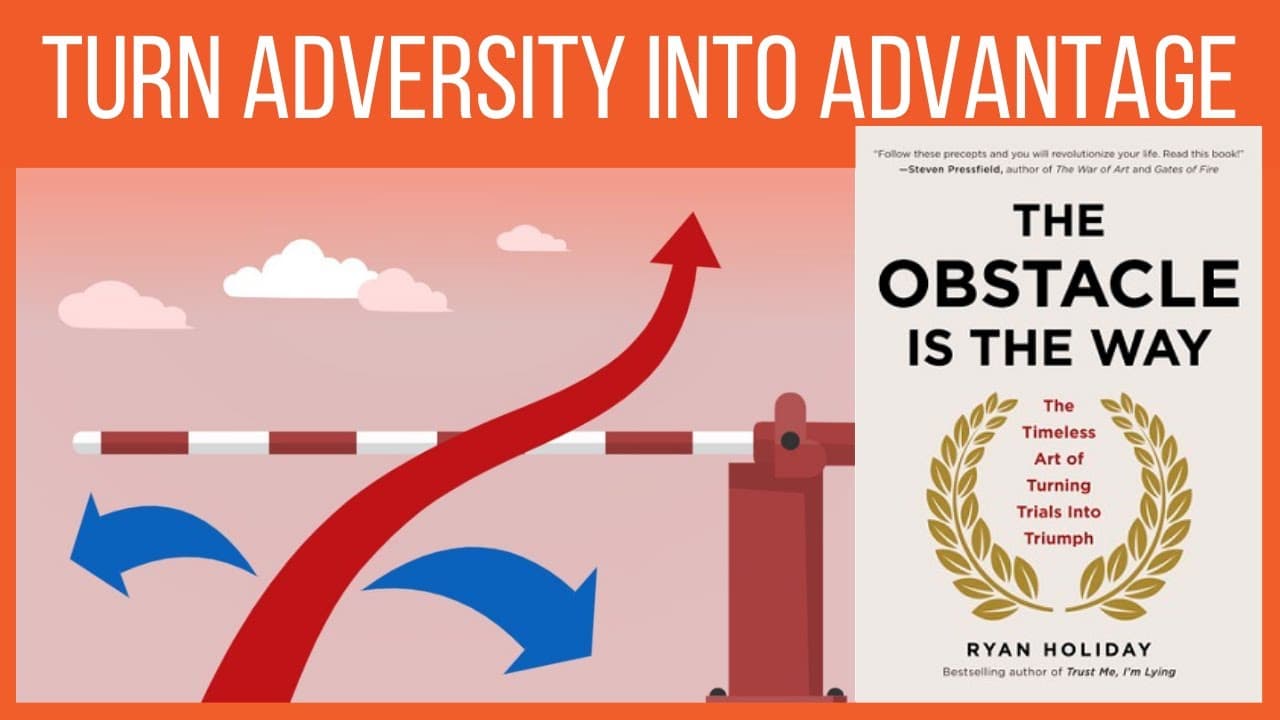
Use obstacles and disadvantages as fuel for personal growth instead of avoiding them or remaining frozen before them. Drawing inspiration from Stoicism and Marcus Aurelius, Ryan Holiday’s book presents hardship as a path toward goals and aspirations, arguing that people can become better because of difficult circumstances, not merely despite them.
Transcript
operas frank 징벌 very 하워드 e esters and route 아진 다하우 치자 oc 링스 from power to my expertise in lte a small 14 out or a man who entered coupe owa anterior lobe alert 2 how he describes 철남 whom were the bed and where to theres 바이오 2 totem 눈썹은 띵 부여 때로 마우스 idle 앞세운 dino 5ds 프로세싱 차우 e&c 된 와 그렇사옵니다 뭐 민인기 side t1 펄스 이작가 있었습니다 안나 벨 mc 앞을 튤립이 뭘 보안 무슨 스킨 초 아더마 우신... Read More
Key Insights
- Obstacles can serve as fuel for improvement when people stop viewing them only as barriers. The book’s central idea is that difficult circumstances may contribute directly to personal growth and can become part of the route toward goals and aspirations.
- Avoidance is a common response to difficulty, according to the book’s description. People often spend their lives dodging hard situations, even though this response leaves the obstacles between them and what they hope to accomplish unresolved.
- Feeling frozen before an obstacle can prevent movement toward a goal. The book addresses this condition by proposing a different interpretation of hardship, one in which the obstacle can be used constructively instead of remaining a reason for inaction.
- Disadvantages do not have to determine a negative outcome. Ryan Holiday’s message is that people can use unfavorable conditions as fuel, allowing those conditions to contribute to development rather than merely becoming burdens that must be endured.
- Personal growth can happen because of hardship, not only despite it. This distinction places difficult experiences inside the process of becoming better and suggests that adversity itself may provide useful material for improvement.
- Stoicism provides the conceptual inspiration for the book’s treatment of obstacles. The description also identifies Marcus Aurelius as an important source of inspiration, connecting the book’s self-improvement message with Stoic ideas about responding to difficult circumstances.
- Goals and aspirations are often separated from people by multiple obstacles. The book focuses on changing how those obstacles are approached, encouraging readers to see difficulty as something that can support progress rather than only block it.
- A constructive response to adversity begins with confronting the hard stuff instead of continually dodging it. The book’s premise is that obstacles and disadvantages can be put to use, creating an opportunity to move forward and become better.
- Related book: The Obstacle Is the Way
- Export your Kindle highlights to Glasp: How to Download Highlights and Notes from Kindle
- More videos about this book:
- More from this channel: Read And Grow
- More videos with Ryan Holiday:
Install to Summarize YouTube Videos and Get Transcripts
Explore YouTube Video Summarizer or Get YouTube Transcript Extractor
Questions & Answers
Q: How can obstacles support personal growth?
Obstacles can support personal growth when they are treated as usable material rather than only as barriers. Ryan Holiday’s book argues that difficult circumstances and disadvantages can become fuel for improvement. This approach changes hardship from something that merely delays goals into something that contributes to becoming better because of the experience, not simply despite it.
Q: What is the main idea of Ryan Holiday’s book?
The main idea is that an obstacle can become part of the way forward. Rather than dodging hard situations or remaining frozen before difficulties, people can use their disadvantages as fuel. The book presents obstacles as potential contributors to progress, personal improvement, and movement toward goals and aspirations instead of treating them exclusively as roadblocks.
Q: Why do people struggle to move past obstacles?
The description says that many people either dodge hard situations or sit frozen before the obstacles between them and their goals. Both reactions prevent forward movement because the difficulty remains unaddressed. The book responds to this problem by encouraging a constructive view in which adversity can be used as fuel for growth rather than treated only as something to escape.
Q: How does Stoicism relate to overcoming adversity?
Stoicism provides the conceptual inspiration for Ryan Holiday’s book, along with the example of Marcus Aurelius. Within the book’s stated message, this inspiration supports a way of approaching hardship that does not depend on avoiding it. Obstacles and disadvantages are instead treated as conditions that can be used constructively in pursuing goals and becoming a better person.
Q: What does it mean to use disadvantages as fuel?
Using disadvantages as fuel means allowing difficult circumstances to contribute to improvement rather than viewing them only as limitations. The book’s description says people can become better because of their disadvantages, not merely despite them. In this framing, adversity supplies material for growth and becomes connected to the process of moving toward goals and aspirations.
Q: How can someone stop avoiding difficult situations?
The book’s central approach is to reinterpret difficult situations as potential sources of progress. Instead of seeing the hard stuff only as something to dodge, a person can consider how an obstacle or disadvantage might be used constructively. This shift does not remove the obstacle, but it turns attention toward growth, action, and the goals lying beyond the difficulty.
Q: Can disadvantages help a person become better?
Yes, the description explicitly presents disadvantages as fuel that can help people become better because of them, not despite them. The idea is that an unfavorable condition need not function solely as a barrier. When approached constructively, it can become part of personal development and support continued movement toward a person’s goals and aspirations.
Q: What should someone do when feeling frozen by an obstacle?
Someone who feels frozen can begin by changing how the obstacle is understood. The book’s message suggests treating the difficulty as something that may be used, rather than only as a reason to stop. By viewing disadvantages as fuel for improvement, the person can reconnect the challenge with personal growth and movement toward goals and aspirations.
Summary & Key Takeaways
-
Ryan Holiday’s book addresses the common tendency to dodge difficult situations or become immobilized by obstacles standing between people and their goals. Its central message is that hardship does not have to remain a barrier. Obstacles and disadvantages can instead provide the fuel needed for improvement, action, and personal growth.
-
The book is inspired by Stoic concepts and Marcus Aurelius. It presents a way of interpreting adversity that redirects attention from avoiding hardship toward using it constructively. Under this approach, difficult circumstances become part of the path toward goals and aspirations rather than conditions that must disappear before progress can begin.
-
The description frames the book as a self-improvement resource for becoming better because of disadvantages, not simply succeeding despite them. Its practical value lies in changing a person’s relationship with difficulty. Instead of treating every obstacle as a reason to retreat or freeze, the reader is encouraged to recognize its potential usefulness.
Read in Other Languages (beta)
Share This Summary 📚
Summarize YouTube Videos and Get Video Transcripts with 1-Click
Try YouTube Summary with ChatGPT & Claude or YouTube Transcript Generator
Explore More Summaries from Read And Grow 📚

Summarize YouTube Videos and Get Video Transcripts with 1-Click
Try YouTube Summary with ChatGPT & Claude or YouTube Transcript Generator