How to Turn Hardship Into Opportunity With Stoicism
TL;DR
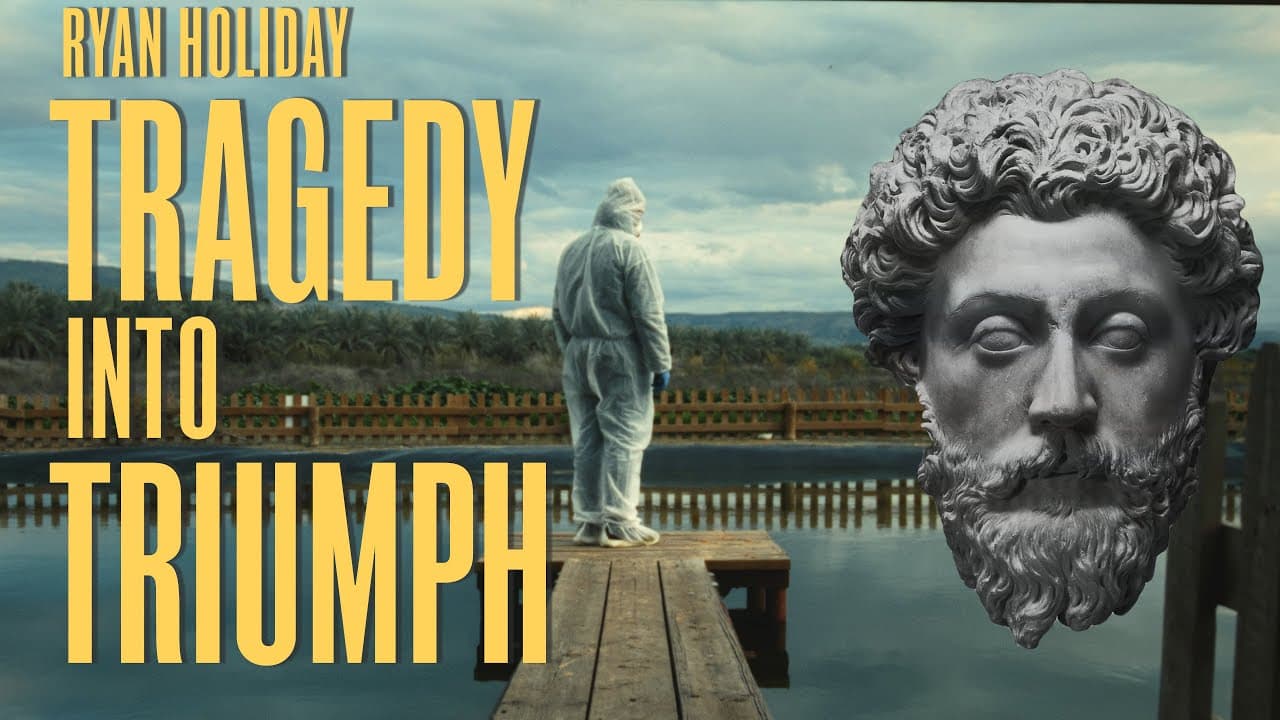
Treat hardship as material for purposeful action by asking how the situation can serve virtue, leadership, or other people. Stoic resilience goes beyond controlling an emotional response: it accepts what has happened, identifies the opportunity inside it, and transforms adversity into conduct worth remembering through courage, justice, temperance, and wisdom.
Transcript
so if we if we take it for granted that life is gonna knock us on our ass sometimes that we're gonna do everything right and everything that possibly go wrong does go wrong if we're gonna face disaster then the question is how do we respond to disasters talked about how the stokke sort of respond to bad news but just managing the response to me is ... Read More
Key Insights
- Stoic resilience is more than managing bad news calmly. Its deeper purpose is to convert disaster into useful action, treating adversity as fuel for greatness and asking what opportunity for virtue, service, or growth has appeared inside an unwanted situation.
- Zeno's shipwreck is presented as the event that redirected him from the Tyrian purple dye trade toward philosophy. After losing everything and reaching Athens, he encountered teachings about Socrates and found the mentorship that eventually placed him on the path to create Stoicism.
- Losing everything can create freedom by breaking a person's attachment to an established identity or career. Zeno's commercial disaster removed his previous path, allowing him to discover work that improved his life and later affected millions of other people.
- Marcus Aurelius treated Avidius Cassius's rebellion as an opportunity to teach Rome how civil strife could be resolved without revenge. He sought reconciliation, opposed executions and punishment, and feared losing the rare chance to forgive someone who had betrayed his friendship.
- Musonius Rufus viewed exile as a test of virtue rather than an evil. During one banishment, he continued writing and teaching, helped the island's inhabitants, and discovered an underground spring in a place that had previously depended on rainwater.
- Usefulness to others is a practical Stoic response to hardship. Instead of concentrating on personal misfortune, a person can examine the immediate environment, accept where circumstances have placed them, and determine how their abilities can benefit the people sharing that situation.
- James Stockdale treated captivity as a responsibility to lead rather than as a private tragedy. He fostered a culture of defiance, comforted prisoners who broke under torture, developed a communication code, and promoted unity over self among the captives.
- Amor fati means embracing what fate has delivered and making something worthy from it. The Stoic does not claim that suffering was desired or deserved, but chooses to create advantages, uphold ideals, and help others once the event cannot be reversed.
- Related book: The Obstacle Is the Way
- Export your Kindle highlights to Glasp: How to Download Highlights and Notes from Kindle
- More videos about this book:
- More videos with Ryan Holiday:
Install to Summarize YouTube Videos and Get Transcripts
Explore YouTube Video Summarizer or Get YouTube Transcript Extractor
Questions & Answers
Q: How do Stoics turn hardship into opportunity?
Stoics begin by accepting that hardship has occurred and directing attention toward the response still under their control. They ask how the event can become an opportunity for virtue, service, leadership, or growth. The aim is not merely to suppress anger or endure passively, but to use the obstacle as material for actions they can later regard with pride.
Q: What does the obstacle is the way mean in Stoicism?
The phrase means that the difficulty blocking a preferred path can become the material for a better response. An obstacle may reveal a new purpose, test a person's principles, create responsibility, or provide a chance to help others. Rather than simply accepting fate, the Stoic embraces the situation and works to transform it through courageous, just, temperate, and wise conduct.
Q: How did Zeno's shipwreck lead him to Stoicism?
Zeno was a successful merchant whose family had traded Tyrian purple dye for generations. A shipwreck destroyed his convoy and fortune, leaving him broke in Athens. At a bookstore, he heard a reading about Socrates and asked how to learn more. He was directed to a philosopher and mentor, beginning the path that led him to create Stoicism.
Q: Why can losing everything create freedom?
Losing everything can remove commitments, identities, and expectations that kept a person on an established course. Zeno's lost fortune ended his life as a dye merchant but placed him where he discovered philosophy. The event remained a disaster, yet it opened a path toward the work he was better suited to do and that later benefited millions of people.
Q: How did Marcus Aurelius respond to Avidius Cassius's rebellion?
Marcus Aurelius responded without seeking vengeance. He treated the rebellion as a chance to show Rome how civil conflict could be resolved, instructed that no one should be executed or punished, and hoped to forgive Cassius personally. When someone assassinated Cassius, Marcus reportedly wept because the killing deprived him of the opportunity to demonstrate forgiveness toward a friend who had betrayed him.
Q: What did Musonius Rufus do during exile?
Musonius Rufus continued writing, teaching, and looking for ways to serve where exile had placed him. On one island, he discovered an underground spring for inhabitants who had previously depended on rainwater. His response illustrates the Stoic question, how can I be useful here, replacing self-pity with practical assistance and treating hardship as a real-world test of virtue.
Q: How did James Stockdale apply Stoicism in captivity?
James Stockdale recognized that, as the highest-ranked prisoner taken captive at that point in the war, he had a responsibility to lead. He helped create a culture of defiance, comforted prisoners who broke under torture, and established a code for communication. The prisoners emphasized unity over self, supporting one another through confinement and making shared conduct central to their response.
Q: What does amor fati mean when facing disaster?
Amor fati means loving and embracing the fate that has arrived, even when the person would not have chosen it and did not cause it. The response is to make the event into something worthy, useful, or beneficial. If no personal advantage is possible, the Stoic can still seek advantages for nearby people through service, leadership, forgiveness, and principled action.
Summary & Key Takeaways
-
Stoicism assumes that disaster and disappointment are unavoidable, then focuses on the response available after they occur. The goal is not merely to remain calm. It is to find a constructive use for hardship, turning an unwanted event into an opportunity for purpose, virtue, service, leadership, or personal transformation.
-
Zeno's shipwreck led him from commerce to philosophy, while Marcus Aurelius treated a general's rebellion as a chance to demonstrate forgiveness and prevent civil bloodshed. Their experiences illustrate the central principle that an obstacle can redirect a person toward valuable work or provide a real test of previously stated beliefs.
-
Musonius Rufus served others during exile, and James Stockdale created unity among prisoners during captivity. Both focused on usefulness rather than self-pity. Their examples show how accepting an unavoidable situation, embracing responsibility, and helping nearby people can transform suffering into a defining expression of character and shared strength.
Read in Other Languages (beta)
Share This Summary 📚
Summarize YouTube Videos and Get Video Transcripts with 1-Click
Try YouTube Summary with ChatGPT & Claude or YouTube Transcript Generator
Explore More Summaries from Daily Stoic 📚



Summarize YouTube Videos and Get Video Transcripts with 1-Click
Try YouTube Summary with ChatGPT & Claude or YouTube Transcript Generator