How Can Stoicism Help You Choose Alive Time Over Dead Time?
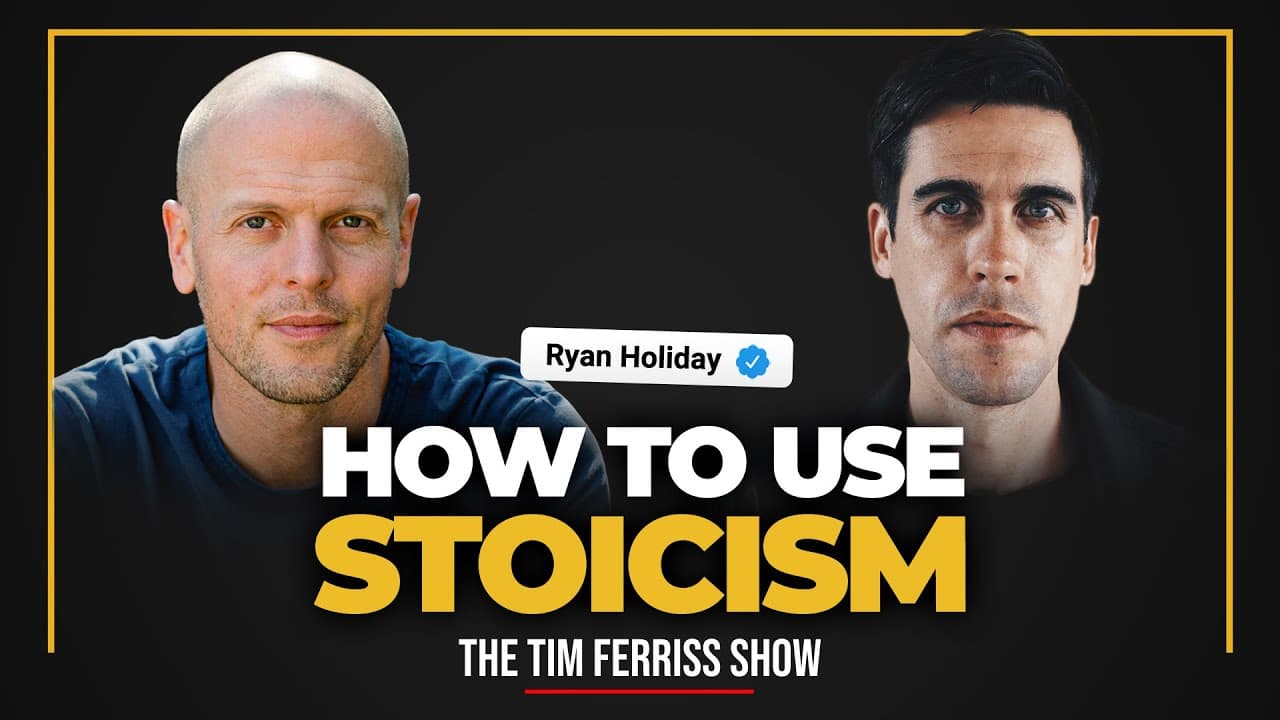
TL;DR
Stoicism provides tools to navigate life's challenges by emphasizing ideals rather than pass/fail standards. Key strategies include rehearsing worst-case scenarios to reduce anxiety, recognizing anger as unproductive, and focusing on personal growth during crises. Applying these principles can help individuals find meaning and make positive impacts during difficult times.
Transcript
all right so I was thinking so we last talked podcast related in January and man life comes at you fast I don't think like yeah you're the three great correctors of human population war pestilence and famine and we certainly have number two in abundance and scaling rapidly so things have changed quite a lot since Jen yeah and I was so I was curious... Read More
Key Insights
- 🙈 Stoic ideals are aspirational and should not be seen as strict pass/fail standards.
- 😨 Rehearsing worst-case scenarios and fear-setting exercises can help reduce anxiety and prepare for different outcomes.
- 💀 It is important to differentiate between anger and productive actions in times of crisis.
- 🥡 Taking control of our own actions and helping those around us can make a positive difference in challenging times.
- 🥺 Focusing on personal growth and using time productively can lead to a sense of fulfillment during crisis.
- 👋 Crisis often brings out the best in human resilience and resourcefulness.
- 😨 Stoic strategies provide a framework for dealing with fear, uncertainty, and challenging circumstances.
- 🎙️ More videos with Ryan Holiday:
Install to Summarize YouTube Videos and Get Transcripts
Explore YouTube Video Summarizer or Get YouTube Transcript Extractor
Questions & Answers
Q: How can Stoicism help in dealing with fear and uncertainty?
Stoicism teaches us to recognize fear as a natural response, but not let it control us. By accepting our fears and using techniques like fear-setting exercises, we can decrease their impact and focus on productive actions.
Q: Why is it important to differentiate between ideals and pass/fail hurdles in Stoicism?
Recognizing that Stoic ideals are something to strive for rather than absolute measures of success prevents us from falling into self-loathing and unrealistic expectations. It allows us to focus on progress and growth.
Q: Can you explain the concept of rehearsing worst-case scenarios and fear-setting exercises?
Rehearsing worst-case scenarios involves deeply envisioning the potential negative outcomes, both emotionally and experientially. Fear-setting exercises involve writing out the worst-case scenarios and developing strategies to decrease their likelihood or minimize their impact.
Q: How can the Stoic practice of visualizing worst-case scenarios be applied to financial decisions?
By mentally preparing for various outcomes, such as stock market crashes, we can make more informed decisions. This process helps us evaluate the potential risks and benefits and make rational choices rather than succumbing to fear or panic.
Summary & Key Takeaways
-
The content discusses how the Stoics, such as Seneca and Marcus Aurelius, can provide guidance during challenging times.
-
The speaker emphasizes that these ancient philosophical ideas are ideals to strive for, rather than pass/fail hurdles.
-
He shares personal strategies, such as rehearsing worst-case scenarios, to mentally prepare for challenging situations.
Read in Other Languages (beta)
Share This Summary 📚
Summarize YouTube Videos and Get Video Transcripts with 1-Click
Try YouTube Summary with ChatGPT & Claude or YouTube Transcript Generator
Explore More Summaries from The Tim Ferriss Show 📚

Summarize YouTube Videos and Get Video Transcripts with 1-Click
Try YouTube Summary with ChatGPT & Claude or YouTube Transcript Generator