How to Turn Obstacles Into Opportunities
TL;DR
Obstacles become useful when you view them objectively, focus on what you can control, and respond with deliberate action. Progress also requires resilience, patience, adaptability, and the will to continue when plans fail. Instead of retreating, blaming circumstances, or waiting for opportunities, identify the real barrier and use it to guide learning, innovation, and practical next steps.
Transcript
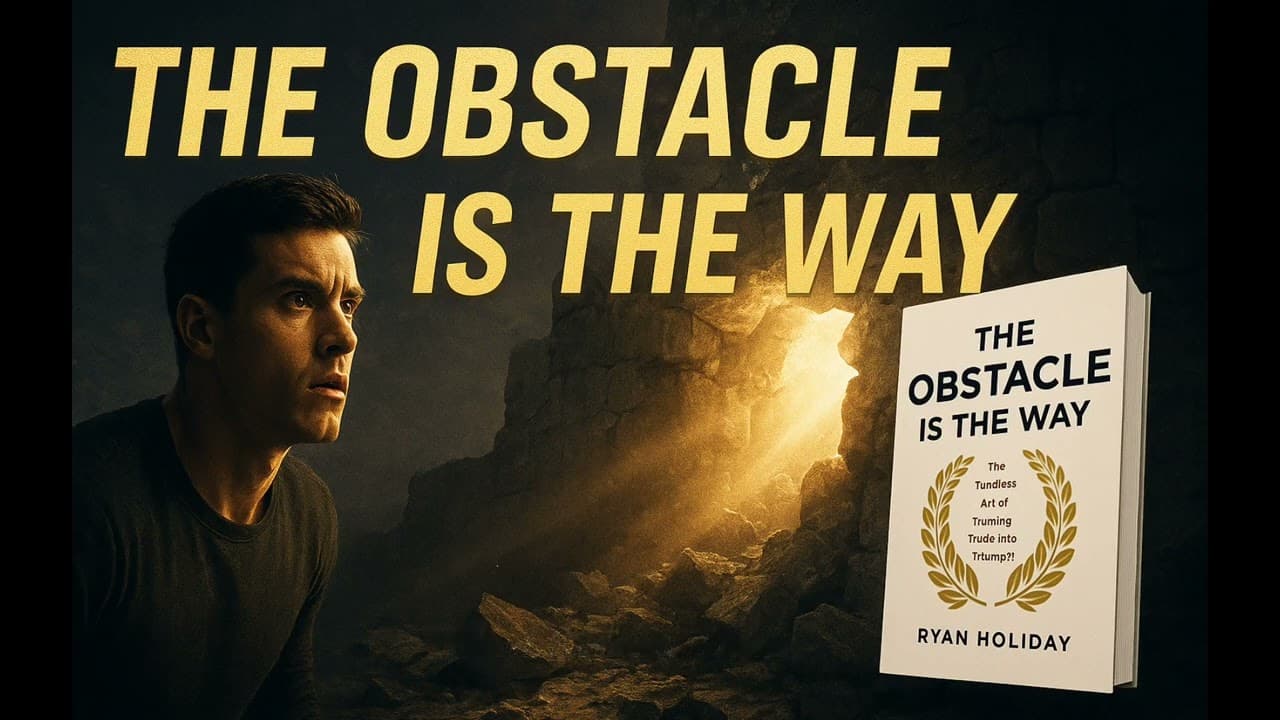
How do you see obstacles as problems or opportunities? In the obstacle is the way, Ryan Holidayiday flips the script on how we view challenges. He argues that obstacles aren't roadblocks on our path to success, but rather stepping stones that can help us grow and learn. This might seem like a strange idea, but it's a principle that's guided many su... Read More
Key Insights
- Obstacles are integral parts of the journey toward a goal, not merely interruptions or evidence of bad luck. Personal failures, professional setbacks, and societal barriers can expose lessons that improve judgment, strengthen capabilities, and create a path toward future progress.
- Perception determines whether a challenge appears to be a dead end or an opportunity. A disciplined perspective stays calm, examines the situation objectively, and searches for useful patterns, lessons, or openings instead of magnifying fear, blame, and discouragement.
- The three disciplines for overcoming obstacles are perception, action, and will. Perception reframes the problem, action produces a proactive response, and will supplies the resilience needed to continue when conditions are difficult or initial efforts do not succeed.
- Objectivity is the ability to examine a problem without allowing fear, personal feelings, wishes, or biases to distort it. Asking what is being missed and considering alternative viewpoints can reveal options that were hidden by the initial emotional reaction.
- Control lies primarily in how a person responds to events, not in everything that happens. Focusing on available choices and possible countermeasures directs energy toward constructive behavior, while worrying about uncontrollable conditions can encourage retreat, blame, or defeat.
- Proactive action creates opportunities through consistent effort, feedback, experimentation, and learning. An aspiring writer, for example, can write regularly, seek criticism, submit work, and use rejection to improve instead of waiting passively for inspiration or recognition.
- Patience is necessary because overcoming obstacles is a process of daily work, small advances, decisions, and adjustments. Working smart means directing effort toward tasks that advance the goal and delegating work that consumes attention without meaningfully supporting progress.
- Will is the grit and resilience that sustains a person when careful perception and determined action do not produce the planned result. It supports persistence, humility, and attention to controllable responses during unexpected setbacks, delays, and difficult conditions.
- Related book: The Obstacle Is the Way
- Export your Kindle highlights to Glasp: How to Download Highlights and Notes from Kindle
- More videos about this book:
- More videos with Ryan Holiday:
Install to Summarize YouTube Videos and Get Transcripts
Explore YouTube Video Summarizer or Get YouTube Transcript Extractor
Questions & Answers
Q: How can obstacles be turned into opportunities?
Obstacles can be turned into opportunities by first identifying the real barrier and then examining it without exaggeration, fear, or blame. The next step is to look for lessons, useful patterns, and actions within personal control. A crowded market, for example, can become a reason for a company to innovate and distinguish itself rather than an excuse for failure.
Q: What are perception, action, and will?
Perception, action, and will are three interconnected disciplines for handling obstacles. Perception means changing how a challenge is interpreted and seeing it objectively. Action means taking proactive steps to address the barrier. Will means maintaining determination, humility, grit, and resilience when circumstances become difficult or when the best available actions do not immediately create the desired result.
Q: Why does perception affect success?
Perception affects success because it shapes the response to a difficult situation. A fearful interpretation can magnify negative details, encourage retreat, and make defeat seem inevitable. A disciplined interpretation can reveal opportunities, patterns, and possible countermeasures. People still face the same external obstacle, but their chosen viewpoint influences whether they blame circumstances, surrender, or begin solving the problem.
Q: How can someone view a problem objectively?
Someone can view a problem objectively by separating observable conditions from personal fears, wishes, and biases. Useful questions include what might be missing and whether the situation can be interpreted differently. Objectivity also requires identifying which parts of the outcome can be influenced. This creates space for calm analysis and constructive action instead of an automatic emotional reaction.
Q: What can Thomas Edison's response to setbacks teach us?
Thomas Edison's examples show how reframing setbacks can support continued action. When his workspace burned, he viewed the loss as a chance to rebuild and begin again. His repeated attempts to create the light bulb were treated as information about approaches that did not work. The broader lesson is to use failure for learning rather than treating it as final defeat.
Q: How can a person create opportunities instead of waiting?
A person creates opportunities by repeatedly taking concrete steps toward a goal. An aspiring writer can write every day, request feedback, submit work to publishers, and study rejection or criticism for lessons. This approach does not guarantee control over every event, but it does place attention on controllable behavior and converts setbacks into information that can improve the next attempt.
Q: Why are patience and adaptability important when facing obstacles?
Patience is important because meaningful progress often consists of daily effort, small steps, and repeated decisions rather than immediate arrival at a goal. Adaptability allows a person to change tactics when the current approach is ineffective or predictable. Together, patience and flexibility support persistence without requiring someone to repeat the same actions regardless of changing circumstances.
Q: When can doing nothing be the right response to an obstacle?
Doing nothing can be useful when action would create an unnecessary distraction or pull attention away from the main objective. If a rival attempts to provoke a fight, ignoring the provocation may be more effective than responding. Strategic inaction is not passive surrender. It is a deliberate choice to preserve energy, remain focused, and avoid letting another person control the response.
Summary & Key Takeaways
-
Ryan Holiday presents obstacles as necessary parts of progress rather than signs that success is impossible. Personal failures, professional setbacks, and societal barriers can reveal useful lessons. The practical starting point is to identify the actual obstacle, separate it from fearful interpretation, and recognize how it might support learning, improvement, or innovation.
-
The framework for overcoming challenges combines perception, action, and will. Perception means interpreting difficulties calmly and objectively. Action means responding proactively with useful steps rather than waiting for favorable conditions. Will means maintaining humility, grit, and resilience when effort does not immediately produce the intended outcome or when circumstances remain outside personal control.
-
Patience, persistence, and adaptability make sustained progress possible. People should focus energy on tasks that move them toward their goals, change tactics when circumstances require it, and avoid distractions or unnecessary conflict. Even inaction can be strategic. By concentrating on controllable responses, setbacks can become material for better decisions and continued growth.
Read in Other Languages (beta)
Share This Summary 📚
Summarize YouTube Videos and Get Video Transcripts with 1-Click
Try YouTube Summary with ChatGPT & Claude or YouTube Transcript Generator