How to Master Sales Conversations with NEPQ

TL;DR
Mastering sales requires understanding the purpose and psychology behind each stage of a conversation, not merely memorizing a script. JP Egan advanced from stocking supermarket shelves to becoming the top closer among roughly 48 to 49 salespeople by developing adaptable questioning skills, listening for meaning, and helping prospects evaluate solutions without product pushing.
Transcript
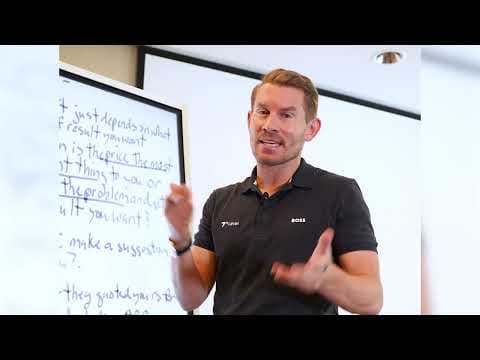
What we do at seventh level for salespeople is the top three salespeople every two months out of those two months, we don't do quarterly, every two months gets to drive the car. So JP is our top closer, top salesperson. Paul's our top SDR the last two months. So these guys work remotely. So they fly in, they get to drive my car anywhere they want t... Read More
Key Insights
- Sales mastery is a transferable skill that JP Egan believed could protect him from going broke because it can be applied across different companies and offers. This belief motivated him to prioritize learning sales skills over choosing a position solely for its immediate income potential.
- JP Egan’s sales career began after he worked stocking shelves in an Irish supermarket and later held a regular office job. He discovered a Jeremy Miner keynote while commuting, and its explanation of sales changed his understanding of the profession and gave him a clear career focus.
- Listening for meaning is more valuable than responding only to a prospect’s literal words. The idea that salespeople should hear what people mean by what they say showed Egan that effective selling involves deeper interpretation, curiosity, and understanding rather than delivering a prepared pitch.
- Early sales roles can produce poor results when training is absent. Egan cold-called prospects, booked meetings with a very high reported no-show rate, and earned about $100 in one month. He later sold AI lead generation to real estate agents but earned no commissions.
- NEPQ is presented as a principles-based structure rather than a script that must be recited word for word. Understanding the intended outcome of each stage allows a salesperson to conduct a natural conversation while still guiding the prospect toward deeper consideration of the problem and possible solution.
- Sales conversations require flexibility because prospects rarely provide identical answers. Egan says only a small portion of prospects stay on script, so representatives must adjust their next questions quickly based on each response while preserving a logical and emotional connection between questions.
- Product pushing differs from working with a prospect to identify a suitable solution. Egan contrasts approaches centered on describing how impressive a product is with NEPQ, which emphasizes collaboration, the prospect’s desired result, and the personal meaning attached to achieving that result.
- Performance incentives at 7th Level include more than commissions. Every two months, the top three salespeople can travel in and drive one of the company leader’s cars for three days, providing visible recognition for strong performance among a sales organization of roughly 48 to 49 people.
- More videos from this channel:
- More from this channel: Jeremy Miner
Install to Summarize YouTube Videos and Get Transcripts
Explore YouTube Video Summarizer or Get YouTube Transcript Extractor
Questions & Answers
Q: How did JP Egan become the top closer at 7th Level?
JP Egan moved from stocking supermarket shelves to sales, endured poorly performing roles with little training, and then applied to 7th Level because he wanted to develop a durable skill. He started as an SDR with the possibility of becoming a closer. By studying the structure and psychology of NEPQ, performing in his role, and learning to adapt questions to each prospect, he became the company’s number one closer.
Q: What is the main principle behind NEPQ sales conversations?
The main principle is to understand the psychological purpose and desired outcome of each stage instead of memorizing a rigid script. A representative asks questions that build connection and help the prospect explore the situation at a deeper emotional level. Because every prospect answers differently, the salesperson uses those responses to choose relevant follow-up questions and maintain a coherent conversation.
Q: Why should salespeople understand principles instead of memorizing scripts?
Principles give salespeople the flexibility to respond appropriately when a prospect says something unexpected. Egan explains that very few prospects follow a predetermined script, so mechanically moving to the next written question can break the emotional and logical connection. Understanding why a question is being asked helps the representative adjust immediately while still pursuing the intended outcome of that conversational stage.
Q: How is NEPQ different from product-pushing sales methods?
NEPQ is described as working with a prospect to identify a solution rather than concentrating on how impressive the product is. The conversation focuses on the results the offering may create and what those results mean to the buyer. This makes the interaction more collaborative and allows the prospect’s concerns, motivations, and desired outcomes to guide the discussion instead of relying on a product-heavy pitch.
Q: What does listening for what prospects mean involve?
Listening for meaning involves looking beyond the prospect’s literal wording to understand the concern, motivation, or emotion beneath the answer. That deeper interpretation helps a salesperson respond with a connected follow-up question rather than returning automatically to a script. For Egan, this principle transformed sales from an activity associated with clever persuasion into a structured process for understanding people and helping them consider solutions.
Q: Why did JP Egan choose sales as a career skill?
Egan wanted to become successful and earn substantial income after seeing his family’s financial position change dramatically. A Jeremy Miner keynote also discussed how successful people had backgrounds in sales, which convinced him that selling was worth learning. He later prioritized joining 7th Level for the skill development, reasoning that a portable sales ability could be used in many settings and make financial failure less likely.
Q: What happened in JP Egan’s early sales jobs?
Egan’s first sales experiences produced little income because the roles offered almost no structured training. In one position, he cold-called prospects and booked them onto his own calendar, but he reported that about 98 percent did not attend, leaving him with roughly $100 for the month. He later sold AI lead-generation services to real estate agents and earned zero commissions.
Q: How does 7th Level reward its leading salespeople?
Every two months, 7th Level identifies its top three salespeople rather than waiting for a quarterly cycle. Those representatives can fly in and drive one of the leader’s vehicles, including the featured car, a Range Rover, or a Benz, for three days. The reward supplements commissions with recognition and a memorable experience for high-performing remote team members.
Summary & Key Takeaways
-
JP Egan began working in sales after stocking shelves at an Irish supermarket and holding a regular office job. His early sales positions included cold calling and offering AI lead generation to real estate agents, but limited training produced weak results, including one month earning about $100 and another role earning no commissions.
-
A keynote by Jeremy Miner changed Egan’s view of sales, particularly the instruction to listen for what people mean rather than only what they say. Egan applied to companies where he wanted to work, joined 7th Level as an SDR, and treated that role as an opportunity to earn a closer position.
-
NEPQ training taught Egan to understand the desired outcome and psychology of each conversational stage instead of following a rigid script. Because prospects respond differently, a salesperson must adapt each next question immediately. The approach focuses on understanding the prospect, building an emotional connection, and discussing results rather than pushing product features.
Read in Other Languages (beta)
Share This Summary 📚
Summarize YouTube Videos and Get Video Transcripts with 1-Click
Try YouTube Summary with ChatGPT & Claude or YouTube Transcript Generator
Explore More Summaries from Jeremy Miner 📚



Summarize YouTube Videos and Get Video Transcripts with 1-Click
Try YouTube Summary with ChatGPT & Claude or YouTube Transcript Generator