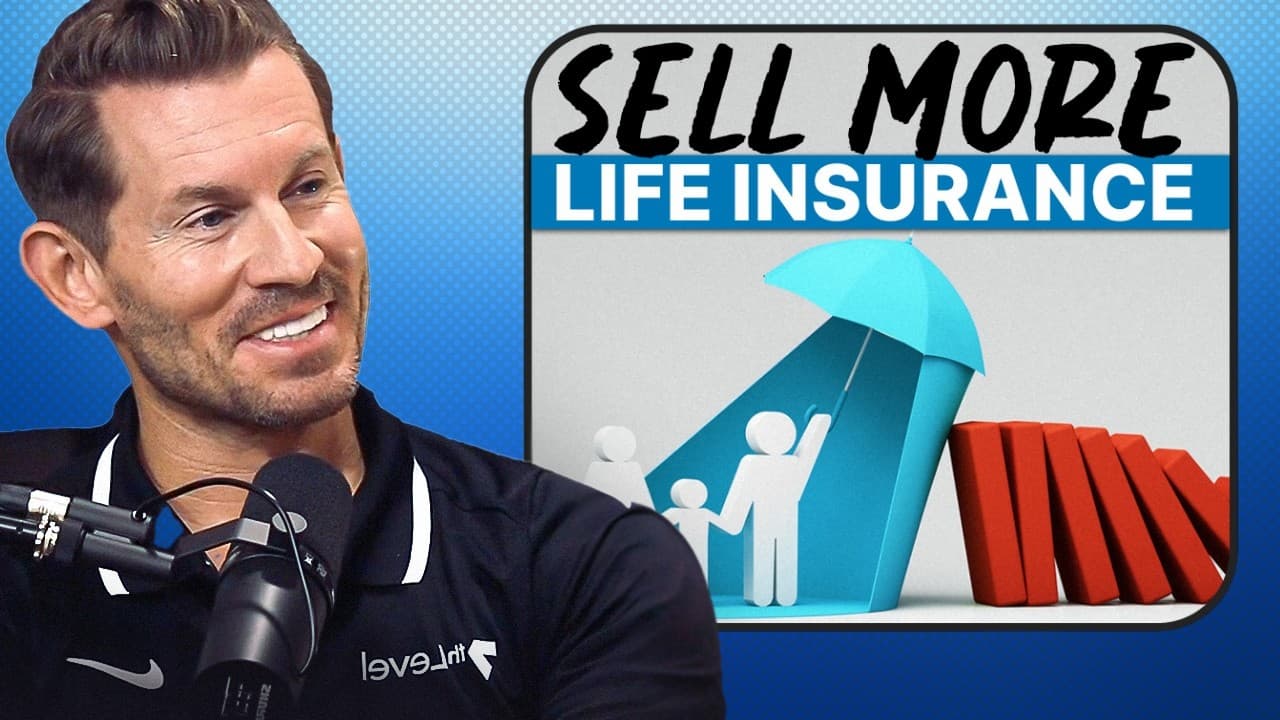
How to Sell Life Insurance Through Emotion
TL;DR
Life insurance agents can improve sales by replacing robotic scripts with emotionally connected conversations, purposeful questions, and disarming tonality. Prospects should be encouraged to explore past financial pain and visualize the consequences of remaining uninsured, while agents build genuine confidence through repeated training, stronger communication skills, and a clear understanding of what to say, ask, and emphasize.
Transcript
I always tell this to, you know, life insurance agents that we're training is that nobody really thinks they're going to die. I mean, they know they're going to die, but they don't really think about it day in and day out until maybe they have stage four cancer or something like they just don't think about it, right? So, a lot of insurance agents w... Read More
Key Insights
- Death is presented as a certainty rather than a hypothetical event. Agents can replace phrases such as "if something happens" with "when something happens" and then ask who would pay the mortgage or provide financial protection for the prospect's family.
- Robotic script delivery prevents emotional connection. Agents who mechanically move from one question to another can appear like telemarketers, particularly when they briefly acknowledge a painful disclosure and immediately return to their prepared sequence without asking thoughtful follow-up questions.
- Emotional connection begins with exploring why the prospect is considering coverage now. If a recent death or illness prompted the inquiry, the agent should respond empathetically and invite the prospect to describe what happened, rather than treating the disclosure as incidental information.
- Past experiences with insurance can demonstrate either relief or hardship. A deceased person's coverage may have been a blessing to the family, while a lack of coverage may have created a financial burden that other relatives had to help carry.
- Pain and fear of future pain are described as the strongest emotional drivers of change. Agents can explore the prospect's past financial hardship, then help the prospect visualize how remaining uninsured could expose their own family to similar problems after their death.
- Tonality shapes how prospects interpret an agent's intentions. The same words can produce different reactions depending on vocal delivery, causing a prospect either to lower their guard and feel understood or to become uncomfortable and defensive.
- A disarming opening requires matching the prospect's energy while maintaining balance. Agents should avoid sounding excessively enthusiastic, overtly sales-focused, or unengaged, and they may need to lower their own intensity when a client's energy is unusually high.
- Confidence is presented as the result of developed sales skill, not temporary motivation. Knowing what to say, why each question matters, and when to shift tone creates certainty, while stronger performance and better sales results reinforce that confidence.
Install to Summarize YouTube Videos and Get Transcripts
Explore YouTube Video Summarizer or Get YouTube Transcript Extractor
Questions & Answers
Q: How should agents discuss death when selling life insurance?
Agents should describe death as an eventual certainty rather than introducing it with "if." A question such as who will pay the mortgage when something happens can encourage a prospect to confront a financial responsibility that is easy to ignore. The purpose is to help the person consider how surviving family members would manage expenses and financial protection after the prospect dies.
Q: Why do scripted life insurance pitches lose prospects?
Scripted pitches lose effectiveness when agents sound robotic, disconnected, or similar to telemarketers. A prospect may disclose that a brother recently died, but an agent who offers a brief apology and immediately asks the next scripted question misses the emotional significance. Without a genuine connection, the prospect has little reason to engage deeply and may finish the conversation by saying they need to think about it.
Q: How can an insurance agent create emotional connection?
An agent can create emotional connection by listening closely, acknowledging painful experiences, and asking considerate follow-up questions. When a prospect mentions a recent death, the agent can ask what happened and recognize that the deceased person may have been young. Allowing the prospect to talk reveals why coverage matters now and connects the policy discussion to a real family experience.
Q: Why should agents explore a prospect's past experience with insurance?
Past experience can reveal the practical and emotional consequences of having or lacking coverage. If the deceased person had insurance, the prospect may describe the policy as a blessing that protected the family. If no coverage existed, relatives may have faced a burden or provided financial help. Either outcome gives the current conversation a concrete reason and helps clarify why protection matters.
Q: What emotional drivers motivate prospects to buy life insurance?
The discussion identifies current pain and painful past history as the two strongest emotional drivers of change, with pleasure described as a distant third. An agent can explore hardship caused by a relative's uninsured death, then help the prospect consider future pain if their own family lacks protection. The conversation links a remembered burden with the possible consequences of taking no action.
Q: How does tonality affect a life insurance sale?
Tonality affects how a prospect interprets the intention behind every statement and question. Identical words can feel supportive and disarming in one tone but sales-focused or threatening in another. Effective delivery matches the client's general energy, avoids excessive excitement or boredom, and may lower the intensity when necessary. These adjustments can determine whether the prospect relaxes or raises their guard.
Q: How can life insurance agents improve their tonality?
Agents can improve tonality through deliberate training and repeated practice. The speaker studied with a Hollywood acting coach in a six-month course, renewed the course several times, and completed about a year and a half of training. He also continued taking other tonality courses. The broader lesson is that vocal delivery is a learnable skill that requires sustained study rather than a single script.
Q: Where does genuine sales confidence come from?
Genuine confidence comes from developing enough skill to know what to say, why to say it, what to ask, and when to change tone. That preparation creates certainty in the agent's voice and improves the ability to guide both the client and the sale. Motivation alone cannot substitute for competence because repeated performance and stronger results are what reinforce lasting confidence.
Summary & Key Takeaways
-
Life insurance conversations become more meaningful when agents acknowledge that death is certain and ask who will handle financial obligations when it occurs. Replacing hypothetical language with direct questions about mortgages and family protection can help prospects consider consequences they normally avoid thinking about during their daily lives.
-
Agents should explore the personal events that prompted someone to consider coverage. When a prospect mentions a death or illness, immediately returning to a script wastes an opportunity for empathy. Thoughtful follow-up questions can reveal whether insurance provided financial relief or whether missing coverage created a burden for surviving family members.
-
Effective delivery depends on disarming tonality, emotional awareness, and confidence grounded in skill. Agents should match a prospect's energy without becoming overly excited, dull, or sales-focused. Knowing what to say, why to say it, and how to adjust vocal tone helps agents guide conversations with greater certainty and composure.
Read in Other Languages (beta)
Share This Summary 📚
Summarize YouTube Videos and Get Video Transcripts with 1-Click
Try YouTube Summary with ChatGPT & Claude or YouTube Transcript Generator
Explore More Summaries from Jeremy Miner 📚





Summarize YouTube Videos and Get Video Transcripts with 1-Click
Try YouTube Summary with ChatGPT & Claude or YouTube Transcript Generator