How to Control a Sales Call From Minute One
TL;DR
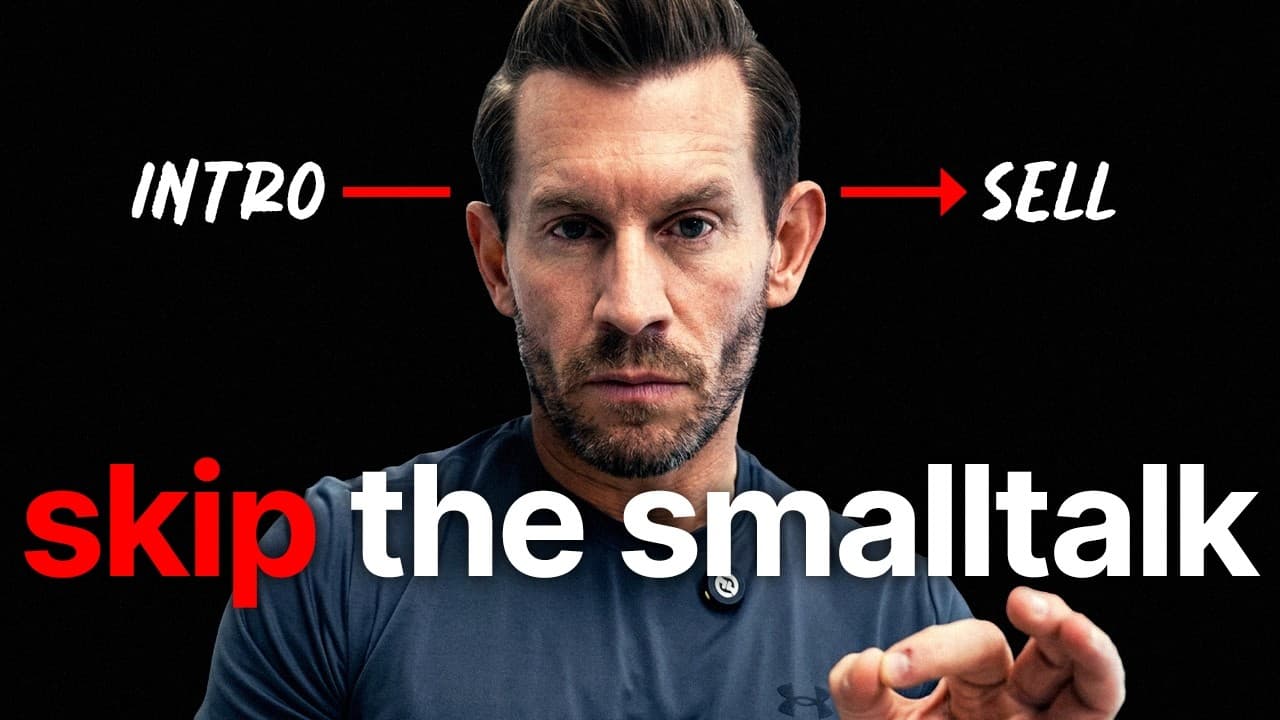
Build authority at the start of a sales call by framing yourself as an expert, focusing the prospect on desired results, and avoiding forced small talk. Use neutral language until trust develops, interject with clarifying questions when answers wander, and loop back to unanswered questions so vague or noncommittal responses do not become objections later.
Transcript
[music] >> This person is in a very very unique niche. I love every I think everybody here is coming to me like, "You don't understand, Jeremy. I'm in a very unique niche." Okay, I've never heard that before. So, what this guy does is he is a relationship coach for women struggling with building relationships. Would you say that's a little bit nich... Read More
Key Insights
- Forced rapport can signal sales intent because generic small talk may make prospects think the salesperson is merely trying to become likable before presenting an offer. The recommended alternative is to establish expert status early and build deeper rapport after the prospect decides to buy.
- Status positioning is created through subtle contextual statements, such as noting that a concern is a common reason people seek help. This communicates experience without relying on familiar claims about being the best, a market leader, a family business, or a boutique provider.
- Results-focused framing shifts the prospect away from price or cost considerations by naming the outcome they want. In the analyzed call, the desired outcome is a better relationship, so the opening question connects the conversation directly to improving relationships and finding the right person.
- The initial call frame should lower pressure by describing the conversation as a basic effort to understand the current situation, desired future, and gap between them. Possible next steps are discussed only if the prospect feels the service might match what they are seeking.
- Body language affects vocal tone even during an audio-only call. Physical gestures that represent the present state, desired state, and gap can help the salesperson's voice communicate contrast, while concrete words should trigger emotion and a visual image rather than remain vague.
- Neutral language is appropriate before sufficient trust and credibility exist. Phrases such as "possibly working with us" and "this might be what you are looking for" avoid assuming a decision too early, while leaving room for stronger assumptions after trust and a clear gap develop.
- Clarifying interjections are different from interruptions because their purpose is to understand a specific statement more precisely. Asking what someone meant at the moment ambiguity appears encourages expansion, demonstrates attention, and lets the salesperson guide the conversation while the prospect feels understood.
- Looping is the practice of returning to a question when the prospect gives a vague, surface-level, noncommittal, or unrelated response. Moving immediately to the next prepared question leaves an important gap unresolved and allows uncertainty to accumulate into later objections such as wanting time to think.
- More videos from this channel:
- More from this channel: Jeremy Miner
Install to Summarize YouTube Videos and Get Transcripts
Explore YouTube Video Summarizer or Get YouTube Transcript Extractor
Questions & Answers
Q: How should a salesperson open a sales call?
A salesperson should open by calmly establishing expert status and clarifying why the prospect scheduled the conversation. The opening can acknowledge that the prospect's concern is a common reason people seek help, then connect the discussion to the result the prospect wants. This approach avoids forced small talk, lowers resistance, and keeps attention on the prospect's desired outcome rather than immediately emphasizing cost.
Q: Why can traditional rapport building hurt a sales call?
Traditional rapport building can hurt when it consists of predictable questions about the prospect's day, location, or other surface-level topics. According to the analysis, prospects may recognize this as an attempt to become likable before selling something. That perception places the caller in the salesperson category and can make the prospect less willing to provide specific, honest answers about the real problem.
Q: How can a salesperson establish status without bragging?
A salesperson can establish status through brief statements that demonstrate familiarity with the prospect's situation. For example, saying that a stated concern is a common reason people seek help implies relevant experience. This differs from claiming to be the best, the leading provider, a trusted family business, or a boutique firm, because competitors often use those same descriptions and therefore sound interchangeable.
Q: How should the purpose of an initial sales call be framed?
The initial call should be framed as a straightforward effort to understand what is happening now, what the prospect wants instead, and what the gap between those two conditions looks like. The salesperson can add that possible next steps will be discussed only if the solution appears relevant. This neutral structure reduces pressure while preserving the salesperson's role as the expert guiding the conversation.
Q: When should a salesperson assume the sale?
A salesperson should not assume the sale during the first minute, when the prospect probably has not developed enough trust or confidence in the proposed help. Early language should remain neutral, using phrases such as "might be," "possibly," and "possible next steps." More assumptive language becomes appropriate only after the salesperson has built trust, established credibility, and helped the prospect recognize a meaningful gap.
Q: How does body language affect a phone sales call?
Body language can influence vocal tone even when the prospect cannot see the salesperson. Gesturing to represent the prospect's current circumstances, desired outcome, and the gap between them helps the caller express those ideas with clearer vocal contrast. The analysis also argues that words should trigger emotion and visual images, so specific descriptions are more effective than vague references to a general situation.
Q: What is the difference between interjecting and interrupting?
Interjecting seeks clarification, while interrupting merely cuts off the other person. When a prospect begins wandering, the salesperson can refer to a specific statement and ask what it meant. That question helps organize the conversation, invites the prospect to expand on an important detail, and shows an effort to understand. It also preserves direction without requiring the salesperson to listen passively to several minutes of unrelated detail.
Q: What is looping in a sales conversation?
Looping means returning to the original question when a prospect responds vaguely, gives a surface-level answer, uses noncommittal language, or discusses something unrelated. The salesperson rephrases and asks again instead of proceeding through a prepared list. Closing that conversational loop uncovers what the prospect is actually seeking and prevents unresolved uncertainty from accumulating into objections later in the call.
Summary & Key Takeaways
-
The opening minute should establish expertise without relying on generic claims or forced rapport. Saying that a prospect's concern is a common reason people seek help subtly raises status. Framing the conversation around the result the prospect wants also shifts attention away from price or cost and toward the desired outcome.
-
The call should be presented as a simple exploration of the prospect's current circumstances, desired future, and the gap between them. Neutral phrases such as "might be" and "possible next steps" lower pressure before trust exists. More confident, assumptive language should wait until credibility and a meaningful gap have been established.
-
Active presence requires guiding the conversation instead of allowing an answer to wander indefinitely. A salesperson can interject with a clarifying question to understand what the prospect means, then return to the original question when necessary. This looping technique addresses noncommittal language before it can develop into objections near the close.
Read in Other Languages (beta)
Share This Summary 📚
Summarize YouTube Videos and Get Video Transcripts with 1-Click
Try YouTube Summary with ChatGPT & Claude or YouTube Transcript Generator
Explore More Summaries from Jeremy Miner 📚




Summarize YouTube Videos and Get Video Transcripts with 1-Click
Try YouTube Summary with ChatGPT & Claude or YouTube Transcript Generator