How to handle price objections and secure funding
TL;DR
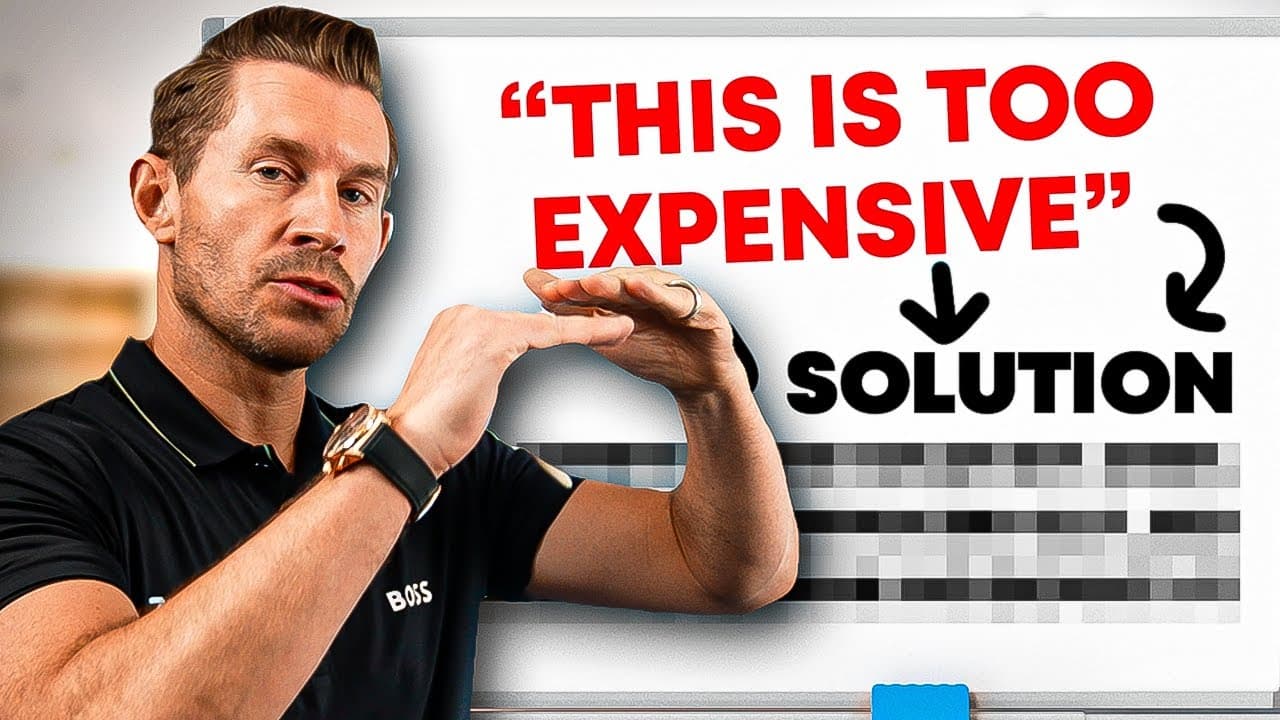
Agree with the prospect to lower guard, then shift the focus from budget to funding and the outcome. Use questions that keep emotional reasoning in play, repeat back what they want, and steer toward funding options and the desired result. This approach aims to keep the conversation on value and end goals rather than price alone.
Transcript
you want me to show you one of the biggest objections that you're probably going to start getting very soon this is going to be one of the biggest objections you will get as the economy starts going down here in the next several months could even be weeks or a few months we just don't know prospects are going to say even though they like what you d... Read More
Key Insights
- Pricing objections can be softened by agreeing with the prospect first to reduce guard.
- Funding, not budget, should be discussed to avoid a capped mindset and keep the focus on capabilities.
- Ask about funds or funding and whether the requested outcome would be possible with available resources.
- Keep the conversation in the emotional decision zone by using feel over think in questions.
- Repeat back what the prospect said to ensure understanding and alignment with their needs.
- Tie the funding discussion directly to the specific result the prospect wants to achieve.
- Use short verbal pauses and precise language to manage the flow of the exchange.
- Promote and utilize the NEPQ Black Book of Questions as a tool to improve questioning and outcomes.
- More videos from this channel:
- More from this channel: Jeremy Miner
Install to Summarize YouTube Videos and Get Transcripts
Explore YouTube Video Summarizer or Get YouTube Transcript Extractor
Questions & Answers
Q: A real search query question about the video (e.g. 'How to...', 'What is...', 'Why does...', 'When should...'). Question 1
To handle the too expensive objection, start by agreeing with the prospect to lower their guard and then steer the conversation toward funding and the results they want. Use a curious tone and ask if, if funds were available, would this solution work for them. This shifts the frame from price to value and outcomes, enabling you to explore funding options while maintaining engagement.
Q: Question 2
If a prospect says they do not have money, respond by reframing the discussion to funding instead of budget, and prompt them to consider how they would achieve their goals with available resources. This approach keeps the dialogue outcome-focused and opens up possibilities like using different funding sources or reallocations.
Q: Question 3
Ask questions that keep the buyer in an emotional frame of decision making, for example asking how they feel they can resolve funding to obtain the results they want. This helps maintain engagement beyond simple price considerations and improves the chance of finding a workable path forward.
Q: Question 4
Explain the difference between funds and budget and why funds are preferred for B2B conversations. This helps shift mental models away from a cap on spending and toward the potential to fund the project through loans, credit, or reallocations, increasing the likelihood of progress.
Q: Question 5
Demonstrate how to repeat back the buyer’s stated needs and desired outcomes to ensure accuracy and alignment. This technique improves trust and ensures the conversation remains focused on the results the buyer wants rather than merely the price.
Q: Question 6
Describe how to handle pushback by guiding the buyer to consider alternatives like credit or loan options, or shifting funds from other areas, to enable the purchase while addressing their constraints. This maintains momentum and demonstrates practical pathways to funding.
Q: Question 7
Highlight the role of tonality and body language in eliciting openness, along with careful phrasing like using how you feel rather than how you think. This keeps the emotional side of decision making engaged and supports a favorable outcome.
Q: Question 8
Introduce the NEPQ Black Book of Questions as a training resource to refine your script and improve your closing rate, even in an economic downturn. The material claims to provide specific, higher quality questions that help move prospects from listening to committing.
Summary & Key Takeaways
-
This video explains a method for handling the common objection that a product is too expensive by reframing the discussion around funding sources and outcomes. It emphasizes building emotional alignment and asking targeted questions to uncover how funds could be found and how the solution aligns with the prospect's goals. The approach also highlights the use of a book and training program as tools to improve questioning techniques across sales conversations.
-
The presenter advises to avoid the word budget for B2B conversations, suggesting funds or funding instead to prevent a capped mindset. It shows how to verbally pause, repeat back the buyer’s needs, and link funding to the results they want, thereby increasing openness and reducing price sensitivity.
-
The content concludes with an invitation to explore the NEPQ Black Book of Questions as a resource to refine scripts and close more deals, even in tough economic conditions, backed by past sales success and a call to action to obtain the book via a link.
Read in Other Languages (beta)
Share This Summary 📚
Summarize YouTube Videos and Get Video Transcripts with 1-Click
Try YouTube Summary with ChatGPT & Claude or YouTube Transcript Generator
Explore More Summaries from Jeremy Miner 📚




Summarize YouTube Videos and Get Video Transcripts with 1-Click
Try YouTube Summary with ChatGPT & Claude or YouTube Transcript Generator