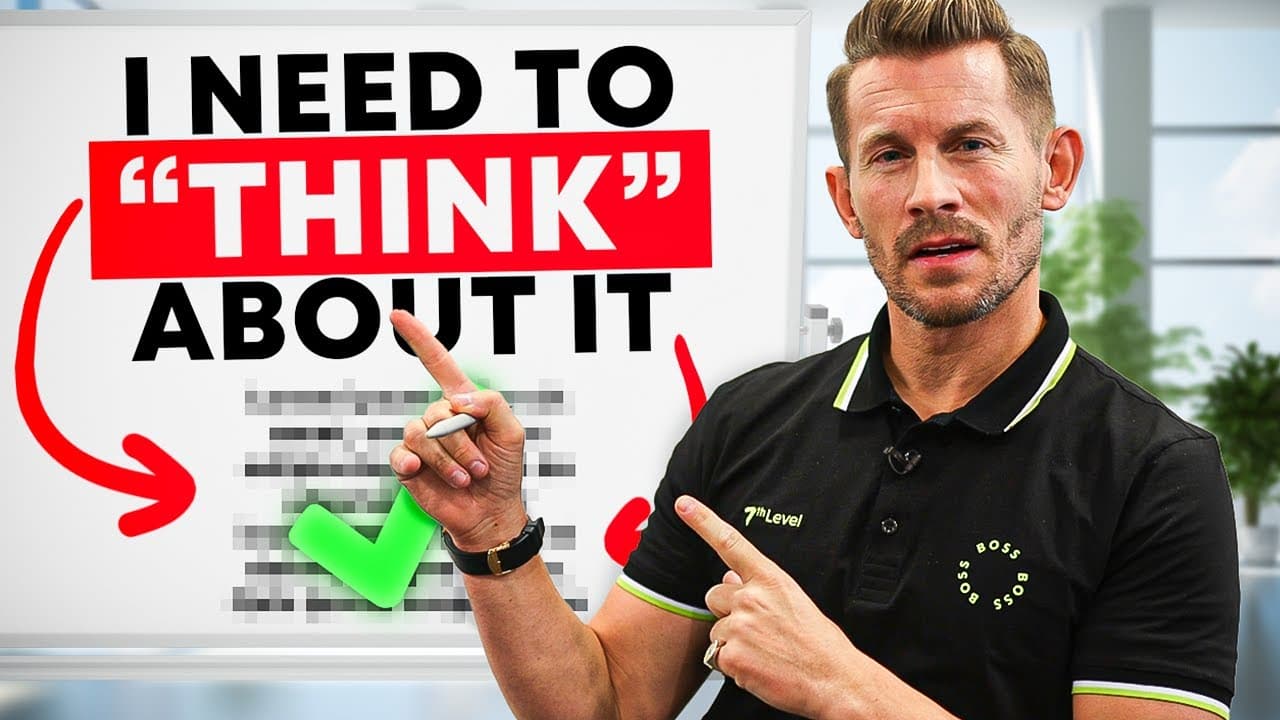
How to Handle “I Need to Think About It” in Sales
TL;DR
Agree with the prospect, secure a specific follow-up time, and then calmly ask what they want to review before the next conversation. This lowers their guard and can reveal the real concern, such as money, timing, or a spouse’s involvement, while giving you an opportunity to address it before ending the current discussion.
Transcript
how many sales do you lose every month when your prospect says I just need some time to think it over yikes all right you want to stop that from happening so you can close those deals I can show you how to do that and overcome it here on the survive board you ready you might want to write this down all right the first thing that you have to learn h... Read More
Key Insights
- “I need to think about it” is presented as a defensive response rather than the prospect’s underlying objection. The useful information is what the prospect wants to consider, because that answer can reveal the concern that must actually be addressed.
- Directly asking “What do you need to think about?” can make a prospect defensive. According to the speaker, pressure at this stage may cause the prospect to protect their position and introduce additional objections instead of discussing the real issue.
- Agreement is the first step in lowering the prospect’s guard. Responding that their request is not a problem signals acceptance, reduces immediate sales pressure, and prepares the conversation for a more revealing question after a follow-up arrangement has been established.
- A specific calendar commitment is necessary when the prospect vaguely promises to call later. The speaker says that prospects who are left responsible for an unspecified callback usually do not call, so both parties should select a firm time together.
- Limited availability is used to position the salesperson as a busy expert. Saying that you may not be randomly available, while offering to schedule a specific appointment, communicates that other clients also seek your help and that your time has value.
- The phrase “before I go” helps signal that the sales interaction is ending. Once prospects believe the salesperson is about to leave the phone, virtual meeting, home, or business, they may feel less pressure and become more willing to disclose their concern.
- Curious vocal delivery is essential when asking what the prospect wants to review. The speaker recommends slow verbal pacing and a curious tone because prospects interpret the purpose of a question partly through tone, facial expression, and delivery.
- The revealed objection may involve money, budget, time, or a spouse. Discovering that concern while the salesperson is still present creates an immediate opportunity to discuss it, rather than waiting for a later appointment without knowing what is preventing the decision.
Install to Summarize YouTube Videos and Get Transcripts
Explore YouTube Video Summarizer or Get YouTube Transcript Extractor
Questions & Answers
Q: How should a salesperson respond when a prospect needs time to think?
The salesperson should first agree and say that the request is not a problem, rather than immediately challenging the prospect. Next, they should ask about the prospect’s time frame for reconnecting and secure a specific appointment if necessary. After scheduling it, they should ask what the prospect wants to review so they can prepare for the questions expected during the next conversation.
Q: Why should salespeople avoid asking what the prospect needs to think about immediately?
Asking that question too directly can cause the prospect to become defensive, especially if it sounds like a rebuttal or challenge. The transcript says defensive prospects often produce more objections instead of revealing their actual concern. The recommended approach is to reduce pressure first by agreeing, arranging a follow-up, and making the prospect believe the current sales conversation is about to end.
Q: Is “I need to think about it” the prospect’s real sales objection?
The speaker argues that it is usually not the real objection. Instead, it functions as a defensive mechanism that allows the prospect to avoid stating the concern directly. The real objection is what they intend to consider, which may involve available money or budget, the time required, or the need to speak with a spouse before deciding.
Q: How do you turn a vague callback promise into a firm appointment?
Explain that you may not be randomly available because of your schedule, then offer a practical alternative. Ask the prospect to open their calendar while you open yours and have them book a specific time. Frame the arrangement as helpful to both parties because neither person will need to chase the other. The speaker describes this method as an NEPQ calendar commitment.
Q: Why does mentioning limited availability help during a sales conversation?
Mentioning that you may not be randomly available is intended to raise your status in the prospect’s mind. The speaker says experts are busy because many people want their help, while appearing available at any time can make someone seem like a regular salesperson. Limited availability also shifts responsibility by encouraging the prospect to reserve time instead of expecting the salesperson to keep chasing them.
Q: What question can uncover the real reason a prospect is hesitating?
After arranging the next appointment, ask: “Before I go, what were you wanting to go over in your mind, just so I know what questions you’ll have when we talk?” This wording connects the question to preparation for the scheduled conversation. It also avoids directly challenging the prospect’s request to think and can encourage them to identify the concern behind their hesitation.
Q: How should the salesperson use tone and facial expression when asking about hesitation?
The question should be delivered slowly, with verbal pacing and a genuinely curious tone. The speaker says tone affects how the prospect interprets why the question is being asked, while facial expression acts like a remote control for vocal delivery. A curious expression and voice make the inquiry feel less confrontational, increasing the likelihood that the prospect will explain what they want to consider.
Q: What types of objections may be revealed after the prospect lowers their guard?
The prospect may disclose that they are uncertain about having enough money or budget, need to discuss the decision with a spouse, or doubt that they have enough time to proceed. These examples show why the initial request to think is incomplete. Once the specific concern is identified, the salesperson remains present and can help the prospect address that issue during the current conversation.
Summary & Key Takeaways
-
When a prospect says they need time to think, immediately challenging the statement can make them defensive and produce additional objections. The recommended first step is to agree without resistance, ask when they expect to respond, and communicate that your future availability may depend on your existing schedule.
-
If the prospect offers only a vague promise to reconnect later, establish a firm calendar appointment. Ask them to open their calendar while you open yours, then select a specific time. The speaker calls this an NEPQ calendar commitment and presents it as a backup that prevents both parties from chasing each other.
-
After scheduling the follow-up, signal that the current conversation is ending and ask what the prospect wants to review before the next meeting. A slowly paced, curious question can uncover whether the actual concern involves money, budget, time, or a spouse, allowing the salesperson to address it immediately.
Read in Other Languages (beta)
Share This Summary 📚
Summarize YouTube Videos and Get Video Transcripts with 1-Click
Try YouTube Summary with ChatGPT & Claude or YouTube Transcript Generator
Explore More Summaries from Jeremy Miner 📚





Summarize YouTube Videos and Get Video Transcripts with 1-Click
Try YouTube Summary with ChatGPT & Claude or YouTube Transcript Generator