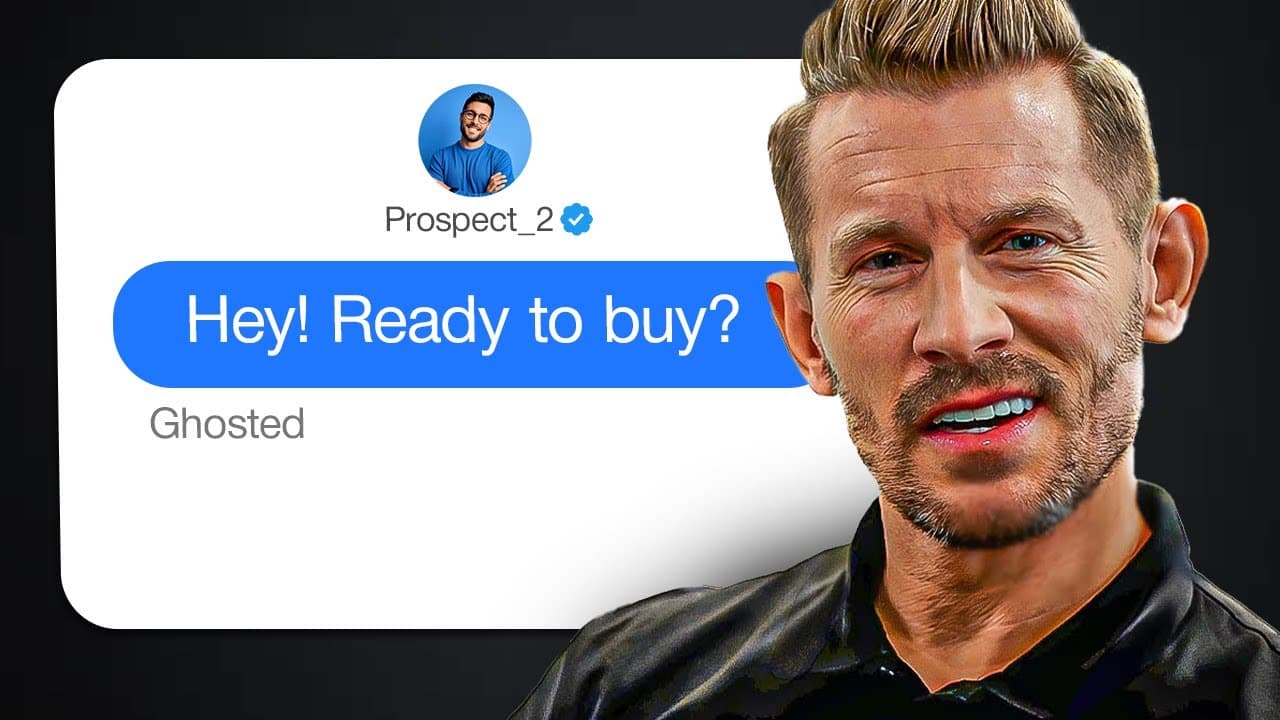
How to Reengage a Prospect After They Ghost You
TL;DR
When a prospect ghosts you, initiate a short, direct follow up asking where to go from here. Then space out another message after a few days if there is no reply, and tailor the next touch to the industry and prior conversation. This sequence improves response rates by focusing on the prospect’s needs rather than generic sales pitches.
Transcript
all right today's training I'm going to show you what to say what to do when a prospect actually ghost you right you've had a great conversation maybe you booked in another appointment maybe they're about to pay and all of a sudden they go missing in action what do you say what do you do oh my gosh come over here I'm going to show you what most sal... Read More
Key Insights
- Prospects who ghost you can be reengaged with a simple, direct question about next steps.
- The right follow up uses spacing to improve visibility and avoid being overlooked in crowded inboxes.
- Timing matters: B2B follow ups can wait a bit longer than consumer sales before a next touch.
- Avoid generic, multi paragraph emails that people quickly skim and delete.
- The phrase where should we go from here or how do you want to proceed from here works well.
- Voicemails and texts should align with the email message and tone for consistency.
- Industry specific examples increase relevance and resonance with the prospect.
- The ultimate goal is to create internal urgency by showing the pain of not changing rather than applying pressure.
- More videos from this channel:
- More from this channel: Jeremy Miner
Install to Summarize YouTube Videos and Get Transcripts
Explore YouTube Video Summarizer or Get YouTube Transcript Extractor
Questions & Answers
Q: What should you say in the first reengagement message after a ghosted prospect?
The first reengagement message should be short and direct, for example asking where you should go from here or how you want to proceed from here. This should come after a few prior attempts and should be clearly separated from earlier messages to improve visibility and response chances.
Q: How should you sequence follow ups after several non replies?
After four or five days from the last contact, send a new message that acknowledges the lack of response and restates the specific next step. Do not repeat the same content; instead, address the client’s goals and remind them of the value, then invite a concrete action.
Q: What tone is recommended for emails in this sequence?
Use a concise, respectful tone that focuses on the prospect’s needs and the agreed outcomes. Avoid overly long emails and generic language. The goal is to prompt a direct response about next steps rather than to pressure or overwhelm.
Q: How can you tailor your follow up to different industries?
Industry tailoring involves inserting specific outcomes the prospect cares about, such as scalability or operational improvements, and referencing the exact problem the prospect stated. This makes the message more relevant and increases the likelihood of a reply.
Q: What is a good way to handle a voicemail in this sequence?
A voicemail should be brief and consistent with the email message, stating who you are, that you left messages previously, and asking where the conversation should go from here. The caller should offer a timeslot or indicate availability to reconnect.
Q: Why is it important to avoid generic phrases in follow ups?
Generic phrases are often ignored because they do not address the prospect’s specific situation. Personalizing the message around the problems and desired outcomes makes the communication more meaningful and increases engagement.
Q: What role does urgency play in this follow up strategy?
Urgency should be internal rather than external. The objective is to help the prospect feel the pain of not changing and to recognize the value of progressing, not to pressure them with hard sell language.
Q: How should you reference the original discovery conversation in follow ups?
Reference the outcomes or problems discussed in the discovery, restating what they wanted and what happened. This anchors the follow up to the prior dialogue and helps the prospect reconnect with the context and next steps.
Summary & Key Takeaways
-
A concise follow up should ask where to go from here and be clearly separated from prior messages. The approach should avoid wordy emails and heavy sales language that prospects skim or ignore. Timing and sequencing are important to reengage without pressuring the prospect.
-
The method emphasizes mentioning the prospect’s pain points and desired outcomes, then restating what was requested or needed to progress the deal. Customization to the industry increases relevance and response likelihood.
-
The process is best used after multiple non replies, with escalation through a structured sequence that avoids repetitive contact. It requires understanding the discovery conversation and the specific outcomes the prospect seeks to achieve.
Read in Other Languages (beta)
Share This Summary 📚
Summarize YouTube Videos and Get Video Transcripts with 1-Click
Try YouTube Summary with ChatGPT & Claude or YouTube Transcript Generator
Explore More Summaries from Jeremy Miner 📚






Summarize YouTube Videos and Get Video Transcripts with 1-Click
Try YouTube Summary with ChatGPT & Claude or YouTube Transcript Generator