How to practice reflective listening effectively
TL;DR
Reflective listening is the skill of restating what someone says to show understanding and empathy. It involves content level summaries, emotional reflection, and meaning level clarifications, while avoiding unsolicited advice. Practicing this creates openness, reduces defensiveness, and helps the speaker articulate feelings and thoughts more clearly.
Transcript
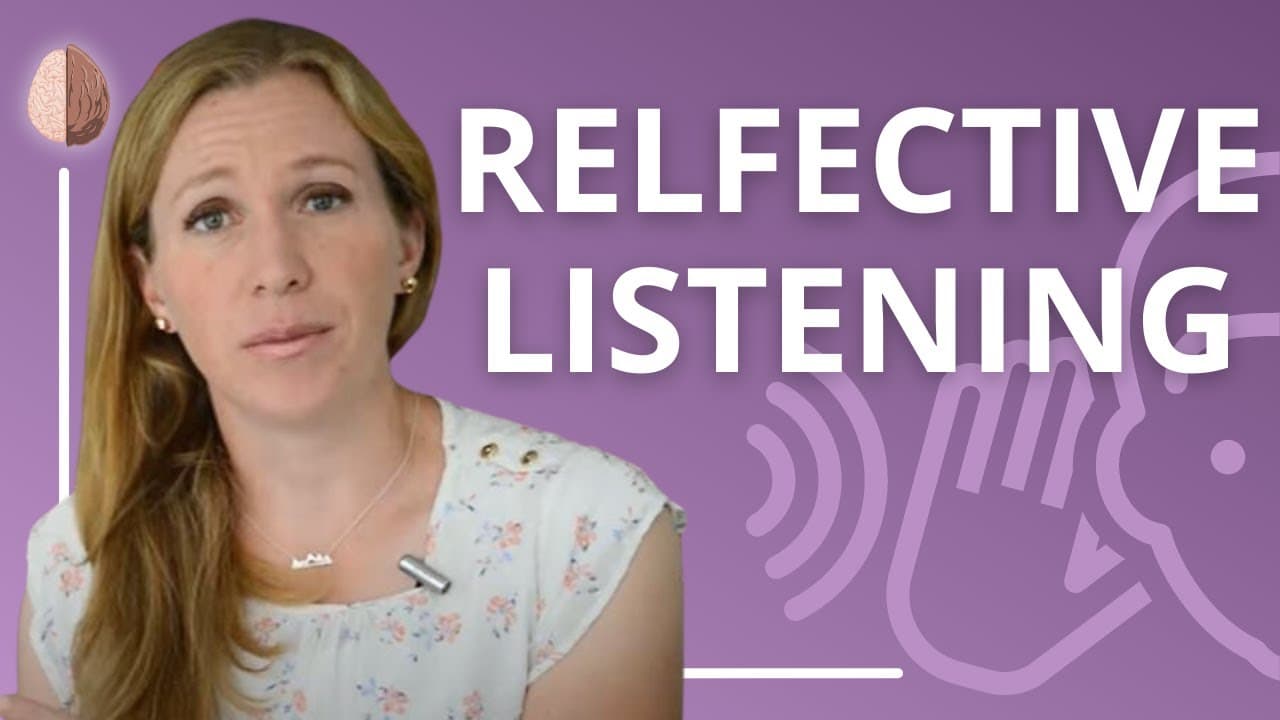
Reflective listening is the ability to bounce back at them what they're saying This is a skill that doesn't come naturally to us. When involved in a conversation we tend to talk about ourselves or give advice, we try to make them feel better or agree or disagree or tell stories. In order to be a good reflective listener we need to set aside our own... Read More
Key Insights
- Reflective listening means bouncing back the speaker’s words in your own phrasing to show understanding.
- The simplest level is to summarize and confirm you got it right, using a content level reflection with a question at the end.
- The next level uses reflecting to help clarify thoughts and make emotions concrete, aiding problem solving.
- The meaning level helps express what the speaker believes those thoughts and emotions imply about their values or goals.
- Good listening statements are often better than questions because they align with the speaker’s agenda rather than directing the conversation.
- Questions can create defensiveness or derail the speaker, so use them sparingly and purposefully to invite openness.
- Reflective listening supports emotional processing by validating feelings and helping articulate underlying concerns.
- Avoid diagnosing or judging the speaker and refrain from trying to be the therapist; stay sincere, humble, and curious.
- More videos from this channel:
- More from this channel: Therapy in a Nutshell
Install to Summarize YouTube Videos and Get Transcripts
Explore YouTube Video Summarizer or Get YouTube Transcript Extractor
Questions & Answers
Q: How to start practicing reflective listening in a conversation
Begin by focusing on understanding the speaker’s content and emotions. Paraphrase what you hear in your own words and end with a clarifying question to confirm accuracy. This establishes that you are listening, reduces misinterpretation, and invites the speaker to elaborate further without feeling judged.
Q: Why are questions often detrimental in reflective listening
Questions can push the conversation toward the listener’s agenda, narrowing the speaker’s space to express their own thoughts. They can also feel like an interrogation, triggering defensiveness and less openness. Using reflections instead keeps the dialogue collaborative and the speaker more willing to share.
Q: What is the content level in reflective listening
The content level focuses on summarizing the facts and explicit statements the speaker makes. This helps verify accuracy and shows you are following the factual thread of the conversation. It is the foundation that supports deeper emotion and meaning exploration.
Q: What is the emotion level in reflective listening
The emotion level involves naming or reflecting the feelings behind the words. By acknowledging emotions, you validate the speaker and help them feel understood. This can reduce emotional distance and create a safer space for discussing sensitive issues.
Q: What is the meaning level in reflective listening
The meaning level seeks to understand what the speaker’s thoughts and emotions imply about their values, needs, or goals. Reflecting meaning helps the speaker articulate deeper concerns and increases the chances of uncovering underlying problems or aspirations that guide their behavior.
Q: How can reflective listening help in conflict situations
In conflicts, reflective listening reduces defensiveness by showing you are hearing the other person without rushing to fix or judge. It clarifies positions, reveals underlying needs, and can lead to collaborative problem solving where both parties feel understood and respected.
Q: What mistakes should be avoided when practicing reflective listening
Avoid diagnosing, advising, or judging the speaker. Do not assume motives or rush to solutions. Refrain from excessive questioning and instead rely on summarizing, clarifying, and exploring meaning. Staying sincere and curious helps maintain trust and openness.
Q: How long does it take to develop reflective listening skills
Development comes with deliberate practice in real conversations and reflective exercises. Start with simple summaries of what was said, then add emotional and meaning reflections as you gain confidence. Regular use in everyday talks compounds skill over time, making listening more natural and effective.
Summary & Key Takeaways
-
Reflective listening involves three levels: content, emotion, and meaning, which help the listener understand and validate the speaker. It emphasizes summarizing and clarifying rather than fixing problems. A sincere, nonjudgmental approach strengthens trust and facilitates discussion.
-
Questions should be used sparingly because they can shift the conversation toward the listener’s agenda and make the other person feel interrogated. Reflective statements invite more openness and accurate expression of thoughts and feelings.
-
The practice requires humility, curiosity, and patience, avoiding diagnoses or attempts to solve the other person’s issues. By mirroring what is said and asking clarifying questions, the listener helps the speaker gain insight and move toward their own solutions.
Read in Other Languages (beta)
Share This Summary 📚
Summarize YouTube Videos and Get Video Transcripts with 1-Click
Try YouTube Summary with ChatGPT & Claude or YouTube Transcript Generator
Explore More Summaries from Therapy in a Nutshell 📚






Summarize YouTube Videos and Get Video Transcripts with 1-Click
Try YouTube Summary with ChatGPT & Claude or YouTube Transcript Generator