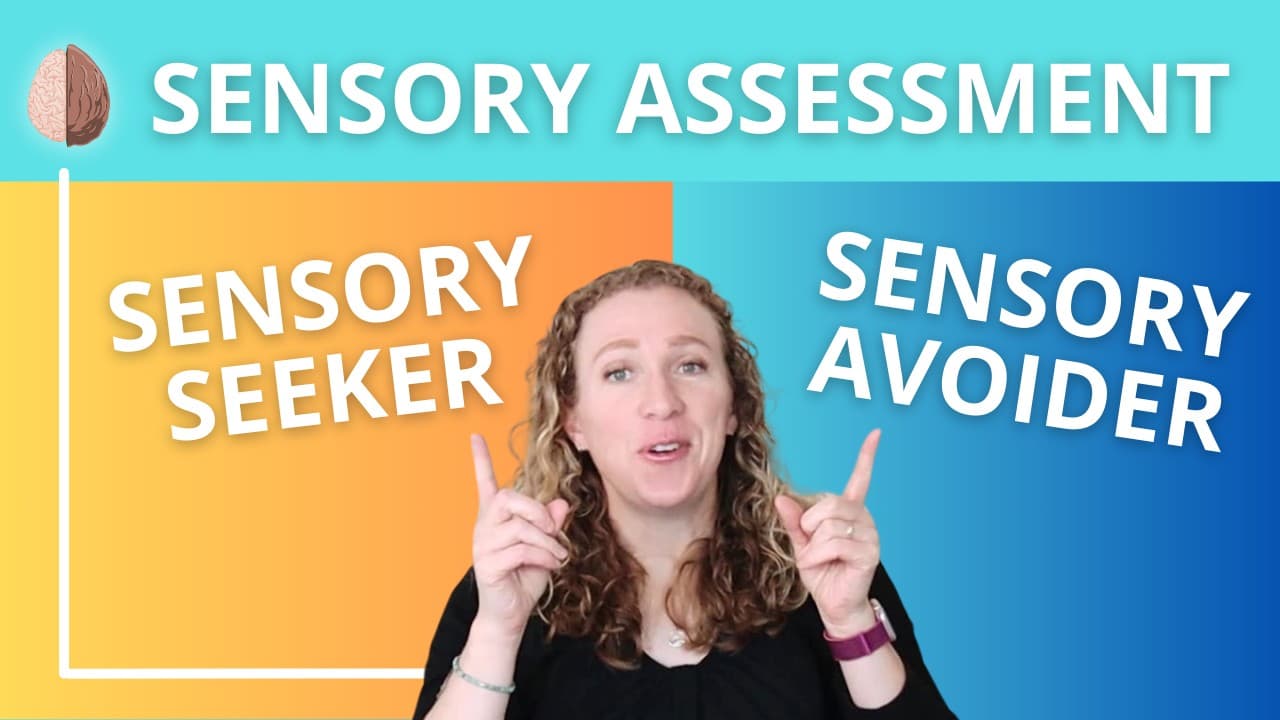
How to identify your sensory needs for autism and ADHD
TL;DR
You can determine your sensory profile by evaluating seven sensory areas and whether you are a seeker, avoider, or neutral in each. The video guides you through self assessment with a tally approach and offers practical adaptations to regulate emotions and improve mental health. It emphasizes consulting a professional for a formal diagnosis and provides resources for downloadable materials.
Transcript
Have you ever found yourself feeling overwhelmed, irritable, or just drained by your surroundings? Like it's not uncommon to experience these emotions, especially in a world that's constantly buzzing. But what many people don't realize is that these feelings could be closely tied to your sensory needs. So understanding and acknowledging our u... Read More
Key Insights
- Touch and proprioception are foundational to how movement and contact shape regulation.
- Visual and taste-smell domains influence how environmental stimuli affect mood and comfort.
- The assessment differentiates seekers from avoiders and neutrals, guiding personalized environmental tweaks.
- Deep pressure and heavy work can provide proprioceptive feedback that aids focus and calm.
- Regular exposure to preferred textures and temperatures helps maintain sensory balance.
- Professional input is recommended for accurate interpretation and individualized intervention.
- A practical, self-administered tally approach makes it easier to identify needs without formal testing.
- The video promotes using downloadable materials to implement the assessment at home.
- More videos from this channel:
- More from this channel: Therapy in a Nutshell
Install to Summarize YouTube Videos and Get Transcripts
Explore YouTube Video Summarizer or Get YouTube Transcript Extractor
Questions & Answers
Q: What is the purpose of the sensory needs assessment described in the video
The assessment helps individuals identify their personal sensory preferences across seven areas and categorize their responses as seeker, avoider, or neutral. It provides a framework to tailor daily environments and activities to reduce overwhelm, regulate emotions, and support mental health, while recognizing it is not a formal diagnostic tool.
Q: Who should consider using the sensory needs framework
People with autism or ADHD or those who feel overwhelmed by their surroundings can benefit from the framework. It offers a structured way to observe sensory responses, track preferences with a chart, and plan accommodations. The video stresses consulting an occupational therapist or mental health professional for personalized interventions.
Q: What should you do if you want a formal diagnosis
The video advises working with an official healthcare provider for a formal diagnosis. It emphasizes that the self-assessment is educational and introductory, not a substitute for professional evaluation. A clinician can tailor interventions based on a comprehensive assessment of sensory processing and related needs.
Q: What is a practical step to start the assessment at home
A practical step is to print or download a tally chart and begin evaluating each sensory area by noting whether you seek, avoid, or feel neutral about specific experiences. This helps you identify patterns, such as seeking touch or deep pressure, and plan simple environmental accommodations to support regulation.
Q: How many primary sensory areas are covered in the video
The video presents seven main sensory areas, combining taste and smell due to overlap, and discusses how each area can be examined for seeking, avoiding, or neutral responses. This structure provides a comprehensive view of sensory processing and guides practical adaptations for daily life.
Q: What role does feedback play in the assessment process
Feedback from tallying experiences in each area helps determine personal sensory profiles. This self-observation informs decisions about adapting the environment, such as modifying textures, temperatures, or physical activities, to meet sensory needs and promote greater calm and focus throughout the day.
Q: What resources are mentioned for further learning
The video mentions a downloadable assessment and a free resource available on the creator’s website. It also references a book titled A Buffet of Sensory Interventions as a recommended read for more specific interventions, and suggests consulting an occupational therapist for detailed guidance.
Q: What caveat is given about the assessment results
It is noted that the assessment is not a official psychological evaluation. The purpose is to introduce sensory needs and help individuals adjust actions and environments. If there are significant concerns, a professional evaluation is advised to obtain tailored strategies and diagnosis.
Q: What is the suggested outcome of applying the sensory adaptations
Applying the adaptations aims to help individuals feel more relaxed and regulated in daily life. By aligning activities to sensory preferences, people can reduce overwhelm, improve mood stability, and support better mental health, while using the resources provided to guide ongoing self-management.
Summary & Key Takeaways
-
A practical introduction to sensory needs explains that individuals can categorize their responses as seeker, avoider, or neutral across seven sensory domains, with touch and proprioception highlighted first. It emphasizes self awareness and environmental adjustments to improve daily regulation.
-
The host clarifies this is not a formal diagnostic tool and recommends working with occupational or mental health professionals for tailored interventions. It also mentions a downloadable assessment and a free resource to support learning.
-
The video combines theory with actionable steps, encouraging readers to track experiences on a chart and apply simple accommodations to meet sensory needs, aiming to enhance emotional regulation and overall wellbeing.
Read in Other Languages (beta)
Share This Summary 📚
Summarize YouTube Videos and Get Video Transcripts with 1-Click
Try YouTube Summary with ChatGPT & Claude or YouTube Transcript Generator
Explore More Summaries from Therapy in a Nutshell 📚

Summarize YouTube Videos and Get Video Transcripts with 1-Click
Try YouTube Summary with ChatGPT & Claude or YouTube Transcript Generator