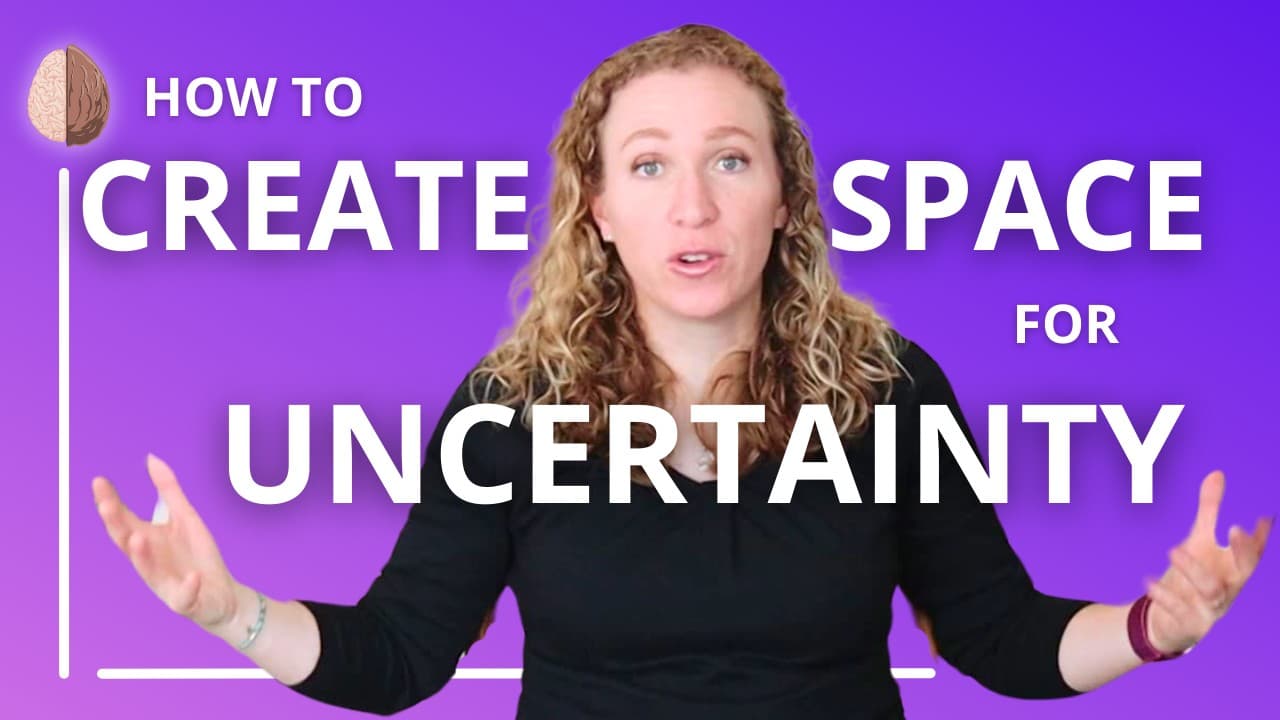
How to cope with uncertainty without self sabotage
TL;DR
Uncertainty triggers more anxiety than pain, so the key is building internal certainty. Don’t try to control every outcome or avoid risk; instead accept uncertainty, practice small exposures, and strengthen your resilience. This approach reduces turning uncertainty into self sabotage and helps pursue opportunities with better emotional balance.
Transcript
Imagine this: you are wired to an electric shock device. And which one would make you more anxious? You get told there is a 50% chance of getting shocked, or you get told that you're going to get shocked no matter what. Researchers found that participants felt far more anxious if they were told that there was a 50% chance of getting shocked tha... Read More
Key Insights
- Uncertainty is perceived as a threat by the nervous system, triggering an anxious state.
- Self sabotage often arises from a craving for certainty and a fear of potential pain.
- Internal safety can be strengthened by accepting feelings and building resilience.
- Avoidance behaviors include reassurance seeking, micromanaging, and procrastination.
- The antidote to uncertainty is willingness to feel uncertain and take action anyway.
- Exposure to uncertainty should be gradual and repeated to build an emotional muscle.
- Transparency with oneself about uncertainty reduces the urge to control external outcomes.
- Seeking professional help can support building skills to handle uncertainty.
- More videos from this channel:
- More from this channel: Therapy in a Nutshell
Install to Summarize YouTube Videos and Get Transcripts
Explore YouTube Video Summarizer or Get YouTube Transcript Extractor
Questions & Answers
Q: How can I start accepting uncertainty in everyday life
Begin by acknowledging that uncertainty is a natural part of living and that you cannot control all outcomes. Develop internal beliefs like I can handle the feelings that come with uncertainty, and that trying new things, even if they are uncomfortable, builds resilience. Start with small, tolerable challenges and gradually increase exposure.
Q: What everyday actions increase tolerance to uncertainty
Try things that feel uncertain but safe, such as ordering a new dish, visiting a new place, or speaking to someone you don’t know. Focus on the experience rather than the emotion, observe what you learn, and assess how your confidence grows. Repetition strengthens the emotional space to handle anxiety.
Q: Why does self sabotage happen when facing uncertainty
Self sabotage happens because avoiding uncertainty feels safer than risking discomfort. This includes quitting activities, overthinking, or micromanaging to protect oneself from potential failure or disappointment. Over time, this prevents growth and reinforces feelings of helplessness and missed opportunities.
Q: How does internal safety reduce anxiety
Internal safety reduces anxiety by shifting focus from external control to internal resilience. Remind yourself that you can endure having difficult feelings, and build beliefs that taking risks is beneficial. This creates emotional space to act despite uncertainty, lowering avoidance behaviors.
Q: What role does willingness play in handling uncertainty
Willingness means choosing to feel uncertain while continuing to act toward goals. It reduces defensiveness and allows for progress even when outcomes are unclear. This mindset encourages continuing attempts, which can lead to discoveries and personal growth rather than retreat.
Q: How can exposure therapy be applied without a therapist
Apply gradual exposure by selecting small, manageable uncertain tasks and repeating them. After each attempt, reflect on what you learned about yourself and your confidence. The goal is to increase tolerance incrementally through consistent practice, not to force immediate results.
Q: What examples illustrate the spaciousness of uncertainty
An example is resolving a friendship misunderstanding during the pandemic by staying open and reconnecting later. Instead of closing the relationship, creating space for uncertainty allowed perspective and willingness to engage, avoiding a final, decisive break. This illustrates how uncertainty can preserve meaningful connections.
Q: When should someone seek professional help for uncertainty related anxiety
If uncertainty leads to persistent anxiety, depressive patterns, or significant impairment in daily functioning, seeking a therapist can be beneficial. Therapists can provide structured strategies, practice plans, and accountability to strengthen internal safety and reduce self sabotaging tendencies over time.
Summary & Key Takeaways
-
Uncertainty is felt as a potential threat by the nervous system, prompting an activated state aimed at prevention. Recognizing this helps shift focus from avoidance to accepting feelings while pursuing growth.
-
Self sabotage stems from a longing for certainty, leading to quitting, overthinking, or micromanaging to avoid possible pain. The antidote is internal safety and willingness to feel uncertain.
-
Practice-based steps build a tolerance to uncertainty: try new things, delegate, face unfamiliar social settings, and gradually increase exposure to discomfort, which strengthens the emotional space to handle anxiety without collapsing into avoidance.
Read in Other Languages (beta)
Share This Summary 📚
Summarize YouTube Videos and Get Video Transcripts with 1-Click
Try YouTube Summary with ChatGPT & Claude or YouTube Transcript Generator
Explore More Summaries from Therapy in a Nutshell 📚




Summarize YouTube Videos and Get Video Transcripts with 1-Click
Try YouTube Summary with ChatGPT & Claude or YouTube Transcript Generator