How to stop an anxiety attack with grounding techniques
TL;DR
Grounding and controlled breathing calm anxiety quickly. Start by naming three things you can touch, then slow your exhale and focus on a safe place. Use quick sensory checks or a gentle face wash or cold touch to ground, and move to quiet space or visualization to reduce panic symptoms.
Transcript
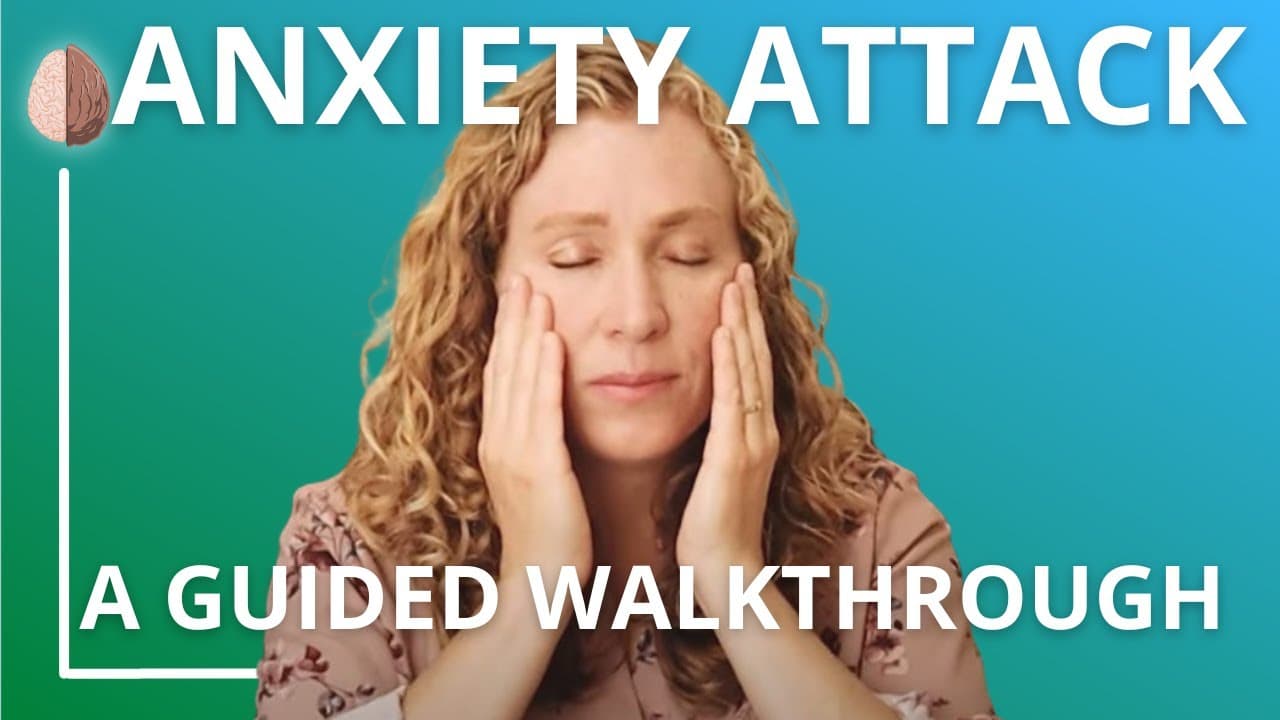
If you're right in the middle of an anxiety attack, this video is for you. You may feel overwhelmed or be freaking out. Maybe you're shaking, crying, feeling sick to your stomach. Or maybe you feel irritable or like running away. I'm gonna walk you through a process to calm down. Now, you're going to be okay. These feelings will pass. You can do th... Read More
Key Insights
- Grounding engages the senses to anchor the mind during an anxiety attack, making the experience more manageable. Three touchable objects are named and described to provide concrete focus. This shifts attention away from internal distress toward external stimuli.
- Breathing is used to slow the body’s stress response. Slowing exhale helps reduce arousal, creating a foundation for subsequent grounding steps. The video discourages forced breathing and encourages natural slow breathing as part of the process.
- Physical contact or a cold sensation can amplify grounding by providing immediate, tangible input. Techniques like washing the face with cold water or holding an ice cube become quick reset cues to signal safety.
- Visualization of a safe place is suggested as an optional anchor when leaving the environment is possible. This cognitive cue leverages imagination to lower panic and instill a sense of calm.
- Name three things you can see around you to reconnect with the present moment. This simple cognitive task distracts from distress and enhances perceptual grounding.
- Moving to a quiet, safe space reduces sensory overload and allows the body to reset. The option to step outside or seek a calm room gives practical control over the environment.
- The process is designed to be simple and repeatable, enabling immediate use during an attack without requiring specialized tools or training.
- The video reassures the viewer that the feelings will pass and that they are capable of handling the experience, reinforcing self-efficacy and coping confidence.
- More videos from this channel:
- More from this channel: Therapy in a Nutshell
Install to Summarize YouTube Videos and Get Transcripts
Explore YouTube Video Summarizer or Get YouTube Transcript Extractor
Questions & Answers
Q: How can grounding help during an anxiety attack and what are the first steps to try?
Grounding helps by shifting attention from internal distress to external sensory input, which lowers arousal and creates a sense of safety. Start with a simple step such as naming three things you can touch, describing their textures, and noting how they feel. This concrete focus interrupts spiraling thoughts and reduces urgency, allowing you to begin controlled breathing and then proceed to further calming techniques.
Q: What role does breathing play in stopping an anxiety attack according to the video?
Breathing slows the body’s stress response and reduces physiological symptoms of panic. The method emphasizes slow exhalation and avoiding forced breathing, using natural breath rhythm to restore balance. By lengthening the exhale slightly, you can decrease heart rate and muscle tension, making it easier to engage the grounding steps and regain control.
Q: Why is it recommended to go to a safe place and how does this aid the calm-down process?
A safe place reduces sensory overload and creates an environment with fewer triggers. Being in a quiet space minimizes distractions, lowers agitation, and provides a stable backdrop for applying grounding cues. This optional step helps consolidate the calming effort and makes subsequent techniques more effective.
Q: What sensory strategies are suggested beyond touch and breathing in the video?
The video suggests visualizing a safe place and, if possible, using a tangible cue like a cold sensation or a gentle facial touch. These strategies engage different senses to anchor attention, promote calm, and support the transition from high arousal to a more regulated state.
Q: How does naming things around you contribute to anxiety reduction?
Naming things around you anchors attention to the present moment and reduces the intensity of racing thoughts. By describing visible objects and their attributes, you reorient perceptual focus away from distress, which helps interrupt the cycle of anxiety and creates space for slower breathing and coping steps.
Q: What guidance is provided if you cannot leave your current location after an anxiety onset?
If leaving is not possible, you can still ground yourself through close-up sensory attention, such as touching your face, noticing textures, or closing your eyes to visualize a safe place. These internal cues replicate the grounding effect of external stimuli and support gradual calming without changing location.
Q: What is the purpose of advising to hug yourself as part of the technique?
Self-hugging serves as a gentle proprioceptive cue that signals safety and self-soothing. It can dampen arousal by providing bodily comfort and a reminder of personal care. Combined with slow breathing and grounding, it helps reduce tension and fosters a sense of security during a challenging moment.
Q: How does the video frame the inevitability of anxiety feelings and the user’s ability to cope?
The video frames anxiety as uncomfortable but not dangerous, offering a clear, repeatable process to manage it. It emphasizes personal agency and resilience, stating that feelings will pass and that the viewer can handle them through grounding, breathing, and visualization, thereby reinforcing confidence in coping abilities.
Summary & Key Takeaways
-
Grounding techniques help shift attention from panic to the present by engaging the senses and breathing. The method starts with noticing surroundings and objects touched. It then sequences into slow exhalation and a safe place visualization to reduce arousal and promote calm.
-
The video emphasizes practical steps you can take in the middle of an anxiety attack, including physical grounding, breathing, and relocating to a quieter space. It also introduces the option of using a safety visualization and a cold or tactile cue to re-anchor focus.
-
Acknowledge that anxiety is uncomfortable but not dangerous, and that you have the capacity to calm yourself through structured cues and sensory attention. The approach is designed to be repeatable and accessible in real time.
Read in Other Languages (beta)
Share This Summary 📚
Summarize YouTube Videos and Get Video Transcripts with 1-Click
Try YouTube Summary with ChatGPT & Claude or YouTube Transcript Generator
Explore More Summaries from Therapy in a Nutshell 📚


Summarize YouTube Videos and Get Video Transcripts with 1-Click
Try YouTube Summary with ChatGPT & Claude or YouTube Transcript Generator