How to Understand Antiarrhythmic Drug Classes
TL;DR
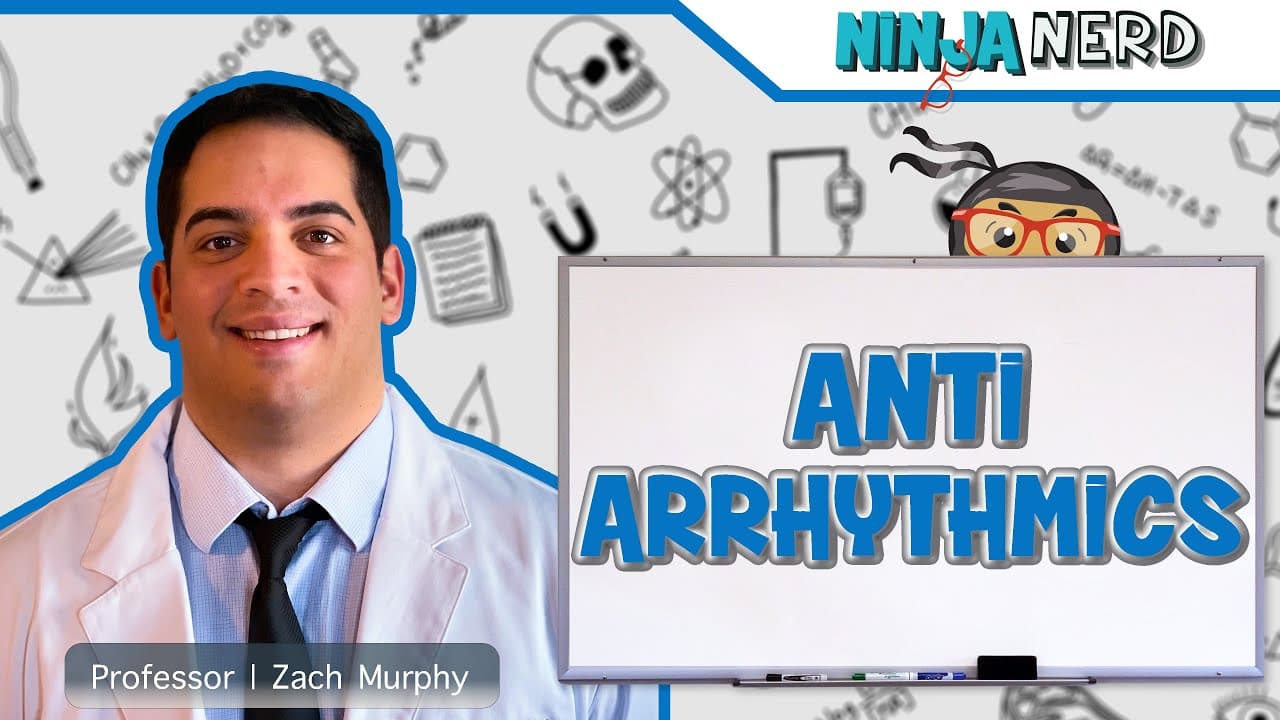
Antiarrhythmic drugs are grouped into five classes, each with a distinct mechanism of action on cardiac ion channels. The lecture reviews cardiac physiology basics, then explains how sodium, beta, potassium, calcium blockers, and adenosine plus digoxin affect action potentials and heart tissue, followed by class-specific adverse reactions and practice problems.
Transcript
foreign what's up Ninja nerds in this video today we're going to be talking about antiarrhythmic drugs there are so many of these so much to talk about I want you guys to stick in there with me hang in there with me I hope that at the end of this video you'll truly be able to understand this and Ace any questions that you get on your exam if you gu... Read More
Key Insights
- The heart uses a network of pacemaker cells, with the SA node and AV node as primary pacemakers, driving electrical conduction through the heart.
- Antiarrhythmic drugs are categorized into five types, each targeting different ion channels or pathways to modify action potential and conduction.
- Sodium channel blockers (Type I) alter depolarization by affecting sodium influx, influencing early phases of the action potential.
- Beta blockers (Type II) reduce adrenergic stimulation, slowing heart rate and conduction, thereby stabilizing rhythm.
- Potassium channel blockers (Type III) prolong repolarization, affecting the duration of the action potential and refractoriness.
- Calcium channel blockers (Type IV) slow calcium entry, shortening conduction in nodal tissue and reducing contractility.
- Adenosine and digoxin (Type V) have unique mechanisms that can terminate certain arrhythmias or modulate conduction.
- The lecture emphasizes understanding the exact cardiac tissue affected by each drug class to predict therapeutic effects and adverse reactions.
- More videos from this channel:
- More from this channel: Ninja Nerd
Install to Summarize YouTube Videos and Get Transcripts
Explore YouTube Video Summarizer or Get YouTube Transcript Extractor
Questions & Answers
Q: A real search query question about the video (e.g. How to..., What is..., Why does...). Question 1
What are the five types of antiarrhythmic drugs and what tissues do they primarily affect? The five types are sodium channel blockers, beta blockers, potassium channel blockers, calcium channel blockers, and adenosine plus digoxin. Each class targets different ion channels or regulatory pathways in cardiac tissue, such as sodium influx in depolarization, adrenergic signaling, potassium repolarization, calcium entry in nodal tissue, and conduction modulation with adenosine or digoxin. Understanding the specific tissue targets helps predict therapeutic effects and potential adverse reactions.
Q: Question 2
How does the lecture describe the role of pacemaker cells in cardiac rhythm control? Pacemaker cells, especially in the SA node and AV node, generate intrinsic action potentials that initiate heartbeats. If one pacemaker area fails, another can take over to maintain rhythm, illustrating redundancy in the cardiac conduction system. The conduction pathway runs from SA node to AV node, then through the bundle of His, bundle branches, and Purkinje fibers, ensuring coordinated atrial and ventricular contraction.
Q: Question 3
What is the basic mechanism explained for sodium channel blockers (Type I) in antiarrhythmic therapy? Sodium channel blockers influence depolarization by reducing sodium influx during phase 0 of the action potential, thereby slowing or altering early depolarization in cardiac tissue. This can modify conduction velocity and help prevent abnormal rapid impulses, contributing to rhythm stabilization depending on the specific drug subclass and heart tissue involved.
Q: Question 4
Why are beta blockers (Type II) useful in managing arrhythmias according to the video? Beta blockers reduce adrenergic stimulation, which slows heart rate and conduction. By dampening sympathetic input, they help stabilize rhythm, particularly in cases where excessive adrenergic activity contributes to arrhythmias, and they can decrease myocardial oxygen demand and mitigate other triggering factors.
Q: Question 5
What role do potassium channel blockers (Type III) play in antiarrhythmic therapy as described in the transcript? Potassium channel blockers prolong repolarization, which lengthens the action potential and increases refractoriness. This helps prevent reentrant circuits and suppresses certain tachyarrhythmias by extending the time during which the heart cannot be re-excited.
Q: Question 6
How do calcium channel blockers (Type IV) affect conduction according to the lecture? Calcium channel blockers slow calcium entry, particularly affecting nodal tissue, which reduces conduction through the AV node and lowers heart rate. They can also decrease contractility and influence overall hemodynamics, contributing to rhythm control in specific arrhythmias where nodal conduction is a key factor.
Q: Question 7
What is the significance of Adenosine and Digoxin in Type V antiarrhythmic therapy as outlined in the video? Adenosine and Digoxin have unique mechanisms within Type V, capable of terminating certain arrhythmias or modulating conduction. Adenosine acts rapidly on nodal tissue to interrupt reentrant circuits, while Digoxin increases vagal tone and affects conduction, supporting rhythm control in select clinical scenarios.
Q: Question 8
What educational approach does the lecturer emphasize for mastering antiarrhythmic drugs, and how is practice integrated? The lecturer emphasizes building a solid understanding of cardiac physiology and the specific tissue targets of each drug class, followed by reviewing mechanisms of action and adverse reactions. Practice problems are used to apply knowledge and prepare for exams, reinforcing how each class modifies conduction and rhythm.
Summary & Key Takeaways
-
The lecture starts with essential cardiac physiology, focusing on action potentials, pacemaker cells, and how ion channels regulate heart rhythm, to build a foundation for antiarrhythmic drug actions.
-
It then outlines the five antiarrhythmic drug types and summarizes their primary targets, indications, and common adverse reactions, setting up study problems for exam preparation.
-
The session concludes with practice problems to apply the mechanisms of action and clinical uses of each class, reinforcing understanding of how these drugs modify cardiac conduction and rhythm.
Read in Other Languages (beta)
Share This Summary 📚
Summarize YouTube Videos and Get Video Transcripts with 1-Click
Try YouTube Summary with ChatGPT & Claude or YouTube Transcript Generator
Explore More Summaries from Ninja Nerd 📚





Summarize YouTube Videos and Get Video Transcripts with 1-Click
Try YouTube Summary with ChatGPT & Claude or YouTube Transcript Generator