What Is the Autonomic Nervous System and Its Functions?
TL;DR
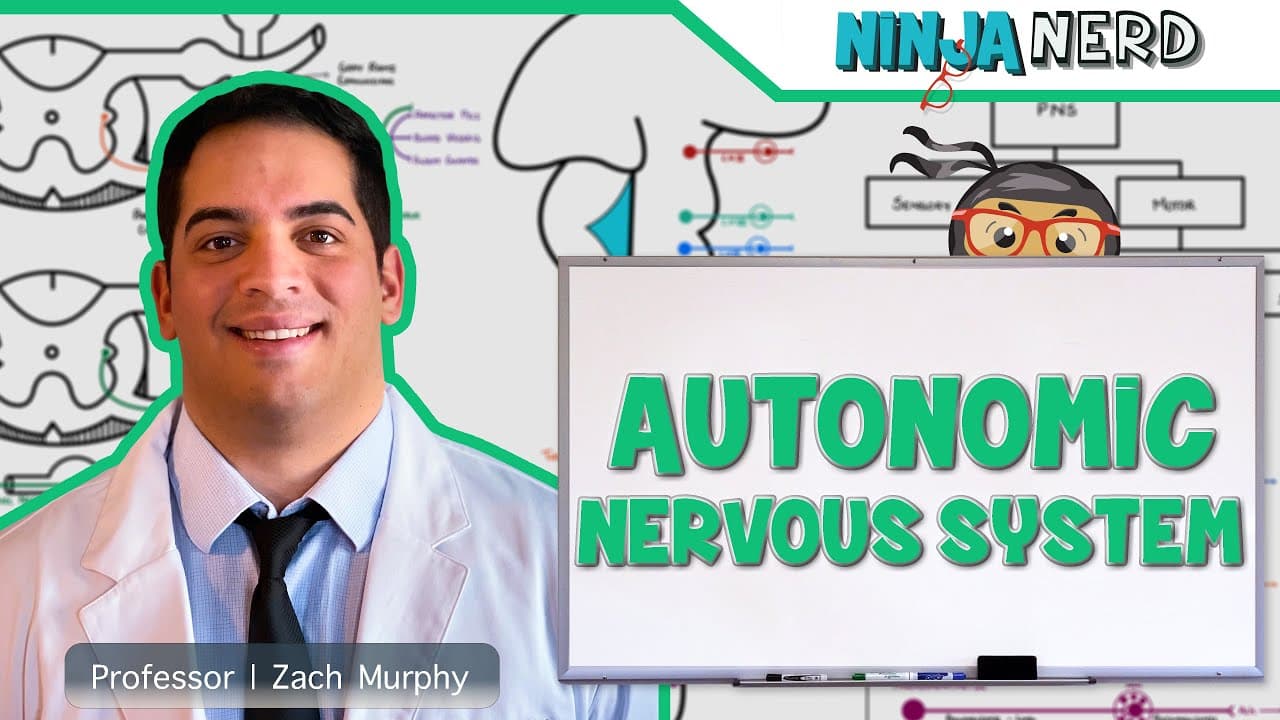
The autonomic nervous system (ANS) regulates involuntary bodily functions and consists of three branches: sympathetic, parasympathetic, and enteric. The sympathetic system triggers the fight or flight response, while the parasympathetic system manages rest and digestion. Key differences include the number and length of motor neurons: sympathetic uses short preganglionic and long postganglionic neurons, whereas parasympathetic uses long preganglionic and short postganglionic neurons.
Transcript
I ninja nerds in this video we're going to talk about the autonomic nervous system so the autonomic nervous system is extremely extremely important okay so what we're gonna do is before we even start getting into the nitty-gritty parasympathetic and sympathetic and enteric I want to talk about what exactly the branches are that actually make up the... Read More
Key Insights
- 🧠 The autonomic nervous system is divided into three branches: sympathetic, parasympathetic, and enteric.
- 🍃 The somatic nervous system controls voluntary movements, while the autonomic nervous system controls involuntary processes like heart and GI tract function.
- 💪 Somatic motor fibers only require one motor neuron to reach the effector organ, while the autonomic nervous system requires two motor neurons.
- 🗣️ The sympathetic nervous system is responsible for the fight or flight response and is primarily located in the thoracolumbar region of the spinal cord.
- 🧠 The parasympathetic nervous system is responsible for rest and digestion and is located in various regions of the brainstem and sacrum.
- ⚓️ Ganglia in the sympathetic nervous system form chains along the spinal cord, while in the parasympathetic nervous system, ganglia are located near or within target organs.
- 🚀 Pre-ganglionic fibers in the sympathetic and parasympathetic nervous systems release acetylcholine, but post-ganglionic fibers release different chemicals (norepinephrine in sympathetic and acetylcholine in parasympathetic).
- 🔒 The sympathetic nervous system can also have collateral ganglia and splanchnic nerves that go to abdominal and thoracic organs.
Install to Summarize YouTube Videos and Get Transcripts
Explore YouTube Video Summarizer or Get YouTube Transcript Extractor
Questions & Answers
Q: What are the main branches of the autonomic nervous system?
The main branches of the autonomic nervous system are the sympathetic, parasympathetic, and enteric branches. The sympathetic branch is responsible for the "fight or flight" response, while the parasympathetic branch is responsible for rest and digestion. The enteric branch controls gastrointestinal function.
Q: How do motor neurons in the somatic and autonomic nervous systems differ?
In the somatic nervous system, it takes one motor neuron to reach the effector organ, and it is under voluntary control. In the autonomic nervous system, it takes two motor neurons (preganglionic and postganglionic) to reach the effector organ, and it is under involuntary control.
Q: What is the role of ganglia in the autonomic nervous system?
Ganglia are groups of cell bodies located in the peripheral nervous system. In the autonomic nervous system, ganglia serve as relay points where preganglionic motor neurons synapse with postganglionic motor neurons. Different types of ganglia exist, including chain ganglia, terminal or intramural ganglia, and collateral ganglia.
Q: What neurotransmitters are involved in the autonomic nervous system?
Acetylcholine is the primary neurotransmitter released by preganglionic motor neurons in both the sympathetic and parasympathetic systems. However, in the sympathetic system, postganglionic motor neurons release norepinephrine, while in the parasympathetic system, they release acetylcholine.
Q: What is the role of the sympathetic nervous system?
The sympathetic nervous system is responsible for the "fight or flight" response, which mobilizes the body's resources to deal with stress or danger. It controls functions such as increased heart rate, dilation of blood vessels, and release of adrenaline.
Q: How are the sympathetic and parasympathetic nervous systems different?
The sympathetic nervous system prepares the body for action, while the parasympathetic nervous system promotes rest and digestion. They have opposite effects on various organs, such as heart rate, pupil size, and digestive activity.
Q: What is the role of the enteric nervous system?
The enteric nervous system is a branch of the autonomic nervous system that controls the functioning of the gastrointestinal tract. It regulates processes such as digestion, absorption, and gut motility.
Q: What is the significance of the cranial sacral outflow in the parasympathetic system?
The cranial sacral outflow refers to the cranial nerves (3, 7, 9, and 10) and the sacral region of the spinal cord (S2-S4) where preganglionic parasympathetic motor neurons are located. These motor neurons innervate various organs, including the eye, salivary glands, and pelvic viscera.
Summary & Key Takeaways
-
The autonomic nervous system is part of the peripheral nervous system and is responsible for involuntary control of visceral organs.
-
The autonomic nervous system consists of three branches: sympathetic, parasympathetic, and enteric.
-
Preganglionic motor neurons are shorter in the sympathetic system and longer in the parasympathetic system, while postganglionic motor neurons are longer in sympathetic and shorter in parasympathetic.
Read in Other Languages (beta)
Share This Summary 📚
Summarize YouTube Videos and Get Video Transcripts with 1-Click
Try YouTube Summary with ChatGPT & Claude or YouTube Transcript Generator
Explore More Summaries from Ninja Nerd 📚




Summarize YouTube Videos and Get Video Transcripts with 1-Click
Try YouTube Summary with ChatGPT & Claude or YouTube Transcript Generator