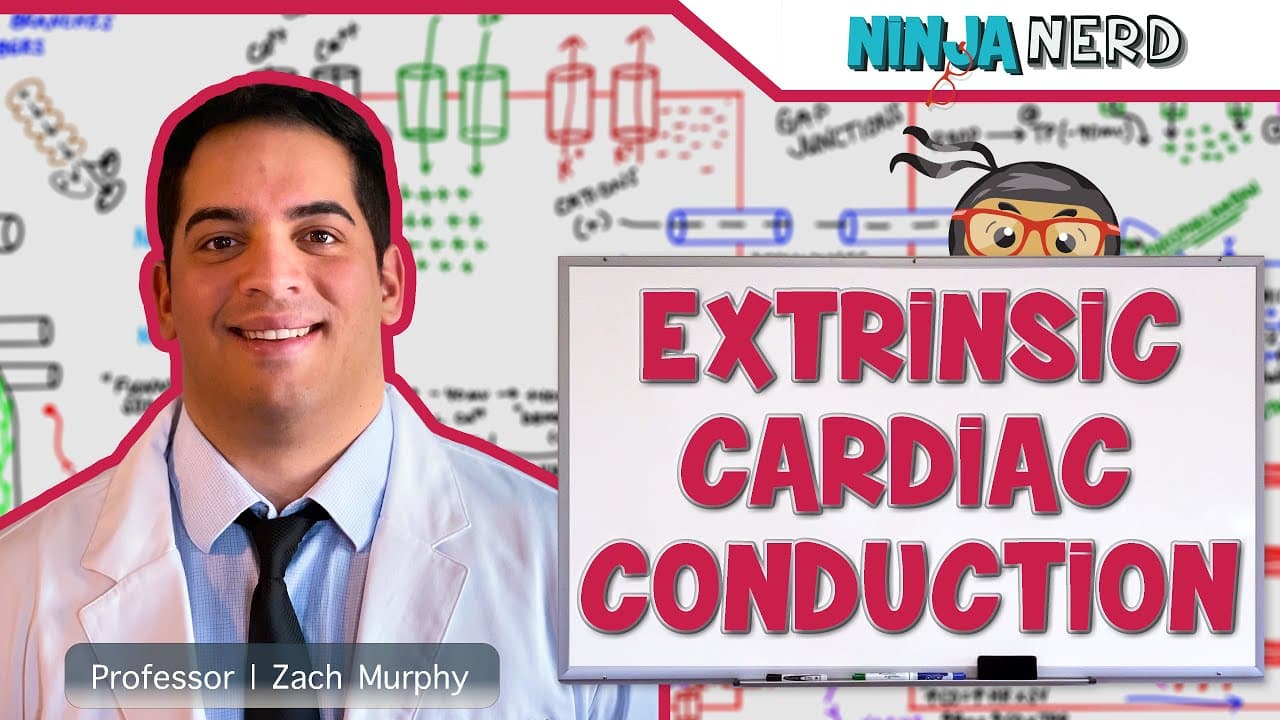
Cardiovascular | Electrophysiology | Extrinsic Cardiac Conduction System
TL;DR
This video explains how the sympathetic and parasympathetic nervous systems affect heart rate and contractility through specific receptors and intracellular processes.
Transcript
all right engineers in this video we're going to talk about uh electrophysiology so if you guys are here for part two I really appreciate it we're going to go into a little bit more detail and we're going to go over what's called extrinsic ination of the heart so we're going to talk about we already talked about in the cardiac conduction system lik... Read More
Key Insights
- 🧠 The sympathetic and parasympathetic nervous systems play a crucial role in regulating heart rate and contractility.
- 🔊 Activation of the sympathetic nervous system leads to an increase in heart rate, known as tachycardia, through the phosphorylation of L-Type calcium channels and increased calcium entry into the cell.
- ❤️ The parasympathetic nervous system, stimulated by the vagus nerve, slows down heart rate, causing bradycardia, by opening potassium channels and increasing the outflow of positive ions.
- ⚡ The sympathetic nervous system also affects the contractility of the heart, increasing the speed and strength of contractions through the phosphorylation of phospholamban and L-Type calcium channels.
- 💥 Increased contractility due to sympathetic activation leads to increased stroke volume, cardiac output, and ultimately, blood pressure.
- 🤝 The sympathetic nervous system is activated through the release of norepinephrine and epinephrine, while the parasympathetic system is activated by acetylcholine.
- 🚦 The sympathetic nervous system is primarily responsible for the fight-or-flight response, while the parasympathetic system promotes rest and relaxation.
- ✅ Understanding the intricate balance between the sympathetic and parasympathetic systems is crucial in maintaining proper heart function and overall cardiovascular health.
Install to Summarize YouTube Videos and Get Transcripts
Explore YouTube Video Summarizer or Get YouTube Transcript Extractor
Questions & Answers
Q: How does the sympathetic nervous system affect heart rate and contractility?
The sympathetic nervous system increases heart rate by stimulating the beta-1 adrenergic receptor, leading to increased calcium entry, faster depolarization, and more frequent action potentials. It also increases contractility by increasing calcium entry into the sarcoplasmic reticulum and phosphorylating L-type calcium channels, resulting in stronger contractions.
Q: What is the role of the parasympathetic nervous system in heart rate regulation?
The parasympathetic nervous system decreases heart rate by releasing acetylcholine, which activates the M2 receptor and inhibits calcium entry into cardiac cells, leading to slower depolarization, less frequent action potentials, and hyperpolarization.
Q: What is the difference between bradycardia and tachycardia?
Bradycardia refers to a heart rate that is less than 60 beats per minute, while tachycardia refers to a heart rate that is greater than 100 beats per minute.
Q: How do sympathetic and parasympathetic effects on heart rate relate to blood pressure regulation?
Increasing heart rate through sympathetic activation can increase cardiac output and subsequently increase blood pressure. Conversely, decreasing heart rate through parasympathetic activation can decrease cardiac output and lower blood pressure.
Q: What is the refractory period and why is it important?
The refractory period is the resting period of the heart, during which it cannot be stimulated to generate another action potential. Adhering to the refractory period is crucial to prevent tetanic contractions and maintain proper cardiac function.
Answer: The refractory period is a period of rest for the heart, during which it cannot be stimulated to generate another action potential. It is important to obey the refractory period to avoid dangerous complications like tetanic contractions.
Summary & Key Takeaways
-
The sympathetic nervous system increases heart rate by stimulating the beta-1 adrenergic receptor through the release of norepinephrine and epinephrine, leading to increased calcium entry into cardiac cells, faster depolarization, and more frequent action potentials.
-
The parasympathetic nervous system decreases heart rate by releasing acetylcholine, which activates the M2 receptor and inhibits calcium entry into cardiac cells, leading to slower depolarization, less frequent action potentials, and hyperpolarization.
-
The sympathetic nervous system also affects contractility by increasing calcium entry into the sarcoplasmic reticulum and phosphorylating L-type calcium channels, resulting in increased crossbridge formations and stronger contractions.
Read in Other Languages (beta)
Share This Summary 📚
Summarize YouTube Videos and Get Video Transcripts with 1-Click
Try YouTube Summary with ChatGPT & Claude or YouTube Transcript Generator
Explore More Summaries from Ninja Nerd 📚





Summarize YouTube Videos and Get Video Transcripts with 1-Click
Try YouTube Summary with ChatGPT & Claude or YouTube Transcript Generator