What Is the Intrinsic Cardiac Conduction System?
TL;DR
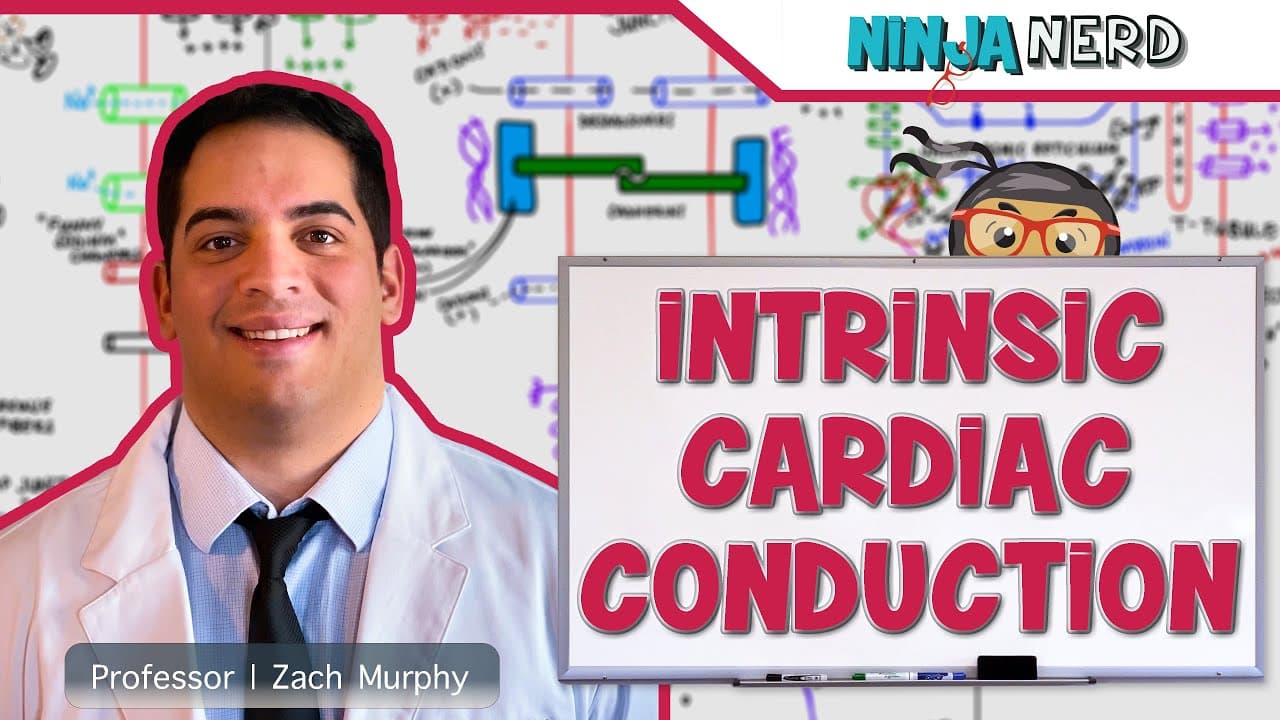
The intrinsic cardiac conduction system enables the heart to depolarize without relying on the nervous system, primarily through specialized nodal cells including the sinoatrial (SA) node, which acts as the pacemaker and sets the sinus rhythm. This system facilitates coordinated contractions by sequentially conducting action potentials through the atria, atrioventricular (AV) node, and into the ventricles, ensuring efficient heart function.
Transcript
iron engineers in this video we are going to talk about electrophysiology this is an extremely important topic and the reason why is because the heart is so special it has the ability to intrinsically depolarize itself it doesn't really depend upon the nervous system we'll talk about how the nervous system like the extrinsic innervation of the hear... Read More
Key Insights
- 📌 The heart has the intrinsic ability to depolarize itself, known as automaticity, without relying on the nervous system.
- 🚀 The myocardium is composed of nodal cells and contractile cells, with nodal cells responsible for generating automaticity and contractile cells for generating force.
- 💡The pacemaker of the cardiovascular system is the SA node, located in the superior part of the right atrium. It sets the sinus rhythm, around 60-80 beats per minute.
- ❗️ The action potentials generated by the SA node are spread through internodal pathways and Bachmann's bundle in the heart, which allows for the synchronization of atrial depolarization.
- 💥 The AV node is an important structure located near the interventricular septum, which receives impulses from the SA node and provides a delay of 0.1 seconds to allow for atrial contraction before ventricular contraction.
- 🏞️ The Bundle of His then conducts the action potentials to the bundle branches, which further spread them throughout the myocardium via Purkinje fibers.
- ⚡️ Nodal cells depolarize themselves slowly with the help of funny sodium channels and T-type calcium channels, eventually reaching the threshold potential and opening L-type calcium channels for a rapid influx of calcium ions, leading to depolarization.
- 🔁 The plateau phase occurs when calcium ions enter the cytoplasm and bind to troponin, allowing for cross-bridge formation between actin and myosin. Potassium channels then open, repolarizing the cell and allowing for relaxation.
Install to Summarize YouTube Videos and Get Transcripts
Explore YouTube Video Summarizer or Get YouTube Transcript Extractor
Questions & Answers
Q: How does the heart exhibit automaticity?
The heart exhibits automaticity through the spontaneous depolarization of nodal cells, such as the SA node, which generate action potentials to trigger the contraction of the heart without relying on the nervous system.
Q: What is the purpose of the AV (atrioventricular) node?
The AV node acts as a gateway between the atria and the ventricles, receiving electrical signals from the SA node and allowing a brief delay (approximately 0.1 seconds) to ensure that the atria contract before the ventricles. This delay prevents simultaneous contraction and allows for efficient blood flow.
Q: How is the contractile force of the myocardium generated?
The contractile cells of the myocardium, consisting of contractile proteins like actin and myosin, generate force that propels blood out of the heart when they contract. The intrinsic ability of the heart to depolarize and trigger action potentials controls the timing and coordination of these contractions.
Q: How are nodal cells and contractile cells connected in the heart?
Nodal cells and contractile cells in the heart are interconnected through gap junctions, specialized channels that allow the flow of ions between cells. This interconnection allows for synchronized contraction of the myocardium, creating a functional syncytium.
Summary & Key Takeaways
-
The heart exhibits automaticity, meaning it has the intrinsic ability to depolarize itself and trigger action potentials without the nervous system.
-
The myocardium is composed of nodal cells (responsible for generating automaticity) and contractile cells (which consist of contractile proteins and generate force for pumping blood).
-
The pacemaker of the heart is the SA (sinoatrial) node, located in the right atrium, which sets the sinus rhythm and initiates the heart's contraction.
Read in Other Languages (beta)
Share This Summary 📚
Summarize YouTube Videos and Get Video Transcripts with 1-Click
Try YouTube Summary with ChatGPT & Claude or YouTube Transcript Generator
Explore More Summaries from Ninja Nerd 📚

Summarize YouTube Videos and Get Video Transcripts with 1-Click
Try YouTube Summary with ChatGPT & Claude or YouTube Transcript Generator