How to identify and treat acute diarrhea causes
TL;DR
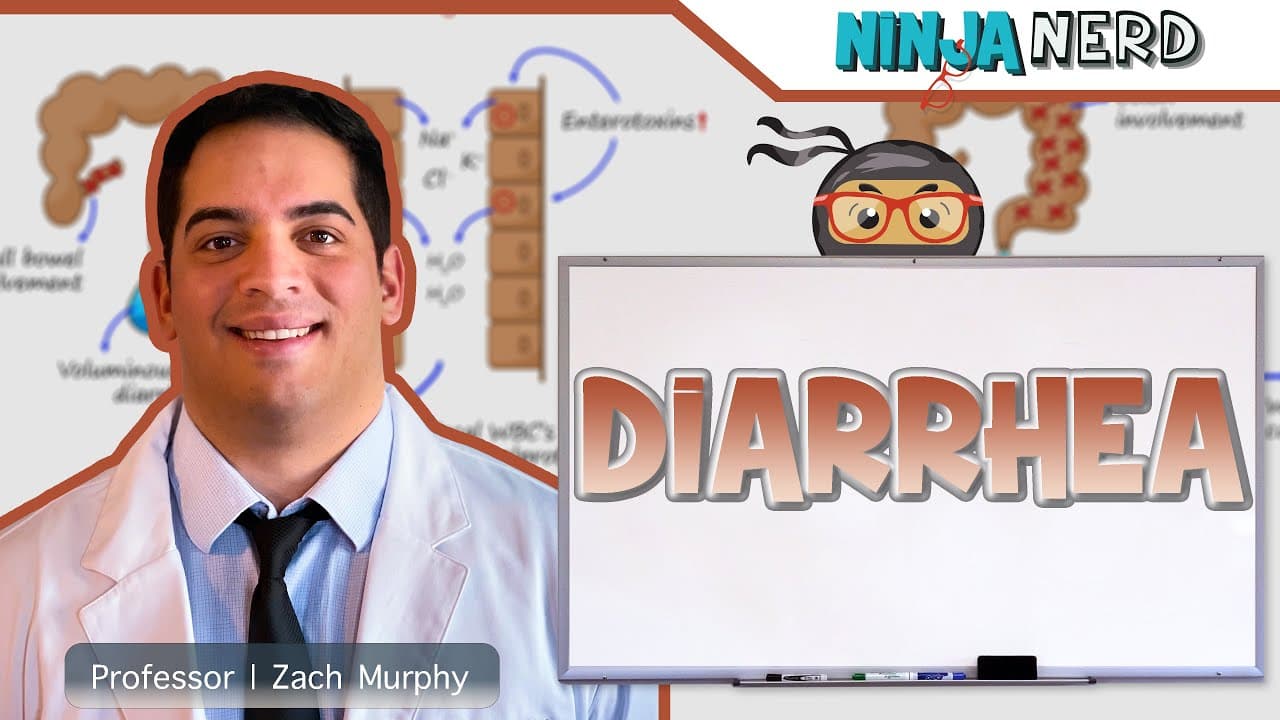
Acute diarrhea is defined as three or more loose stools per day for less than two weeks. The framework distinguishes acute non inflammatory and secretory diarrhea from acute inflammatory diarrhea, with small bowel involvement driving heavy watery stools and poor absorption. Hydration, electrolyte replacement, and targeted treatment based on cause are key management steps.
Transcript
what's up Ninja nerds in this video today we're going to be talking about diarrhea this is a part of our clinical medicine section if you guys like this video it helps you it makes sense please support us and some of the ways that you guys can do that is by hitting that like button commenting down the comment section and please subscribe also reall... Read More
Key Insights
- Acute diarrhea is defined as three or more loose stools per day for less than two weeks.
- Acute non inflammatory diarrhea involves the small bowel and results in high volume watery stools due to impaired absorption.
- In acute non inflammatory diarrhea pathogens may release enterotoxins that stimulate secretion without direct mucosal damage.
- Secretory diarrhea is driven by enterotoxins stimulating electrolyte and water secretion into the intestinal lumen.
- Common bacterial toxin producers include Staphylococcus aureus, Bacillus cereus, enterotoxigenic E coli, and Vibrio species.
- Viruses such as norovirus and rotavirus are common causes of acute diarrhea, especially in communal settings like cruise ships and daycares.
- Diagnosis involves clinical evaluation, stool analysis, and selective endoscopic examination when needed.
- Management emphasizes hydration, electrolyte replacement, and dietary modifications while addressing the underlying cause.
- More videos from this channel:
- More from this channel: Ninja Nerd
Install to Summarize YouTube Videos and Get Transcripts
Explore YouTube Video Summarizer or Get YouTube Transcript Extractor
Questions & Answers
Q: What is acute diarrhea and how is it defined?
Acute diarrhea is defined as three or more loose stools per day for a duration of less than two weeks. This classification helps clinicians differentiate it from chronic diarrhea and guides immediate management, including hydration and assessment for potential infectious etiologies. Recognizing this threshold is important for proper triage and treatment planning.
Q: How does acute non inflammatory diarrhea differ from inflammatory types?
Acute non inflammatory diarrhea primarily involves the small bowel and results in very high volume, watery stools due to impaired absorption rather to direct mucosal injury. In contrast, inflammatory diarrhea involves mucosal damage and presents with more inflammatory symptoms. Understanding this distinction guides the use of supportive care versus investigation for invasive pathogens.
Q: Why is the small bowel's involvement key in acute non inflammatory diarrhea?
Small bowel involvement explains the heavy volume of watery stools because the small intestine is responsible for most absorption of fluids and nutrients. When absorption is reduced, large amounts of fluid remain in the lumen, producing voluminous stools. This feature helps differentiate non inflammatory from other diarrheal processes.
Q: What role do enterotoxins play in secretory diarrhea?
Enterotoxins released by certain pathogens stimulate epithelial cells to secrete electrolytes and water into the intestinal lumen, increasing stool volume. This secretory mechanism causes watery stools even without direct mucosal damage, and understanding it helps explain why fluids and electrolytes are central to treatment.
Q: Which bacterial toxins are commonly implicated in acute diarrhea?
Bacterial toxins from organisms like Staphylococcus aureus, Bacillus cereus, enterotoxigenic E coli, and Vibrio species are high yield causes. These pathogens often produce preformed toxins that trigger secretion and rapid onset diarrhea, which is important for recognizing foodborne and travel related cases.
Q: Which viruses are frequent causes of acute diarrhea and where are they commonly seen?
Norovirus and rotavirus are common viral causes of acute diarrhea. Norovirus is frequently associated with cruise ships, whereas rotavirus is commonly seen in daycare and communal settings. These viral etiologies are typically self limiting and require supportive care rather than antibiotics.
Q: What is the diagnostic approach to acute diarrhea?
The diagnostic approach includes a clinical evaluation, stool analysis, and, if indicated, endoscopic examination. The goal is to determine hydration status, electrolyte disturbances, and to identify possible infectious etiologies so that targeted therapy can be provided. Imaging or endoscopy is reserved for suspected complications or persistent symptoms.
Q: What is the mainstay of management for acute diarrhea?
The mainstay of management is hydration and electrolyte replacement. Dietary modifications and supportive care are important, and specific treatments should be guided by the underlying cause whether bacterial, viral, or parasitic. Preventing dehydration and maintaining fluid balance are the primary priorities.
Summary & Key Takeaways
-
Diarrhea is categorized by duration and mechanism, guiding treatment and workup to hydration and specific etiologies.
-
Acute non inflammatory diarrhea mainly involves the small bowel, causes high volume watery stools, and often improves with supportive care.
-
Diagnosis relies on recognizing pathogens that cause toxin mediated secretion and distinguishing viral, bacterial, and parasitic causes to tailor therapy.
Read in Other Languages (beta)
Share This Summary 📚
Summarize YouTube Videos and Get Video Transcripts with 1-Click
Try YouTube Summary with ChatGPT & Claude or YouTube Transcript Generator
Explore More Summaries from Ninja Nerd 📚



Summarize YouTube Videos and Get Video Transcripts with 1-Click
Try YouTube Summary with ChatGPT & Claude or YouTube Transcript Generator