How to understand cell cycle regulation and checkpoints
TL;DR
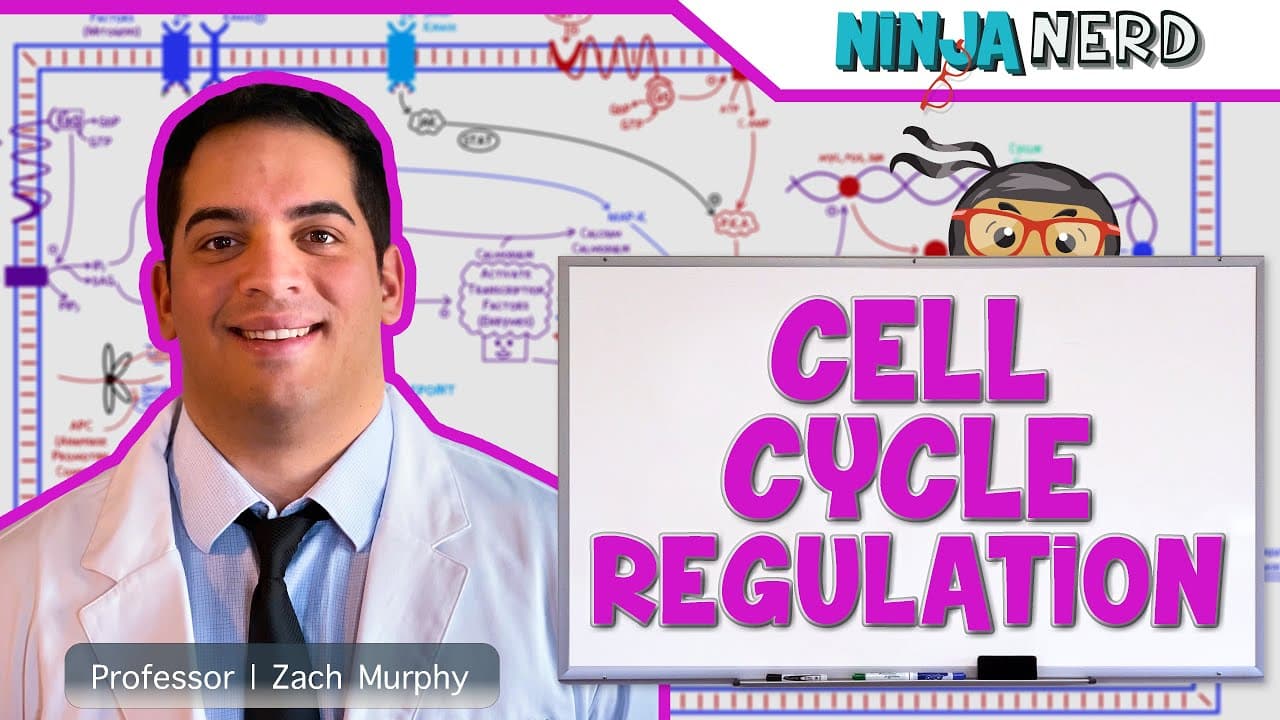
Cell cycle progression is controlled by growth signals and brakes that ensure DNA is replicated and divided only when ready. The three main checkpoints (G1/S, G2/M, and M) prevent progression if DNA is damaged or conditions are not right. Proto-oncogenes drive proliferation while tumor suppressor genes slow or stop the process, and misregulation can lead to cancer.
Transcript
iron engineer so in this video we're going to talk about the regulation of the cell cycle it's an extremely important concept so you guys haven't already seen it go watch the video on the cell cycle we talked about all the phases of the cell cycle in great detail we are going to talk about regulation because regulation is important we have to know ... Read More
Key Insights
- The cell cycle is regulated by growth signals and brakes that determine when cells progress from one phase to another.
- Checkpoints exist at G1/S, G2/M, and M to assess DNA integrity and readiness before continuing.
- Growth factors, mitogens, and receptors initiate signaling cascades that drive cell cycle progression.
- Proto-oncogenes promote proliferation by activating transcription factors and kinases that regulate cycle genes.
- Tumor suppressor genes act as brakes, inhibiting progression when DNA is damaged or the cell is unprepared.
- Signaling pathways such as GQ-PLC and Gs-AC-PKA modulate transcription factors and enzymes to regulate cycle genes.
- DNA damage monitoring and checkpoints help prevent propagation of mutations, maintaining genomic integrity.
- Dysregulation of cycle regulators and checkpoints can lead to uncontrolled cell growth and cancer.
- More videos from this channel:
- More from this channel: Ninja Nerd
Install to Summarize YouTube Videos and Get Transcripts
Explore YouTube Video Summarizer or Get YouTube Transcript Extractor
Questions & Answers
Q: What triggers the cell to move from G1 to S phase in the cell cycle?
The transition from G1 to S phase is driven by growth signals that activate proto-oncogenes and signaling pathways. Growth factors bind to receptors, triggering cascades that activate transcription factors and enzymes, which then upregulate genes required for DNA replication. This checkpoint ensures cells only replicate DNA when conditions are favorable.
Q: What are the main checkpoints in the cell cycle and their purpose?
There are three main checkpoints: G1/S checks for readiness to replicate DNA and whether conditions are favorable; G2/M checks for integrity of DNA and preparation for mitosis; the M checkpoint ensures proper chromosome alignment and attachment before anaphase. Each checkpoint halts progression if damage or errors are detected.
Q: How do proto-oncogenes influence cell cycle progression?
Proto-oncogenes promote proliferation by signaling transcription factors and kinases that drive the expression of genes needed for cycle progression. They act as accelerators, responding to mitogenic signals to push the cell toward S phase and subsequent stages, thereby coordinating growth with division.
Q: What role do tumor suppressor genes play in the cell cycle?
Tumor suppressor genes act as brakes on the cell cycle. They respond to DNA damage or cellular stress by inhibiting progression to the next phase, slowing or stopping proliferation. This regulatory braking helps maintain genomic integrity and prevents accumulation of mutations that could lead to cancer.
Q: How do growth factors and receptors couple to the cell cycle machinery?
Growth factors, often called mitogens, bind to receptors such as G protein coupled receptors or receptor tyrosine kinases. This initiates signaling cascades (like Gq-PLC or Gs-AC-PKA) that activate transcription factors and kinases, ultimately regulating genes that control cell cycle transitions and proliferation.
Q: What signaling pathways are mentioned as regulators of the cell cycle in the video?
The video discusses pathways including GQ coupled receptor signaling leading to phospholipase C activation and diacylglycerol and calcium signaling, which activate protein kinase C and calcium/calmodulin-dependent processes. It also mentions receptor mediated pathways involving adenylyl cyclase and protein kinase A, all converging on cell cycle control.
Q: Why is the G1/S checkpoint important for genomic integrity?
The G1/S checkpoint prevents cells with damaged DNA from entering S phase where DNA replication occurs. By evaluating DNA integrity and cellular conditions, the cell can halt progression, activate repair mechanisms, or induce other responses to ensure that replication proceeds only when the genome is intact, reducing mutation risk.
Q: How can dysregulation of cell cycle control lead to cancer?
Dysregulation can occur when proto-oncogenes become constitutively active or tumor suppressor pathways are inactivated, removing restraints on proliferation. Uncontrolled activation of growth signaling and failure of checkpoints allow cells with damaged DNA to proliferate, increasing the likelihood of tumor formation and cancer progression.
Summary & Key Takeaways
-
The video explains how cells use growth factors and signaling pathways to decide when to move from one phase to the next, and how checkpoints guard against errors during division.
-
It highlights the roles of cyclins, CDKs, and inhibitors in regulating transitions between G1, S, G2, and M, and how defects in these pathways relate to cancer.
-
It connects molecular regulation of the cell cycle to clinical relevance, including how therapies target these pathways to control cancer growth.
Read in Other Languages (beta)
Share This Summary 📚
Summarize YouTube Videos and Get Video Transcripts with 1-Click
Try YouTube Summary with ChatGPT & Claude or YouTube Transcript Generator
Explore More Summaries from Ninja Nerd 📚


Summarize YouTube Videos and Get Video Transcripts with 1-Click
Try YouTube Summary with ChatGPT & Claude or YouTube Transcript Generator