Atlas & Axis Cervical Vertebrae (C1-C2) Anatomy
TL;DR
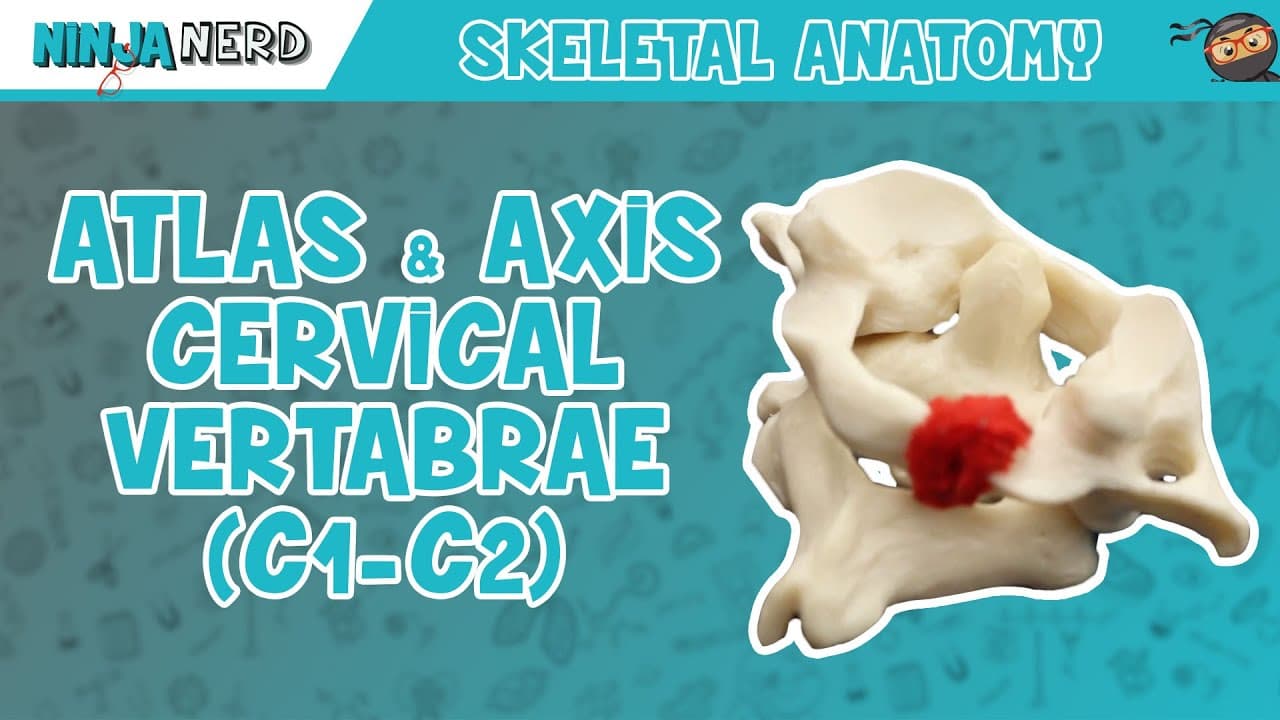
This video provides an in-depth analysis of the anatomy and articulation of the Atlas (C1) and Axis (C2) vertebrae.
Transcript
Alright Ninja Nerds, we are going to take a look at Atlas and Axis. So what we're looking at right now is Atlas, C1. We're looking at the superior surface here. If you look at the superior surface, we have these little depressions here, these are called your superior articulating processes with facets right there. These are what articulate with the... Read More
Key Insights
- 💁 The Atlas (C1) vertebra has superior articulating processes for forming a synovial condylar joint with the occipital condyles.
- 👻 The Axis (C2) vertebra has a dens or odontoid process that allows for rotational movement.
- 🛟 The transverse foramina in both vertebrae serve as passageways for the vertebral arteries.
- 👻 The articulation between the Atlas and Axis enables a synovial pivot joint, allowing for side-to-side movement.
- 💁 The superior and inferior articulating processes of the Atlas and Axis form facet joints for specific types of movement.
- 🪗 The spinous processes of both vertebrae protect the spinal cord.
- 🧔 The Atlas and Axis are part of the cervical vertebrae and have weight-bearing effects.
Install to Summarize YouTube Videos and Get Transcripts
Explore YouTube Video Summarizer or Get YouTube Transcript Extractor
Questions & Answers
Q: What are the superior articulating processes of the Atlas vertebra?
The superior articulating processes of the Atlas vertebra are the small depressions that articulate with the occipital condyles, forming a synovial condylar joint.
Q: What is the purpose of the odontoid process in the Axis vertebra?
The odontoid process in the Axis vertebra allows for rotation and pivoting of the C1 vertebra, creating a synovial pivot joint.
Q: What is the significance of the transverse foramina in both vertebrae?
The transverse foramina in both the Atlas and Axis vertebrae serve as passageways for the vertebral arteries.
Q: How do the superior and inferior articulating processes of the Atlas and Axis interact?
The superior articulating processes of the Atlas articulate with the inferior articulating processes of the Axis, forming facet joints that allow for specific types of movement.
Key Insights:
- The Atlas (C1) vertebra has superior articulating processes for forming a synovial condylar joint with the occipital condyles.
- The Axis (C2) vertebra has a dens or odontoid process that allows for rotational movement.
- The transverse foramina in both vertebrae serve as passageways for the vertebral arteries.
- The articulation between the Atlas and Axis enables a synovial pivot joint, allowing for side-to-side movement.
- The superior and inferior articulating processes of the Atlas and Axis form facet joints for specific types of movement.
- The spinous processes of both vertebrae protect the spinal cord.
- The Atlas and Axis are part of the cervical vertebrae and have weight-bearing effects.
- The anatomy and articulation between the Atlas and Axis play a crucial role in the movement and stability of the neck.
Summary & Key Takeaways
-
The Atlas (C1) vertebra has superior articulating processes and facets that form a synovial condylar joint with the occipital condyles. It also has anterior and posterior tubercles, transverse processes, and vertebral foramina.
-
The Axis (C2) vertebra has a dens or odontoid process that articulates with the Atlas. It also has superior articulating processes, transverse processes, and vertebral foramina.
-
The articulation between C1 and C2 allows for a synovial pivot joint, enabling the C1 to pivot around the odontoid process.
Read in Other Languages (beta)
Share This Summary 📚
Summarize YouTube Videos and Get Video Transcripts with 1-Click
Try YouTube Summary with ChatGPT & Claude or YouTube Transcript Generator
Explore More Summaries from Ninja Nerd 📚



Summarize YouTube Videos and Get Video Transcripts with 1-Click
Try YouTube Summary with ChatGPT & Claude or YouTube Transcript Generator