How Glycogenolysis Releases Glucose From Glycogen
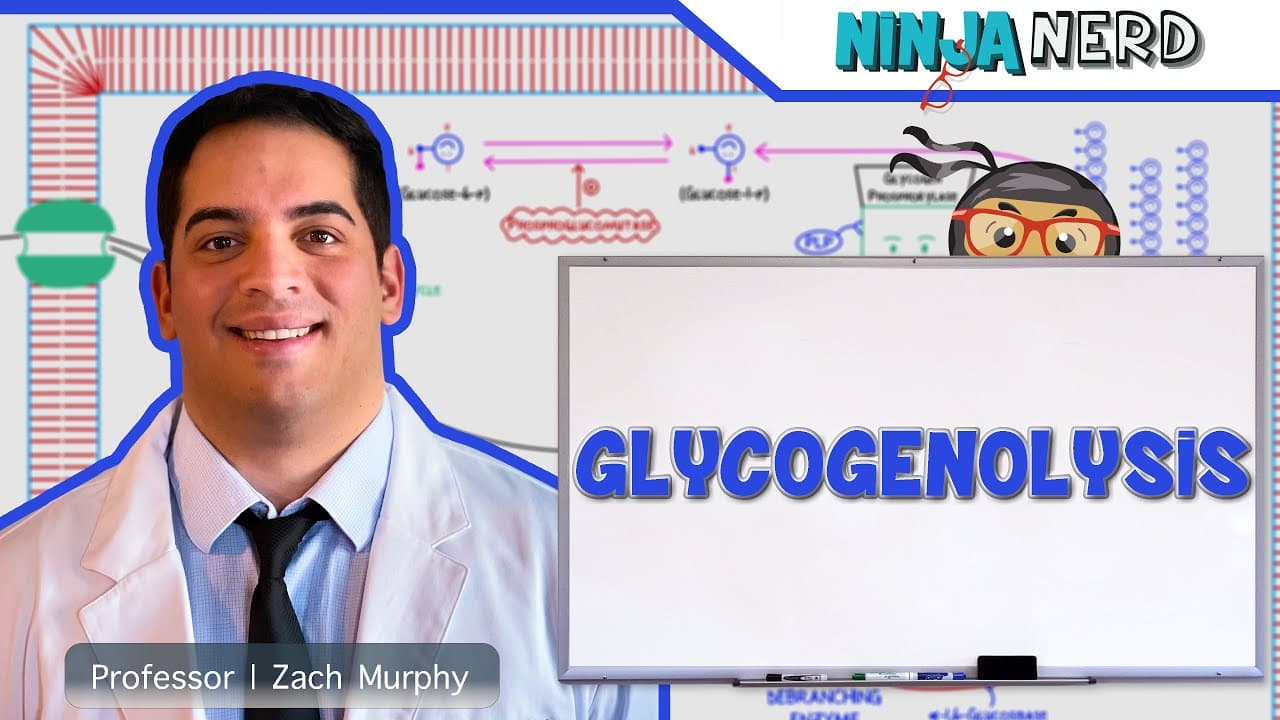
TL;DR
Glycogenolysis occurs in the liver and muscles to release glucose when blood sugar is low. The process is driven by hormones such as glucagon and epinephrine, with glycogen phosphorylase and debranching enzymes enabling the breakdown of glycogen into glucose-1-phosphate and free glucose for energy or blood glucose maintenance.
Transcript
I engineers in this video we're going to talk about glycogen alysis if you guys haven't already seen it go watch our video on glycogenesis because we're going to really be depending upon that concept first okay so if you guys watch glycogenesis you know that we basically synthesize glycogen by the activity of the glycogen synthes and the branching ... Read More
Key Insights
- Glycogenolysis is the process of breaking down glycogen into glucose.
- The liver and muscles are the primary sites where glycogenolysis occurs, with liver contributing to blood glucose and muscle supporting local energy.
- Glycogen phosphorylase cleaves alpha 1,4 glycosidic bonds to release glucose-1-phosphate.
- Debranching enzymes resolve alpha 1,6 linkages to liberate glucose units.
- Glucose-1-phosphate is produced as a key intermediate in glycogenolysis.
- Alpha 1,6 glycosidic bonds are the branching points that are targeted to release more glucose.
- Hormones such as glucagon and epinephrine activate glycogenolysis via phosphorylation cascades.
- Insulin opposes glycogenolysis by promoting dephosphorylation of key enzymes to reduce breakdown.
- More videos from this channel:
- More from this channel: Ninja Nerd
Install to Summarize YouTube Videos and Get Transcripts
Explore YouTube Video Summarizer or Get YouTube Transcript Extractor
Questions & Answers
Q: A real search query question about the video (e.g. 'How to...', 'What is...', 'Why does...', 'When should...'). Question 1
What is glycogenolysis and where does it primarily occur? Glycogenolysis is the breakdown of glycogen into glucose units, and it mainly occurs in the liver and muscles. In the liver, glucose can be released into the bloodstream to raise blood sugar levels during fasting or low glucose states. In muscles, glucose is used locally for energy during activity.
Q: Question 2
What triggers glycogenolysis and why is this important for energy regulation? Glycogenolysis is triggered when blood glucose levels are low, a state called hypoglycemia. This allows the body to mobilize internal glucose reserves to maintain blood glucose and supply ATP during fasting, exercise, or stress, helping to keep energy production steady.
Q: Question 3
Which enzymes are involved in glycogenolysis and what are their roles? Glycogen phosphorylase cleaves alpha 1,4 glycosidic bonds to release glucose-1-phosphate. A debranching enzyme resolves alpha 1,6 linkages, liberating additional glucose units so glycogen can be completely broken down for energy.
Q: Question 4
How do hormones regulate glycogenolysis according to the video? Glucagon and epinephrine activate glycogen phosphorylase through phosphorylation cascades involving protein kinase A, promoting glycogen breakdown. Insulin has the opposite effect, promoting dephosphorylation of enzymes and suppressing glycogenolysis.
Q: Question 5
What is the difference between liver and muscle glycogenolysis described in the video? In the liver, glycogenolysis contributes to blood glucose levels for the whole body. In muscles, glycogenolysis supplies local energy for muscle activity and does not directly release glucose into the bloodstream.
Q: Question 6
What is glucose-1-phosphate and how is it involved in glycogenolysis? Glucose-1-phosphate is an intermediate produced when glycogen phosphorylase cleaves alpha 1,4 bonds. It can be converted into glucose-6-phosphate and enter glycolysis or be further processed to support energy production during fasting or activity.
Q: Question 7
What structural bonds in glycogen are targeted during glycogenolysis and what happens to the products? Alpha 1,4 glycosidic bonds are cleaved by glycogen phosphorylase to release glucose-1-phosphate. Alpha 1,6 bonds at branching points are cleaved by the debranching enzyme, liberating additional glucose units so glycogen can be fully degraded.
Q: Question 8
Why does the video emphasize the relationship between glycogenesis and glycogenolysis? Understanding glycogenesis helps explain how glycogen is formed, while glycogenolysis shows how that stored glycogen is broken down when energy or blood sugar is needed, highlighting the balance of storage and mobilization in metabolism.
Summary & Key Takeaways
-
Glycogenolysis is the stepwise breakdown of glycogen into glucose units with the help of specific enzymes and hormones.
-
In liver and muscle tissue, glycogen breakdown serves distinct roles: supplying blood glucose versus local energy needs.
-
Hormonal regulation via glucagon and epinephrine activates the breakdown cascade, while insulin suppresses it, maintaining metabolic balance.
Read in Other Languages (beta)
Share This Summary 📚
Summarize YouTube Videos and Get Video Transcripts with 1-Click
Try YouTube Summary with ChatGPT & Claude or YouTube Transcript Generator
Explore More Summaries from Ninja Nerd 📚





Summarize YouTube Videos and Get Video Transcripts with 1-Click
Try YouTube Summary with ChatGPT & Claude or YouTube Transcript Generator