How to use context engineering for AI app coding
TL;DR
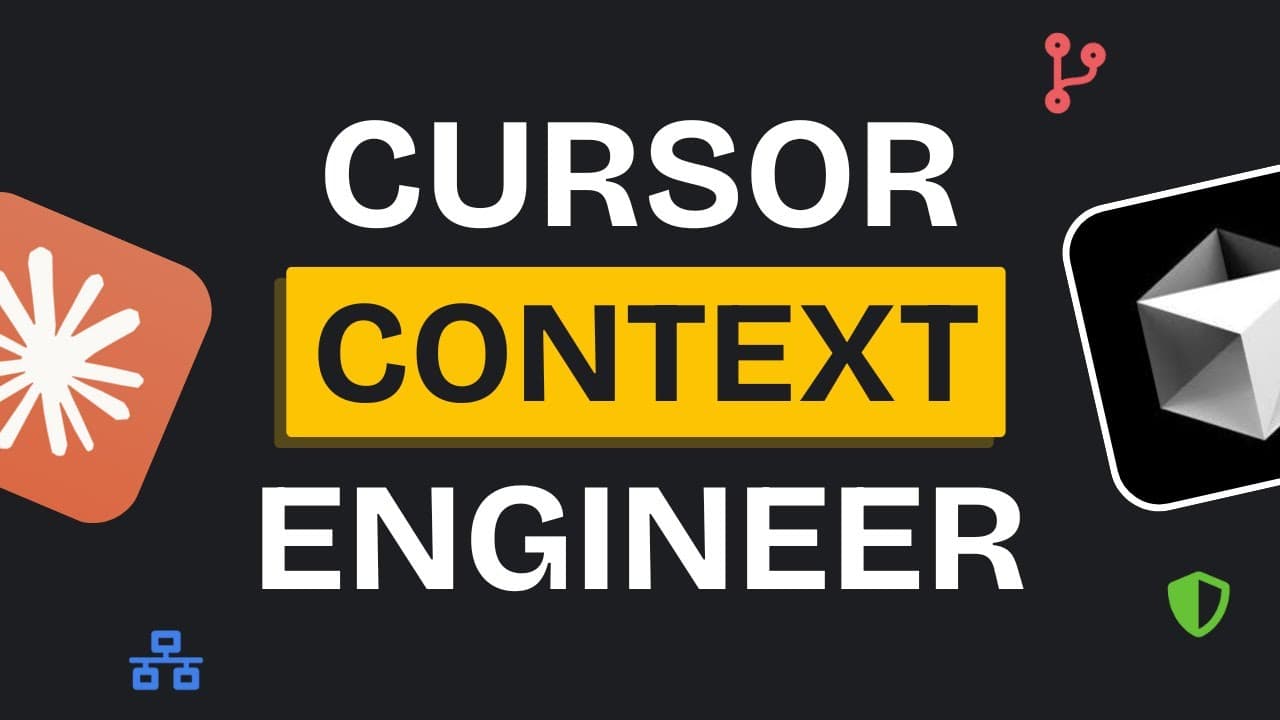
Context engineering fills the model’s context window with all relevant facts, rules, tools, and documentation so the AI can work without hallucinating. It centers on turning a PRD into four key files, then guiding the AI with workflow rules to build an app step by step while avoiding context overload.
Transcript
You probably know about vibe coding, but turns out that when it was coined by Andre Karpathy, it wasn't like he invented it. He just coined something that people had been doing for months. And now he has done it again. Karpathy, who was a founding member at OpenAI, has unknowingly coined another term, context engineering. And again, just like vibe ... Read More
Key Insights
- Context windows define what the model can remember and influence how it generates code and decisions.
- The core idea is to supply complete, structured context rather than relying on prompts alone.
- A PRD (project requirement document) anchors the project and dictates feature directions and back end choices.
- Four essential files provide the model with project context: implementation plan, project structure, UI and UX documentation, and bug tracking.
- Two rules govern usage: generate rule to create context from PRD and work rule to guide execution of tasks.
- Context engineering includes the app layer as part of the context, not just the prompts or code snippets.
- Efficient context management prevents hallucinations by avoiding dumping entire contexts into the model at once.
- The workflow can adapt to different LLM apps like Cursor or Claude Code, each with strengths, without relying on a single wrapper.
- More videos from this channel:
- More from this channel: AI LABS
Install to Summarize YouTube Videos and Get Transcripts
Explore YouTube Video Summarizer or Get YouTube Transcript Extractor
Questions & Answers
Q: What is context engineering and why is it important for AI coding
Context engineering is a method of supplying AI models with all relevant facts, rules, tools, and documentation within the model’s context window so it can perform tasks with reduced hallucinations. It changes how developers interact with AI by focusing on the information the model needs to remember and apply rather than just crafting prompts. This approach makes AI-assisted development more reliable across full workflows from PRD to production.
Q: How does context engineering differ from prompt engineering
Context engineering differs from prompt engineering by extending beyond crafted prompts to include a structured set of contextual artifacts that the model can reference. It treats the app and project documentation as part of the memory the model uses, ensuring that the model has access to requirements, architecture, and workflow rules. This holistic context reduces randomness and hallucination.
Q: What role does a PRD play in context engineering
The PRD, or project requirement document, guides the AI by listing desired features and technical directions. It serves as the starting point for generating the other contextual files and informs decisions about technology stacks and development priorities. By tying development tasks to the PRD, the AI can create consistent, goal-aligned outputs.
Q: What are the four key context files and why are they needed
The four key files are the implementation plan, the project structure, the UI and UX documentation, and bug tracking. They provide concrete, navigable context for the model to act on: the plan outlines how tasks fit together, the structure defines the project skeleton, the UI/UX docs guide interface decisions, and bug tracking records issues to be addressed. Together they shape reliable, auditable AI-driven development.
Q: How do the generate and work rules function in context engineering
The generate rule converts the PRD into all supporting context documents, creating a comprehensive development context until a model’s limit is reached. The work rule then governs how the AI uses those files during execution, mapping tasks to the correct document and ensuring consistency across implementation, UI decisions, and bug resolution. These rules keep the process organized.
Q: Why is context window management crucial in this workflow
Context window management is crucial because once the model’s context fills up, hallucinations increase and quality can drop. By segmenting context into generated documents and loading only what is needed for each task, the workflow maintains accuracy while still benefiting from rich guidance. This ensures scalable, step-by-step progress.
Q: Can this approach work with different AI tools
Yes, the approach can adapt to different AI tools such as Cursor or Claude Code. The key is maintaining the core contextual artifacts and workflow rules, while choosing the tool that best fits the project and team. This flexibility helps developers leverage strengths of various agents without being locked to a single wrapper.
Q: What practical steps should a developer take to start context engineering
A developer should start by drafting a PRD, identifying essential files (implementation plan, project structure, UI/UX docs, bug tracking), and outlining the two core rules: generate and work. Then set up a workflow within a chosen AI app, ensure the documents are properly linked, and begin guiding the AI through staged development from PRD to production while monitoring the context usage to avoid overload.
Summary & Key Takeaways
-
Context engineering trains the AI by providing structured, relevant context beyond prompts, including PRD based inputs and documentation files, to reduce hallucinations and improve workflow.
-
The workflow uses a PRD, four core context files, and a set of rules to manage how the AI generates and applies tasks across development stages.
-
The approach emphasizes careful management of the model’s context window, using modular pieces that are loaded only when needed to maintain accuracy.
Read in Other Languages (beta)
Share This Summary 📚
Summarize YouTube Videos and Get Video Transcripts with 1-Click
Try YouTube Summary with ChatGPT & Claude or YouTube Transcript Generator
Explore More Summaries from AI LABS 📚


Summarize YouTube Videos and Get Video Transcripts with 1-Click
Try YouTube Summary with ChatGPT & Claude or YouTube Transcript Generator