How to Upgrade Claude Code with Free GitHub Tools
TL;DR
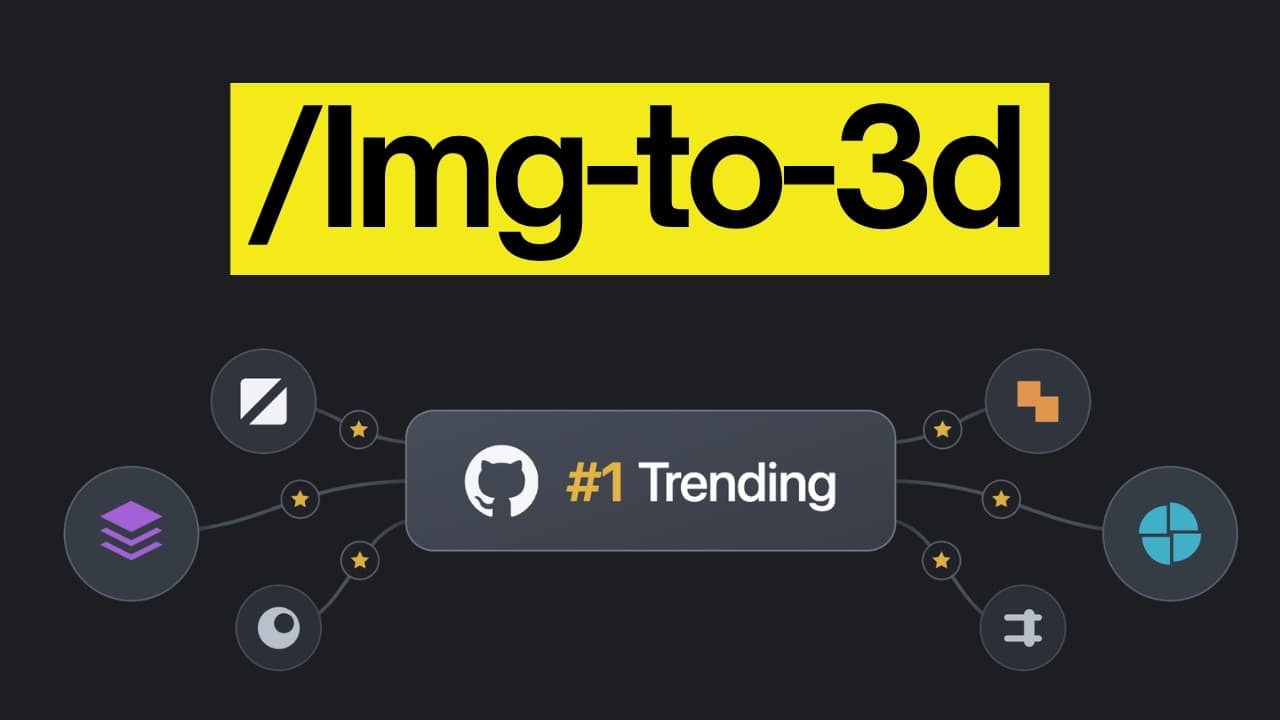
Add specialized repositories to give coding agents stronger 3D generation, browser testing, concise reporting, design selection, planning, and SwiftUI guidance. Img2threejs creates editable coded models, Reticle verifies app behavior, Chisel reduces unnecessary output, UI Skills selects relevant design guidance, Ouroboros plans and validates requirements, and SwiftUI Skills addresses current Apple interface patterns.
Transcript
Agents can build most of what you ask it for, but there's still a lot it can't do on its own. People have built tools that fix those gaps, and we went through them to find the ones that actually hold up. Eight of them changed how we work, and two of those have even been trending on GitHub. One of them lets you build those scrollable product landing... Read More
Key Insights
- Img2threejs is a skill that converts an object from a reference image into a Three.js model composed entirely of code. Because the output remains code-based, an agent can revise its colors, lighting, animation, and other visual properties without requiring separate 3D animation software.
- The img2threejs workflow is iterative: the agent constructs an object in stages, compares each stage with the supplied image, and corrects detected differences before adding more detail. The process consumes many tokens, takes considerable time, and may require repeated requests to refine specific areas.
- Reticle is a browser-based verification tool that tests whether an agent-built application actually behaves correctly after the agent declares it finished. It gives each tested area one of three conclusions: it worked, it failed, or the available information was insufficient to decide.
- Reticle works automatically after installation when the agent builds an application, even when the user does not explicitly mention the tool. It opens and operates the application as a user would, explains failures, supports repair and retesting, and preserves previous checks for later inspection.
- Chisel is a Claude Code plugin that instructs the agent to use fewer words and avoid unnecessary code. In the cited search-box example, the response fell from about 1,500 tokens without Chisel to about 600 tokens with it, while retaining a clearer summary structure.
- Chisel installs four skills and three hooks that run when a session starts, when a prompt is submitted, and after the agent uses a tool. It can also remove repeated or unnecessary text from tool results before Claude Code reads them, limiting context growth and token use.
- UI Skills is a searchable library that helps an agent find design skills suited to the requested visual style. It is available through MCP or a terminal tool, with the MCP option keeping its tools accessible throughout the agent session without requiring every design skill to be installed beforehand.
- Ouroboros is a planning and validation workflow that resolves requirements before implementation and checks the completed application against its plan. It infers only small, reversible details, asks the user about consequential choices, records assumptions, and triggers focused repairs when verification finds a mismatch.
- More videos from this channel:
- More from this channel: AI LABS
Install to Summarize YouTube Videos and Get Transcripts
Explore YouTube Video Summarizer or Get YouTube Transcript Extractor
Questions & Answers
Q: How can an AI coding agent turn an image into an interactive 3D model?
The agent can use the img2threejs skill after receiving the image it should recreate. It builds the object as a Three.js model in stages, compares its current output with the reference image, and corrects differences before continuing. Because the model is made entirely from code, the agent can later change colors, lighting, animations, and other details or place the interactive result on a landing page.
Q: What are the limitations of using img2threejs for 3D generation?
The img2threejs process uses many tokens and can take a long time because the agent builds, compares, corrects, and adds detail iteratively. Its first result may also be less detailed than expected. The suggested approach is to identify specific parts that need improvement and ask the agent to refine them repeatedly until the model moves closer to the detail shown in the project demonstrations.
Q: How does Reticle verify an application built by a coding agent?
Reticle lets the agent open the application in a browser and operate it in the way a person would. It follows what happens while the app runs, then classifies each tested area as working, failing, or lacking enough information for a conclusion. When a check fails, Reticle explains the problem so the agent can repair that part and run the test again.
Q: Why is loading an app successfully not enough to confirm that it works?
An application can load and display its intended design while still containing failures in its behavior. The transcript identifies this as a major weakness of coding agents, which may declare completion after checking only startup and appearance. Browser access gives the agent visibility into actual interactions and runtime behavior, allowing Reticle to expose problems that a basic loading or visual check would miss.
Q: How does Chisel reduce Claude Code token usage?
Chisel tells the agent to write more directly, use fewer words, and avoid producing code that the task does not require. It also filters repeated or unnecessary text from tool responses before the agent reads them, which keeps irrelevant material out of the context. In the example provided, a search-box change used about 600 response tokens with Chisel instead of about 1,500 without it.
Q: What does Chisel install in a Claude Code setup?
Chisel installs four skills together with three automatic hooks. One hook runs at the start of a session, another runs when the user submits a prompt, and the third runs after the agent uses a tool. The resulting responses use shorter, more direct wording and organize the final report around the general work performed, the important changes, and anything that was skipped.
Q: How does UI Skills choose design guidance for an AI agent?
UI Skills provides a library containing design skills from different authors. After the user describes the desired design, the agent searches the library, narrows the results to relevant skills, and retrieves their instructions for use during construction. The library can be connected as an MCP or run from the terminal, although the MCP option keeps its tools available inside the ongoing agent session.
Q: How does Ouroboros prevent an agent from making important product decisions alone?
Ouroboros generates questions about the requested application and answers them using the user's description and the existing project. It fills in only small missing details when they are easy to change and remain within scope. If a choice could alter what the application is supposed to do, it pauses and asks the user. It also records assumptions, reviews the resulting plan, and verifies the finished application against it.
Summary & Key Takeaways
-
Img2threejs converts an object shown in an image into a Three.js model made from code. The agent builds the model progressively, compares it with the reference, and corrects differences. The resulting object can be animated, made interactive, and revised through requests involving details such as colors, lighting, or motion.
-
Reticle and Ouroboros target unreliable task completion from different directions. Reticle operates the finished application in a browser and reports whether each tested part worked, failed, or lacked enough information. Ouroboros develops a reviewed specification first, supervises implementation, and repeatedly checks the result against that approved plan.
-
Chisel reduces verbose responses and unnecessary context, while UI Skills retrieves design instructions suited to a requested style. SwiftUI Skills provides focused guidance for Apple interfaces, including built-in liquid-glass components in iOS 26 and content arrangements for the wider iPhone Duo format described in the transcript.
Read in Other Languages (beta)
Share This Summary 📚
Summarize YouTube Videos and Get Video Transcripts with 1-Click
Try YouTube Summary with ChatGPT & Claude or YouTube Transcript Generator
Explore More Summaries from AI LABS 📚
Summarize YouTube Videos and Get Video Transcripts with 1-Click
Try YouTube Summary with ChatGPT & Claude or YouTube Transcript Generator