How to Fix Claude's Gauntlet Loop for Real Apps
TL;DR
A gauntlet loop works reliably only when critics have a concrete quality standard and explicit verification checks. For original business software with no existing product to compare against, define requirements through intensive planning and control how critics evaluate each component, otherwise agents can build many features against an invented standard and waste time and tokens.
Transcript
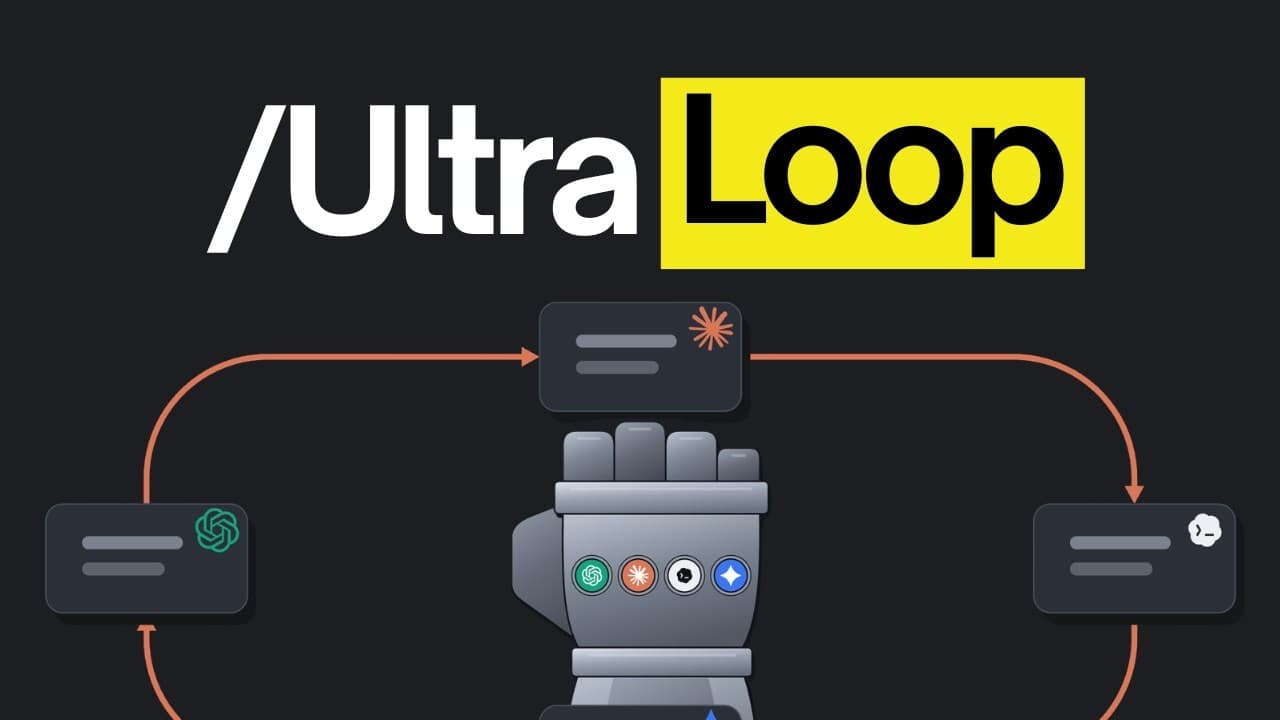
There's a type of loop that's been hyped up a lot lately and it's called the gauntlet loop. It's the loop that actually does let people build huge apps and proper highquality games and all of it one shot. For example, we gave it a huge product to build and while it took over an hour, it was able to complete the job without any bugs. And the prompt ... Read More
Key Insights
- A loop is an agent workflow that repeatedly checks and revises its own work against a stated goal and standard. The user supplies the target at the beginning and receives the result after the automated checking process, instead of manually reviewing every intermediate response.
- The gauntlet loop is driven by a three-line prompt that defines the intended product, delegates smaller tasks to sub-agents, and establishes the final quality threshold. Its apparent complexity comes from the resulting coordinated workflow, not from a long or elaborate initial instruction.
- Sub-agents are separate agents that handle individual tasks in their own memory without seeing what other agents are doing. The main agent determines how to decompose the overall goal, allowing multiple components to be developed independently and reducing the amount of manual task assignment.
- A critic is a separate review agent that checks a builder's output and returns inadequate work for correction. It does not build anything, begins without memory of earlier attempts, and is instructed to grade the output critically rather than favor the agent that produced it.
- A concrete reference product gives critics an external quality standard instead of allowing them to define what counts as good. In the first-person shooter example, critics blindly compared Claude's result with recent Call of Duty games and selected whichever output appeared better.
- Ultra Code is described as a Claude Code keyword that activates a dynamic workflow using a fleet of sub-agents. This produces a diamond graph, where one task splits into several parallel branches before their findings or outputs are consolidated by a single agent.
- The first weakness is uncontrolled verification because the main agent decides how critics are created and instructed. A broad command to inspect work harshly and visually does not provide concrete checks, making failures difficult to trace when the workflow operates across many agents and components.
- The second weakness is dependence on an existing comparison target, which makes the method suitable for games, landing pages, and 3D worlds with recognizable references. Original business rules often have no finished counterpart, so Wayfinder-style intensive planning and explicit verification must supply concrete requirements instead.
Install to Summarize YouTube Videos and Get Transcripts
Explore YouTube Video Summarizer or Get YouTube Transcript Extractor
Questions & Answers
Q: What is a gauntlet loop in Claude Code?
A gauntlet loop is an automated agent workflow in which a main agent divides a large goal into smaller tasks, delegates those tasks to separate builder agents, and attaches critic agents to review their work. Each builder revises its output until its critic accepts it. The approach can produce games, 3D worlds, and websites from a single prompt when the agents receive a concrete quality standard.
Q: How does the three-line gauntlet loop prompt work?
The first line states what should be built and the quality level it must reach. The second instructs the main agent to decompose the goal and distribute smaller tasks among sub-agents, with critics reviewing their work. The third provides the final comparison standard that determines when critics may approve the output. Together, these instructions initiate decomposition, parallel building, repeated criticism, and final consolidation.
Q: What does a critic agent do in the gauntlet loop?
A critic agent reviews a builder agent's work without creating the component itself. It starts without memory of previous attempts, so it does not know who produced the work or how often it has already been rejected. When the output fails the stated standard, the critic returns it to the builder for correction. The loop ends only after the critic considers the work acceptable.
Q: Why did Call of Duty make the game-building loop effective?
Call of Duty provided a real, already shipped product that critics could use as an external quality benchmark. Instead of deciding independently what a good first-person shooter should look like, a critic could compare Claude's result with that reference and choose which appeared better. The blind comparison reduced reliance on a vague, self-invented quality standard and gave the revision loop a clearer stopping condition.
Q: What does Ultra Code change in the gauntlet loop?
Ultra Code is described as a Claude Code keyword that turns the process into a dynamic workflow. Rather than dividing the project among only a few workers, it activates a fleet of sub-agents that can operate at once. This creates what the transcript calls a graph: many separate agents run their own loops, then their work narrows back into a single agent that combines the results.
Q: Why is uncontrolled verification a problem in agent workflows?
Uncontrolled verification lets the main agent determine how critics are created, what instructions they receive, and how they judge each component. A general request to be harsh and inspect work visually does not establish concrete tests. At the scale of a multi-agent project, that ambiguity makes it difficult to identify which instruction, judgment, or component caused a failure, especially after many branches have produced work simultaneously.
Q: Why can the gauntlet loop fail on original business software?
Original business software often has no completed product that can serve as a comparison target. Billing rules unique to one company, for example, cannot simply be judged against an existing application. Without a concrete reference or explicit requirements, critics invent their own quality standard and may approve work in the wrong direction. The user can then return to many completed features that consumed substantial time and tokens but reflect unwanted assumptions.
Q: How can Wayfinder help fix the gauntlet loop?
Wayfinder is presented as Matt Pocock's intensive planning skill, built from planning fundamentals he used as a developer before AI. Its role in the proposed fix is to provide concrete requirements so the loop does not drift from the user's intent. Combined with deliberately planned verification checks, those requirements replace an unavailable reference product and give builders and critics clearer criteria for implementing and evaluating original work.
Summary & Key Takeaways
-
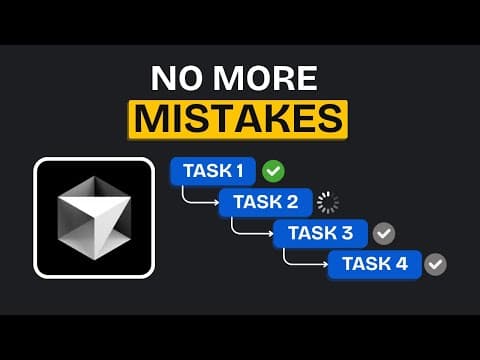
The gauntlet loop replaces repeated human feedback with an automated workflow. A main agent decomposes one goal into smaller tasks, delegates them to independent builder agents, and assigns critic agents to review their outputs. Each builder revises its work until the attached critic concludes that the specified quality standard has been reached.
-
Its three-line prompt defines the product and quality bar, tells the main agent to divide work among sub-agents, and gives critics an existing product for blind comparison. Adding the Ultra Code keyword activates a dynamic workflow with a fleet of parallel agents, creating a diamond graph that later consolidates their separate results.
-
The method has two central weaknesses: the main agent controls critic instructions and verification, while the quality benchmark depends on an existing comparable product. Real business systems often lack such references. The proposed remedy combines deliberately planned checks with concrete requirements developed through Wayfinder, an intensive planning skill created by Matt Pocock.
Read in Other Languages (beta)
Share This Summary 📚
Summarize YouTube Videos and Get Video Transcripts with 1-Click
Try YouTube Summary with ChatGPT & Claude or YouTube Transcript Generator
Explore More Summaries from AI LABS 📚
Summarize YouTube Videos and Get Video Transcripts with 1-Click
Try YouTube Summary with ChatGPT & Claude or YouTube Transcript Generator