How Do Claude Agent Loops Improve AI Coding?
TL;DR
Claude agent loops work best when matched to a task’s verification and learning needs. Stateless loops repeatedly pursue a concrete goal, learning loops improve reusable skills through recorded experiments, and multi-agent loops review work from several specialized perspectives. Tests, saved working versions, comparison sessions, and structured feedback give these loops clearer evidence for deciding what to change or when to stop.
Transcript
You've probably already heard about agent loops since everyone is hyping them up a lot right now. And you might think they're just a way for these AI companies to get you spending more on their products since these loops chew through a lot of tokens. But that only happens when you're using the wrong type of loop for the job. As you already know, we... Read More
Key Insights
- • Loop engineering is a system design approach in which the agent drives its own sequence of prompts, responds to problems, and determines its next action instead of relying on a person to prepare every detailed instruction manually.
- • Deterministic loops are suited to outcomes that can be checked against a known standard, while non-deterministic loops lack a definitive verification method and require alternative ways to judge whether the work is adequate.
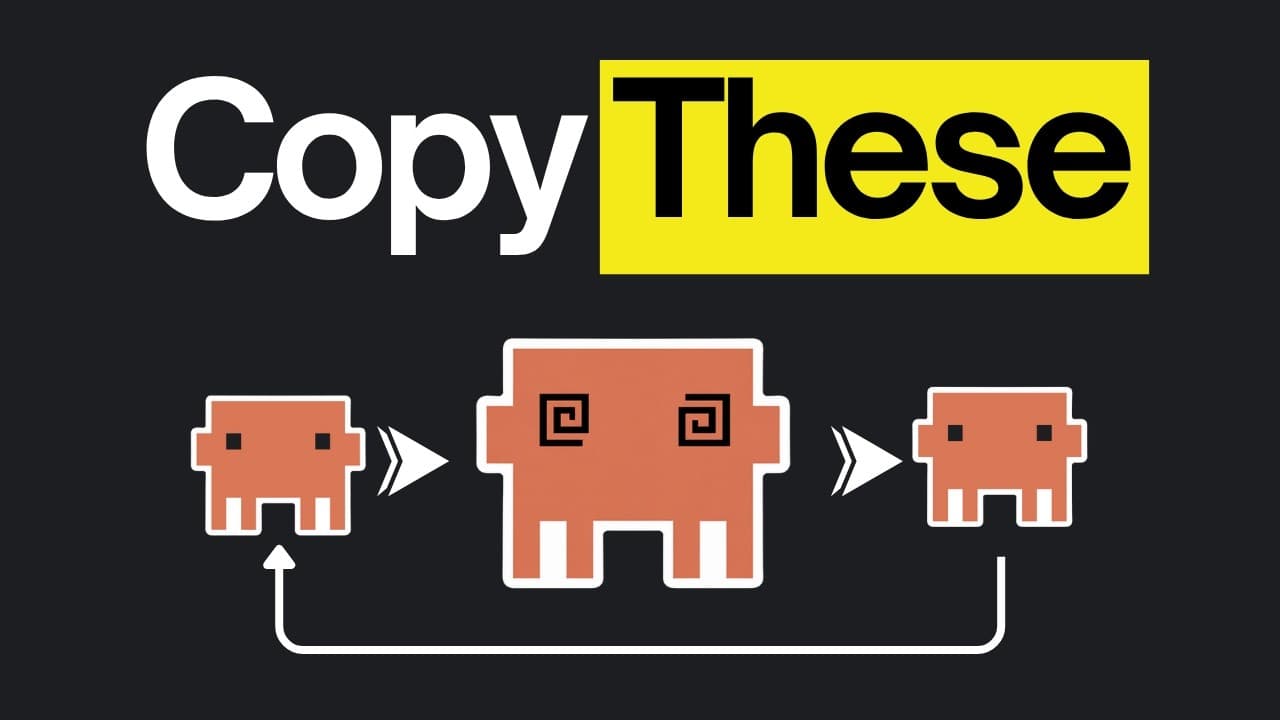
- • A stateless loop is an agent loop that retains no memory and performs no self-improvement while executing a task. It repeatedly works toward the same goal, checks whether the task is complete, and stops when completion is detected.
- • The Claude Code goal command uses the main agent to perform work and Haiku to check that work against the prompt’s requirements. If the checker finds missing requirements, it reprompts the main agent to continue working.
- • Tests are a concrete completion standard for autonomous coding loops because they expose implementations that violate expected behavior. Writing tests before requesting a feature lets the agent repeatedly code and run checks until every relevant test passes.
- • Saving each working application version gives an autonomous agent a recovery point. If later changes break the application, the agent can return to the last working version and continue instead of reconstructing or reversing changes from memory.
- • A learning loop improves a reusable skill by running tests across multiple rounds, comparing implementations produced with and without the skill, applying changes, and preserving structured lessons about attempted changes and observed results in a learning.md file.
- • A multi-agent review loop assigns factual correctness, domain relevance, safety, and style to separate critics. An orchestrating agent coordinates their feedback, applies reported fixes, and launches another review round to identify problems that remain after the first pass.
Install to Summarize YouTube Videos and Get Transcripts
Explore YouTube Video Summarizer or Get YouTube Transcript Extractor
Questions & Answers
Q: What is loop engineering in Claude Code?
Loop engineering is an approach in which the agent manages the sequence of work instead of depending on a person to write every prompt that drives it. The agent works toward an objective, responds to problems it encounters, and decides what it needs to do next. Different loop designs determine whether it retains lessons, how it verifies results, and when it stops.
Q: What is the difference between deterministic and non-deterministic agent loops?
A deterministic loop targets an outcome that is already known, giving the agent a solid standard against which it can check its work and continue until that standard is reached. A non-deterministic loop has no equally definitive result to verify. Because the agent cannot confirm completion through a single concrete check, the workflow needs other evaluation or review methods.
Q: How does a stateless Claude loop work?
A stateless loop repeatedly pursues a task without retaining a record of previous lessons or improving its own process. The Ralph loop and Claude Code goal command are presented as examples. The loop receives a goal, performs work, checks whether the task is complete, and either stops or runs again. Its simplicity makes reliable external requirements especially important.
Q: How does the Claude Code goal command check completed work?
The goal command sets the requested build outcome as the main agent’s objective. When that agent decides a task is finished, Claude Code uses the smaller Haiku model to check the work against the requirements supplied in the prompt. If the work does not fully satisfy those requirements, the checker reprompts the main agent to complete whatever it missed.
Q: Why should tests be written before an autonomous coding loop starts?
Tests give the loop a hard, concrete standard that is stronger than asking a model to judge its own completion. If Claude implements a feature incorrectly or changes behavior that should remain stable, the tests produce an error. The agent can then continue editing and rerunning the suite until every test passes, providing a clear stopping condition for the goal.
Q: Why should Claude save every working version of an application?
Saving every working version creates reliable recovery points during autonomous development. If the agent later makes a change that breaks the application, it can roll back to the most recent working state and continue from there. The suggested setup is to place an instruction in Claude.md telling the agent to preserve working versions rather than relying on memory to reverse faulty changes.
Q: How does a learning loop improve a reusable Claude skill?
A learning loop runs a skill, evaluates its performance, modifies it, and repeats the process until it finds no further improvements. The described skill improver tests several areas and launches separate Claude sessions that implement the same prompt with and without the skill. Comparing those results reveals the skill’s actual impact and helps identify specific changes that should be made.
Q: How does a multi-agent review loop improve AI-generated work?
A multi-agent review loop divides evaluation among specialized agents instead of expecting one reviewer to cover every dimension. The described setup uses critics for factual correctness, domain relevance, safety, and style. An orchestrate command launches them, gathers their reports, and lets the main agent apply the fixes. It then launches another round so the critics can inspect the revised result.
Summary & Key Takeaways
-
Loop engineering shifts responsibility from a person repeatedly writing detailed prompts to a system that determines what to do next. The source first distinguishes deterministic loops, which have outcomes the agent can verify, from non-deterministic loops, which lack a definitive completion check and therefore require other methods for evaluating progress and quality.
-
Stateless loops retain no memory and do not improve themselves while working. Claude Code’s goal command illustrates this pattern by pursuing a stated objective, using Haiku to check completed work against requirements, and reprompting the main agent when something is missing. Concrete tests provide a stronger completion standard than model judgment alone.
-
Learning loops refine reusable skills by testing them repeatedly, comparing performance with and without the skill, and recording results in learning.md. Multi-agent loops instead divide reviews among specialized critics for factual correctness, domain relevance, safety, and style. An orchestrating agent applies their feedback and repeats the review across multiple rounds.
Read in Other Languages (beta)
Share This Summary 📚
Summarize YouTube Videos and Get Video Transcripts with 1-Click
Try YouTube Summary with ChatGPT & Claude or YouTube Transcript Generator
Explore More Summaries from AI LABS 📚



Summarize YouTube Videos and Get Video Transcripts with 1-Click
Try YouTube Summary with ChatGPT & Claude or YouTube Transcript Generator