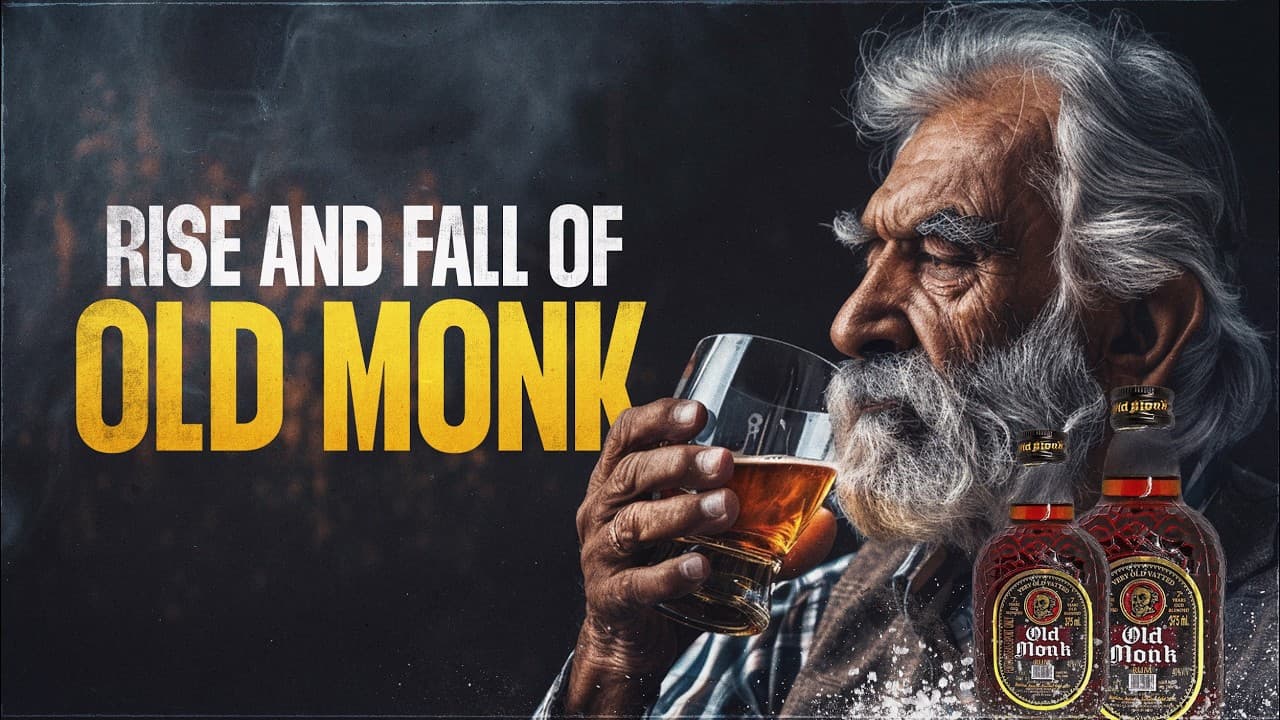
How did Old Monk become a world famous rum without ads
TL;DR
Old Monk rose to global prominence with no advertising, driven by abundant raw materials like sugar cane, a seven year aging process in oak barrels, and a distinctive, natural flavor profile. Its success was built on availability, a careful aging and blending method, and a strong brand story that outpaced competitors despite limited marketing.
Transcript
hi everybody old monk is one of the most iconic drinks in the Indian liquor history sold since the' 60s as Russian to the FIS but still going strong okay so now I like that this is the monk who won't sell his Rari and while most people see old monk as a symbol of college Nostalgia what they don't know is that back then old Monon had been such a leg... Read More
Key Insights
- Old Monk benefited from abundant sugar cane as a primary raw material, making rum production feasible even in a post independence era.
- Oak barrels played a key role by contributing vanilla, coconut, and woody notes, while enabling oxidation and evaporation that mellowed the drink.
- A seven year aging cycle in oak barrels was crucial to creating the distinctive flavor and aroma that defined Old Monk.
- The brand achieved global scale with minimal or zero marketing spend, relying on product appeal and word of mouth.
- The rise occurred during a period when India faced food shortages, yet sugar cane remained plentiful, aiding production and supply.
- Global leadership was reached by outpacing competitors that sold far fewer cases per year, underscoring scale advantages.
- The narrative of Indian entrepreneurship, including Mohan’s investment and local manufacturing, reinforced Old Monk’s market presence.
- Despite past success, the video highlights the current decline and the need for strategic attention to revive iconic brands.
- More videos from this channel:
- More from this channel: Think School
Install to Summarize YouTube Videos and Get Transcripts
Explore YouTube Video Summarizer or Get YouTube Transcript Extractor
Questions & Answers
Q: What made Old Monk stand out without using ads or marketing?
Old Monk stood out because of its excellent taste developed through a seven year aging process in oak barrels, which imparted vanilla, coconut and woody notes. The beverage also benefited from abundant raw materials like sugar cane, making production scalable. This combination created a strong consumer preference that fueled sales of millions of cases annually without traditional advertising.
Q: When was Old Monk launched and how did it achieve rapid popularity?
Old Monk was launched in 1954 by Narendra Mohan’s family business. Its popularity grew rapidly due to an unmatched flavor profile achieved through careful aging and blending in oak barrels, the availability of sugar cane as a raw material, and a low marketing footprint, allowing supply to meet rising demand in India and beyond.
Q: How did sugar cane availability influence Old Monk’s success?
Sugar cane availability was a critical driver because it ensured a steady supply of raw material for rum production. In the 1950s and 60s India had abundant sugar cane, which supported large scale production without significant input costs, helping Old Monk achieve high case volumes and global visibility while keeping production efficient.
Q: What is special about oak barrel aging for Old Monk?
Oak barrel aging contributes vanillin for vanilla aroma, tannins for a drying sensation, and lactones for coconut and woody notes. The aging process allows limited oxygen interaction, promoting oxidation and evaporation that mellow the drink, and charring or toasting inside barrels adds caramel and spice flavors, resulting in a richer, more complex rum.
Q: How did Old Monk compare to competitors in terms of sales?
Old Monk reportedly sold around 8 million cases annually at its peak, compared with competitors selling 2 to 3 million cases, establishing it as one of the top rum sellers globally. This scale, achieved with minimal marketing, underscores how product quality and market dynamics can create dominance.
Q: What happened to Old Monk after its peak in the global market?
After a period of prominence, Old Monk began to disappear from the market and the company faced significant losses, reportedly around 20 crores, signaling a downturn. The video frames this as a rise and fall where historical strength did not translate into sustained leadership or profitability.
Q: What lessons can be drawn from Old Monk’s rise for business students?
Key lessons include leveraging abundant raw materials to scale production, investing in distinctive product processes like oak aging to differentiate taste, understanding timing and market conditions, and recognizing that even iconic brands require ongoing strategic execution and adaptation to maintain leadership and profitability.
Q: Why is Old Monk considered the drink of gods and legends in its heyday?
Old Monk earned legendary status due to its rich, natural taste achieved through seven years of aging in oak barrels, which produced a unique flavor profile that competitors could not easily replicate. The combination of superior taste, broad availability of raw materials, and a lack of need for heavy marketing cemented its reputation as a premier rum.
Summary & Key Takeaways
-
Old Monk achieved worldwide recognition starting in the 1950s due to readily available raw materials and a seven year oak barrel aging process that enriched its flavor, setting it apart from competitors.
-
The brand reached global significance by selling millions of cases annually without a marketing budget, highlighting the power of product quality, timing, and market conditions.
-
Today, Old Monk has faded from market leadership, illustrating how even iconic brands can decline without ongoing innovation or sustained strategic execution.
Read in Other Languages (beta)
Share This Summary 📚
Summarize YouTube Videos and Get Video Transcripts with 1-Click
Try YouTube Summary with ChatGPT & Claude or YouTube Transcript Generator
Explore More Summaries from Think School 📚






Summarize YouTube Videos and Get Video Transcripts with 1-Click
Try YouTube Summary with ChatGPT & Claude or YouTube Transcript Generator